
Should federal law protect defense contractors from facing lawsuits over alleged failures to prevent a terrorist attack?
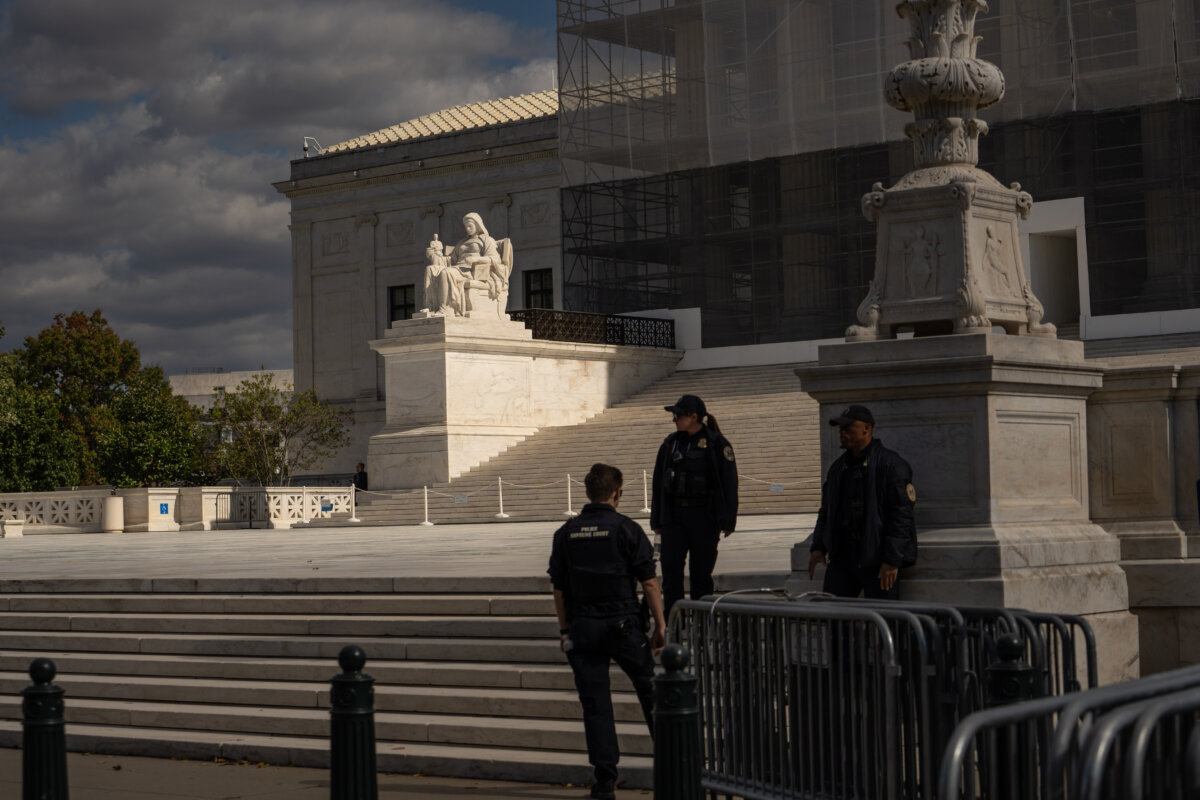
That is a question the Supreme Court is expected to take up on Nov. 3 when the justices hear oral argument in Hencely v. Fluor Corp.
In 2016, an Afghan man named Ahmad Nayeb detonated a suicide bomb vest at Bagram Airfield in Afghanistan, killing five people and wounding many others.
Nayeb was an employee of a subcontractor for Fluor Corp., whose failures the Army has called “the primary contributing factor” to the bombing.
Fluor Corp. has denied liability.
According to court papers, Nayeb was able to construct his bomb on the military base while using the contractor’s own tools and components.
Hundreds of troops had gathered on the base for a Veterans Day 5K when U.S. Army Spc. Winston Hencely saw Nayeb approaching suspiciously.
When Hencely and others confronted Nayeb, the Afghan employee detonated his suicide vest, leaving Hencely with permanent and life-altering injuries.
Years later, Hencely still suffers from abnormal brainwaves and seizures and is unable to fully use parts of the left side of his body.
He sued Fluor Corp. for negligence in South Carolina, where Fluor entities maintain a place of business.
Hencely attempted to sue under a state law, but that faced a roadblock because of a legal concept known as preemption: Generally, federal law trumps state law when there is a conflict between the two.
In this case, Fluor Corp. argued that South Carolina’s liability law was preempted by a law known as the Federal Tort Claims Act, which governs how people can sue the federal government for alleged wrongdoing.
The law generally allows individuals to sue the federal government over negligence, but contains an exception for “any claim arising out of the combatant activities of the military or naval forces, or the Coast Guard, during time of war.”
The Supreme Court is expected to consider whether that exception can apply to contractors who breach their contract and violate military orders.
Although Fluor was a contractor rather than a formal part of the federal government, it has argued that it was acting at the direction of the U.S. military.
The U.S. Court of Appeals for the Fourth Circuit agreed in 2024.
It held that the federal government had authority over the field of military combat in law and that therefore its laws preempted the state law Hencely used in the case.
In other words, Hencely’s lawsuit could no longer proceed in court.
Hencely is asking the Supreme Court to reverse the Fourth Circuit’s decision, suggesting that the appeals court was reading too much into the Federal Tort Claims Act.
“Congress does not hide elephants in mouseholes,” one of his briefs to the Supreme Court reads.
He argued that contractors are not included in the law’s definition of federal agencies that enjoy a certain level of immunity.
Rather, where the law does mention contractors, it states that the law does not govern disputes with contractors.
Both the Fourth Circuit and Fluor emphasized how entwined the contractor was with the U.S. military.
Fluor also said the Army screened Nayeb and authorized his employment while withholding certain security information.
Applying state tort law such as the law Hencely used would intrude on federal interests in military decision-making, Fluor argued.
“Allowing tort law to regulate battlefield conduct also would require civilian judges and juries to sit in judgment of sensitive military decisions,” its brief from September reads.
The two sides also clashed over the phrasing of the law, specifically its exception for “any claim arising out of combatant activities.”
According to Fluor, claims that arise from combatant activities can include claims against private parties.
Oral argument and the Supreme Court’s eventual decision could focus more on the balance between state and federal interests.
The Trump administration has filed a brief in favor of Fluor and is expected to participate in the oral argument on Nov. 3.
Like Fluor, it raised concerns about state law interfering with federal decisions.
“States have no historical or traditional interest in regulating conduct on foreign battlefields,” the administration stated in an amicus brief.
“And opening the door to state-law tort suits in this context would inflict grave harms on the separation of powers and the federal government’s ability to effectively prosecute wars abroad.”
On the other side, the attorneys general from 12 mostly red states have urged the Supreme Court to rule in Hencely’s favor.
They stated that although states must accept federal law, “nothing says that the interests of private contractors should trump the states’ policy interests in the same way.”
West Virginia Attorney General JB McCuskey told The Epoch Times that he was interested in helping Hencely achieve justice.
“We shouldn’t be placing the men and women who are willing to put their life on the line for this country in a position where they have no recourse when somebody does something negligent that harms them,” he said.
 Friends Read Free
Copy
Facebook
Tweet
Friends Read Free
Copy
Facebook
Tweet