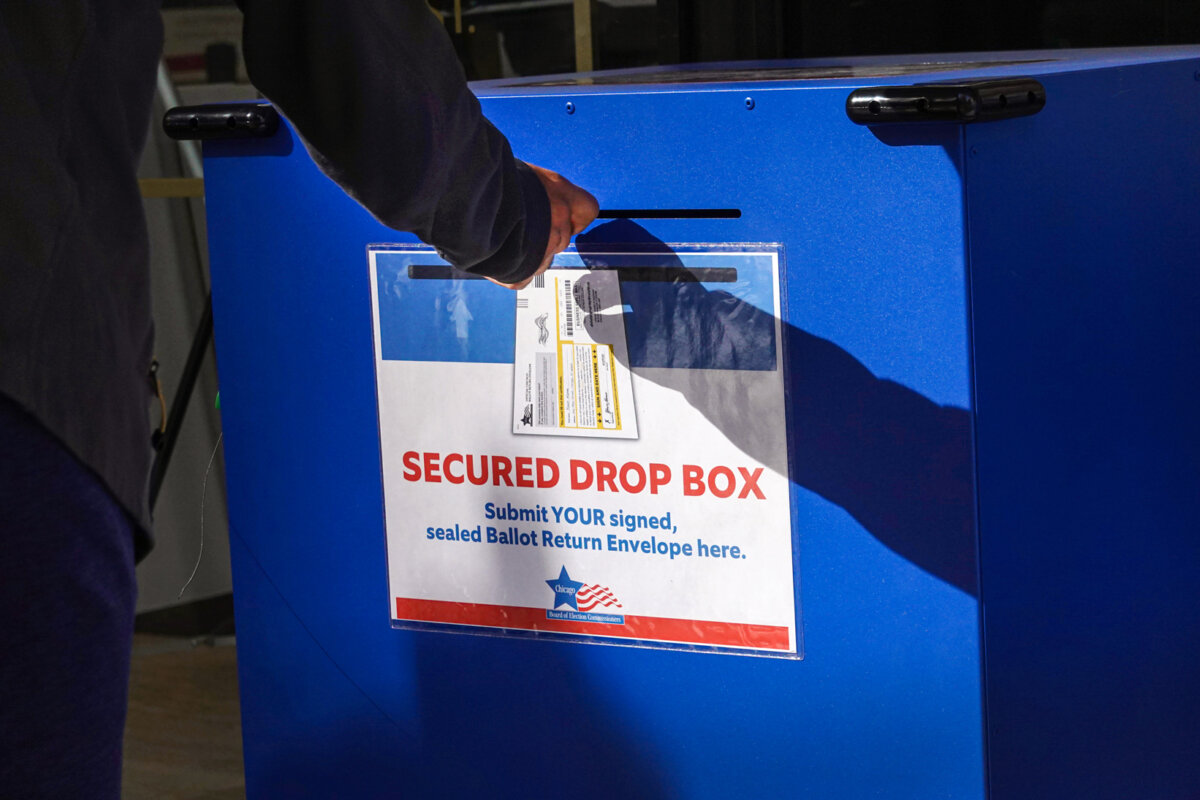

The U.S. Supreme Court on Nov. 10 agreed to take up a case that asks if states can legally count ballots received after Election Day.
The justices have not set a date for oral arguments, but a decision is expected by the end of June 2026—just ahead of the midterm elections.
Here’s what to know.
Mississippi Law
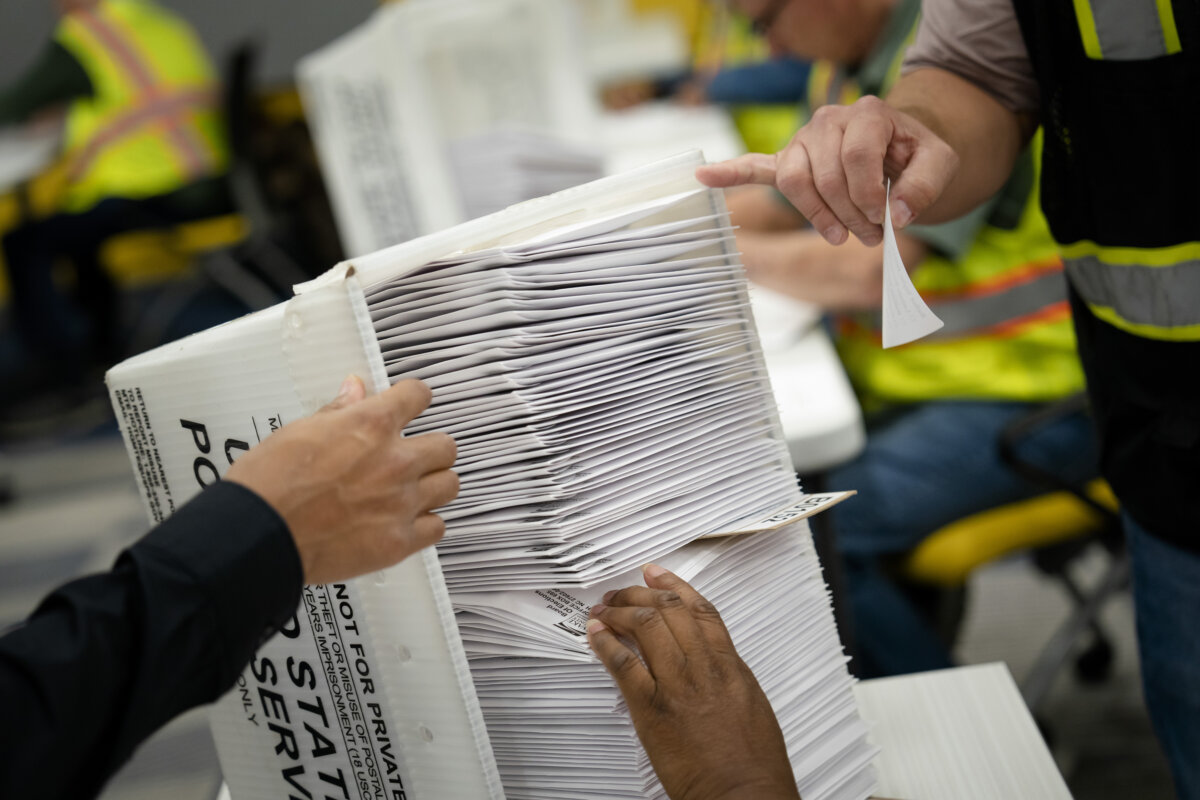
In July 2020, during the COVID-19 pandemic, Mississippi passed an emergency law allowing mail-in ballots to be counted as long as they were “postmarked on or before the date of the election and received by the registrar no more than five business days after the election.”
The law was eventually made permanent.
In January 2024, the Republican National Committee (RNC), the Mississippi Republican Party, and GOP election officials sued to overturn the law.
The Libertarian Party of Mississippi sued in February, and the cases were combined.
The plaintiffs alleged that Mississippi’s law was a violation of the Elections Clause of Article I of the Constitution.
That clause says that Congress can override state election laws; an 1845 federal law requires the election for members of Congress and presidential electors to take place on the Tuesday following the first Monday in November.
The RNC said that by establishing Election Day, Congress superseded Mississippi’s decision to continue receiving ballots after the allotted time.
It also alleged that late votes “dilute” ballots that were cast on time, and force the party to expend extra resources on post-election day poll watching.
They also said, in their complaint, that counting late votes favors Democrats.
“For example, according to the MIT Election Lab, 46 percent of Democratic voters in the 2022 General Election mailed in their ballots, compared to only 27 percent of Republicans,” their court filing reads.
“That means the late-arriving mail-in ballots that are counted for five additional days disproportionately break for Democrats.”
The state countered that Mississippi’s law harmonizes with federal election law because the election is the “casting”—not the counting—of ballots.
It argues that the ballot is cast when a voter drops it in the ballot box or mails it.
Court Decisions
U.S. District Judge Louis Guirola Jr. of Mississippi ruled in favor of the state in July 2024.
He found that, since there was no explicit law passed by Congress prohibiting the state’s procedures for late-received ballots, Mississippi was free to count votes that were cast before election day, even if they trickled in through the mail a few days after.
“In the absence of federal law regulating absentee mail-in ballot procedures, states retain the authority and the constitutional charge to establish their lawful time, place, and manner boundaries,” he wrote in his opinion.
However, a three-judge panel of the Court of Appeals for the Fifth Circuit had a different take.
Writing for the court, Judge Andrew S. Oldham said the state’s suggestion that a ballot is cast before it is received was “absurd.”
“That is not to say all the ballots must be counted on Election Day,” he wrote.
“Even if the ballots have not been counted, the result is fixed when all of the ballots are received and the proverbial ballot box is closed. The selections are done and final. By contrast, while election officials are still receiving ballots, the election is ongoing.”
The court also rejected, in a 10–5 vote, a request for an “en banc” rehearing by a larger panel of judges.
In a dissent representing the judges who wished to rehear the case, Circuit Judge James E. Graves wrote that the panel oversimplified the question historically.
He noted that, during the Civil War, several states allowed soldiers to cast their ballots on the battlefield, after which they were transported to election officials weeks after Election Day.
Ahead of Midterms
Over a dozen states and the District of Columbia accept mail ballots after Election Day.
If the Supreme Court sides with the RNC, it may require those states to change their election procedures.
In October, the court also took up two landmark cases: one on using race to draw district lines and another on federal candidates’ right to challenge election laws.
Depending on how and when the nine justices rule, the outcomes could drastically reshape the election landscape ahead of the 2026 midterms.
 Friends Read Free
Copy
Facebook
Tweet
Friends Read Free
Copy
Facebook
Tweet