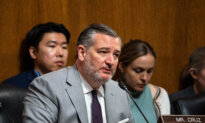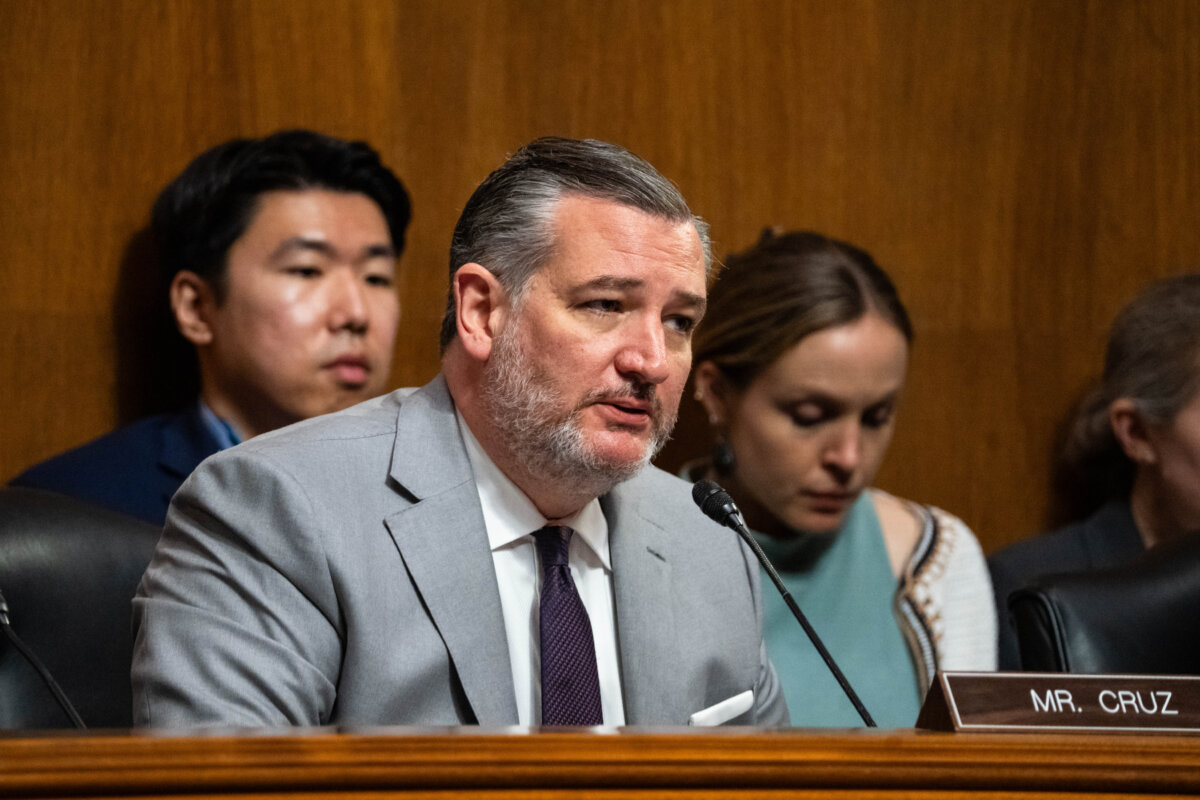

Sen. Ted Cruz (R-Texas) debuted a bill on July 29 that would make changes to the way the Pentagon uses helicopters around busy airports, as well as prevent the Army from disengaging a critical location-transmitting technology that was inactive on the Black Hawk helicopter involved in January’s deadly midair collision near Washington.
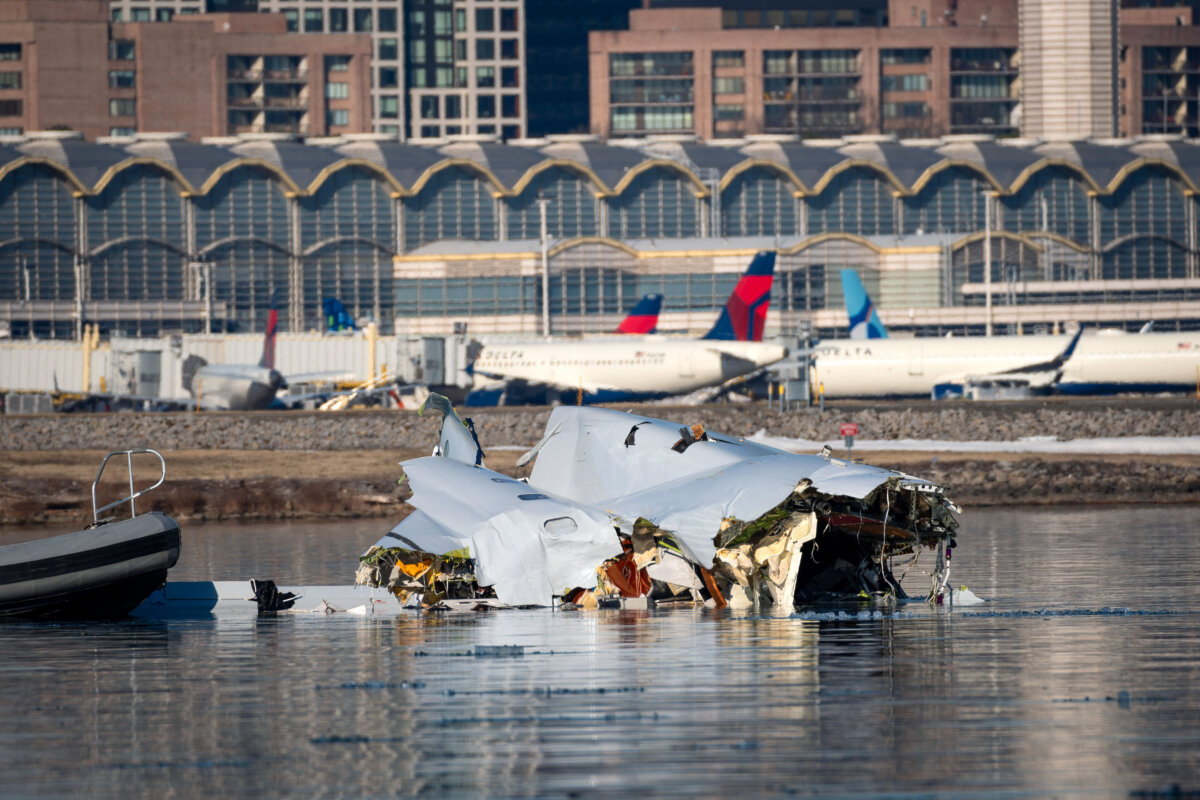
Cruz unveiled the new legislation at a press conference one day before the beginning of a three-day National Transportation Safety Board (NTSB) fact-finding hearing into the midair collision between a commercial airplane and an Army Black Hawk helicopter over the Potomac River near Ronald Reagan Washington National Airport on Jan. 29.
The NTSB—an independent agency that investigates transportation accidents—is probing the incident, which killed all 67 people on board the two aircraft.
Cruz’s bill would mandate the use of a location-transmitting technology called ADS-B Out, which was not active on the helicopter ahead of the collision. Whether the crew had intentionally switched off the technology, which notifies air traffic control of the aircraft’s location, altitude, and speed, or if it was no longer operational, is part of the NTSB’s investigation.
While the agency has already released a preliminary report into the disaster, its final report is not expected until next year.
“We should not tolerate special exceptions for military training flights operating in congested airspace, no matter the circumstances. Any aircraft flying near commercial traffic must fully adhere to safety standards,” Cruz said during a Tuesday press conference unveiling the bill.
NTSB Chair Jennifer Homendy, Transportation Secretary Sean Duffy, Federal Aviation Administration (FAA) Administrator Bryan Bedford, and several family members of those who died in the January collision joined Cruz at the conference.
Congress has scrutinized the Army’s policy of disabling the tracking technology during certain flights in the Washington area.
Before recent FAA rule changes following the midair collision, the Army would disable the helicopter transponders during sensitive or classified missions with commander approval, as confirmed by Gen. Matthew Braman during Senate testimony in March.
An Army official told The Epoch Times that it does not comment on proposed or pending legislation.
After the rule changes, the military must now get an exemption from the FAA for what’s considered a “sensitive government mission” before it can conduct flights closer to airports without the location tracking technology enabled.
Cruz’s legislation would significantly limit the types of flights that qualify. The Black Hawk helicopter in the Jan. 29 midair crash was conducting a “training flight.”
At Cruz’s press conference, Duffy said the legislation is a “bold step” and “by and large, this is the right approach.”
“Leaders became complacent, and we had warnings of near misses in the [Reagan National] airspace—unacceptable,” he said.
“Safety is not partisan. It is Democrats and Republicans, House, Senate, [Transportation Department], FAA, the president’s administration, all of us want to make sure we’re safe.”
Cruz’s bill would also require aircraft to be equipped with ADS-B In and Out, the tracking technology that sends location signals in real time to air traffic control.
The bill closes the FAA loophole that allowed the Black Hawk to fly with the technology disabled on Jan. 29, and only allows it to be disengaged during sensitive government missions.
Under the legislation, the FAA will also “comprehensively evaluate” helicopter routes near airspace at congested airports to ensure enough separation between helicopters and airplanes. This will include studying whether audio and visual signals can be deployed to “reduce airspace confusion and avoid traffic conflicts.”
Cruz’s bill directs the Army Office of the Inspector General to initiate a safety coordination audit into the midair collision, as well as a review of the Army’s approach to safety.
The midair collision near Reagan National Airport in January was the deadliest U.S. aviation disaster in more than two decades.
Homendy, who will be leading the NTSB’s three-day “fact-finding” hearing into the crash, said Cruz’s legislation “will save lives.”
 Friends Read Free
Copy
Facebook
Tweet
Friends Read Free
Copy
Facebook
Tweet