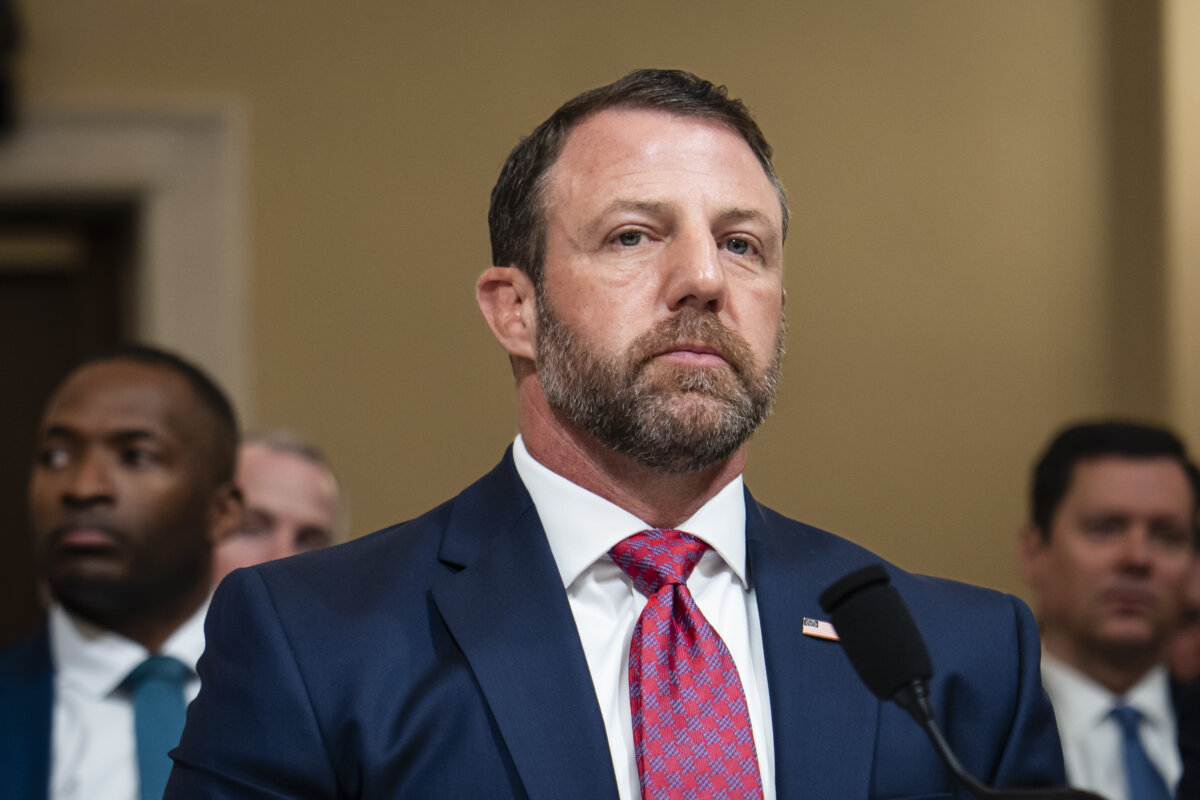

Homeland Security Secretary Markwayne Mullin on Sunday said that a lapse in a key surveillance law provision comes as the U.S. terrorism threat level is “the highest it’s ever been.” he called for members of Congress to pass a measure extending it.
On June 12, Congress failed to pass an extension of Section 702 of the Foreign Intelligence Surveillance Act (FISA), which allows for the warrantless surveillance of non-Americans who are living abroad.
When he was asked in a Fox News interview about the lapse in Section 702, Mullin said that the expiration of the section means the federal government will face more red tape in monitoring potential terrorists.
“When I say we arrest terrorists every single week, I’m not exaggerating. Those aren’t the individuals that are coming across our border, those are individuals that are still inside this country,” Mullin told Fox News in an interview on Sunday.
Mullin cited security around World Cup games being played in cities across the United States along with events celebrating the 250th anniversary of the United States.
“We remember just with FIFA … we have 78 games against 11 cities in 38 days, which is essentially 78 Super Bowls. On top of that, you have Freedom 250 with all the activity that’s going on, a tremendous amount of local partnership that has to take place, and not all have the resources,” he said.
During the June 12 congressional session, 19 Republicans and nearly all Democrats rejected a temporary measure to extend Section 720 of FISA. The Senate tried to approve its own versions, but also failed, dimming the chances of preventing what a rare lapse of spy powers. The law expired late last week.
Sen. Tom Cotton (R-Ark.), chairman of the Senate Intelligence Committee, and Sen. Chuck Grassley (R-Iowa), chairman of the Senate Judiciary Committee, have warned the administration to prepare “for a potential significant gap in foreign intelligence collection.”
Some Democrats said they would not extend the measure due to President Donald Trump’s decision to appoint Bill Pulte, the head of a federal housing agency, to be the director of national intelligence on an acting basis after outgoing Director of National Intelligence Tulsi Gabbard said she is leaving the position to be with her husband, who has been diagnosed with a rare form of cancer.
Last week, Trump said he would be nominating Jay Clayton, a U.S. attorney for the Southern District of New York who previously served as chairman of the Securities and Exchange Commission, as the permanent head of the intelligence office. Days before that, the president said that he wanted Pulte to terminate significant numbers of staffers who work for the Office of the Director of National Intelligence, saying many are holdovers from previous administrations.
Senate Minority Leader Chuck Schumer (D-N.Y.), when asked about Clayton last week by a reporter, said that “Pulte has to go.” He added, “He cannot be in the DNI role. It’s too important.”
House Minority Leader Hakeem Jeffries (D-N.Y.) also blamed Republicans and the Trump administration for the lapse in the FISA provision last week. He said that Trump should “come to the table and demonstrate leadership so we can reopen good faith negotiations about how best to extend surveillance authority,” also indicating that Pulte serving as acting head of the Office of the Director of National Intelligence is a non-starter for him.
Section 702 of FISA allows agencies such as the CIA, the National Security Agency, and FBI to collect communications from foreign targets overseas without a warrant. While members of both parties who cite privacy issues related to incidental collection of data on Americans have long wanted to limit its authority, there has historically been bipartisan support to renew it.
The Associated Press contributed to this report.
 Friends Read Free
Copy
Facebook
Tweet
Friends Read Free
Copy
Facebook
Tweet