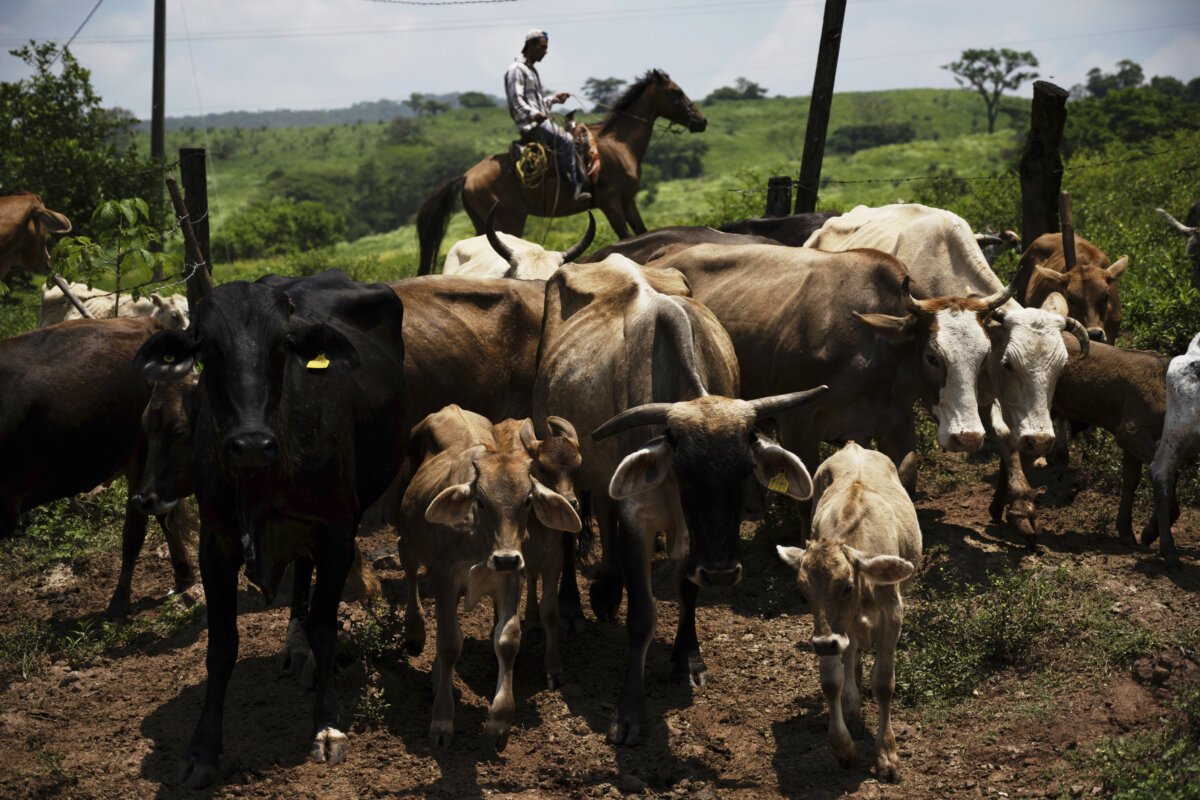

Texas is racing to contain a flesh-eating parasite that can infect animals and, more rarely, humans, causing horrific wounds that can be fatal if left untreated.
The New World screwworm has infected three calves and a goat in Texas. On June 8, officials confirmed a fifth case in New Mexico involving a dog that traveled to Mexico.
According to the Centers for Disease Control and Prevention (CDC), at least seven people had died from screwworm infections in Central America and Mexico as of Jan. 20.
This month, the CDC reported more than 185,000 cumulative animal cases in the same geographic areas and more than 2,100 cases in people.
In the United States, one human case was reported at a Maryland hospital in August 2025 after a person returned from a visit to El Salvador.
Officials say the screwworms spread north after hundreds of thousands of migrants opened up the Darién Gap along the border between North and South America, once a natural barrier to the pest.
Screwworm infestations begin when a female screwworm fly lays eggs on a wound or the mucus membranes of a mammal.
The flies are attracted to blood and mucus. A wound as minor as a tick bite can attract a female fly to feed.
A single female can produce about 3,000 eggs in a lifespan that can last up to 30 days.
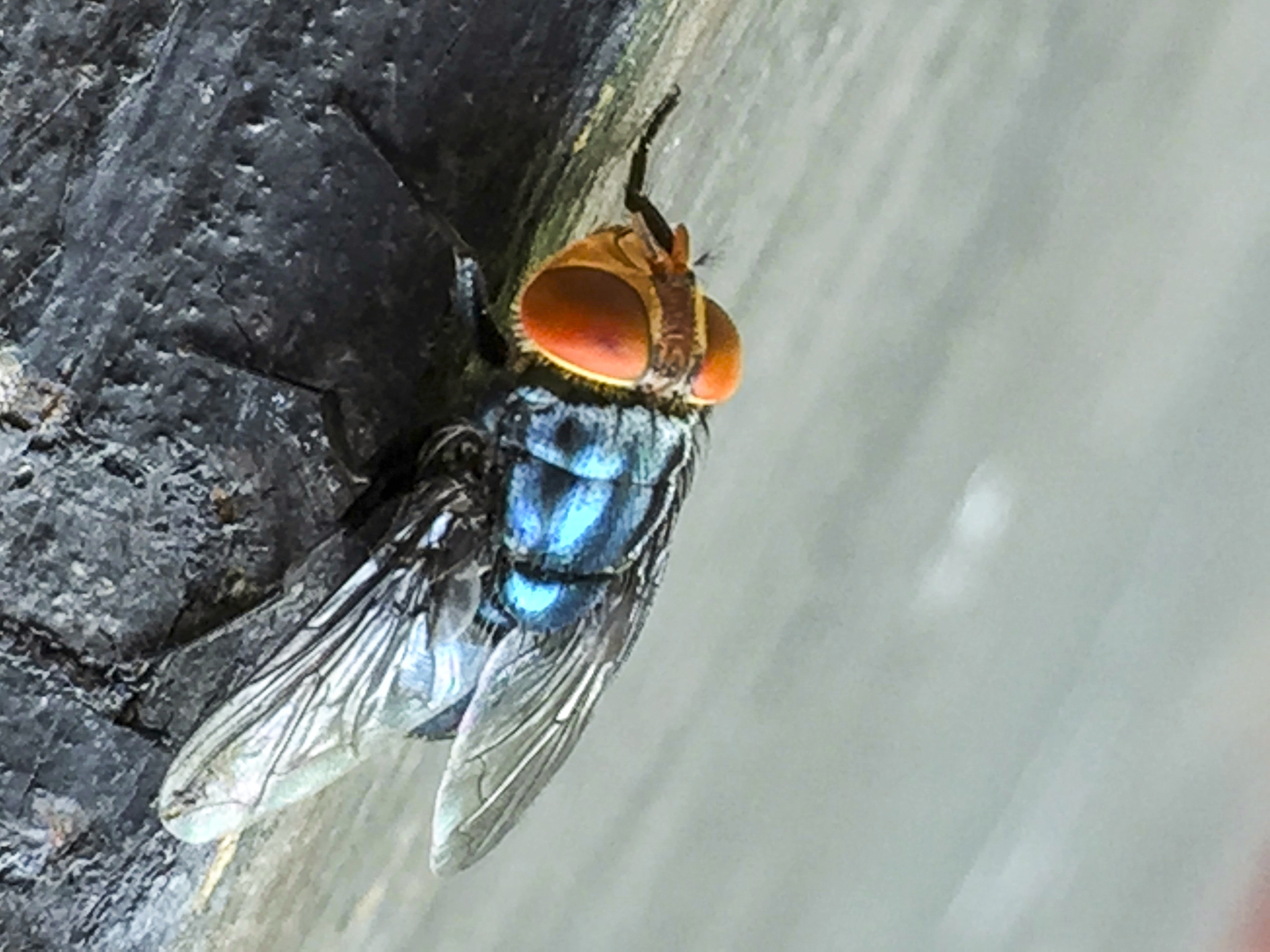 An adult New World screwworm fly, in this undated photo. (Denise Bonilla/U.S. Department of Agriculture via AP)
Eggs hatch into larvae, or maggots, that burrow into the flesh of animals and begin to eat. The last time screwworms were newly detected in Texas was 1966, followed by a major outbreak in 1972 involving 90,000 reported cases. The outbreak was mostly contained by 1975.
Dr. Michael Vickers, a longtime veterinarian who practices at Las Palmas Veterinary Hospital in Falfurrias, Texas, said the news hit South Texas ranchers hard.
“It’s going to be a catastrophic disaster,” the 76-year-old told The Epoch Times. “Everybody’s in a panic.”
The risk to the $100 billion U.S. cattle industry is real, he said.
He recalls one rancher during the ’70s who lost 500 calves in three or four weeks during the outbreak. In today’s dollars, that’s potentially a $1.5 million loss.
Most ranchers are preparing by stocking up on Dectomax, an anti-parasitic that has been injected into cattle to kill cattle fever ticks, he said. Ranchers can also spray their cattle with Co-Ral, a popular livestock insecticide that protects against horn flies, face flies, lice, and ticks.
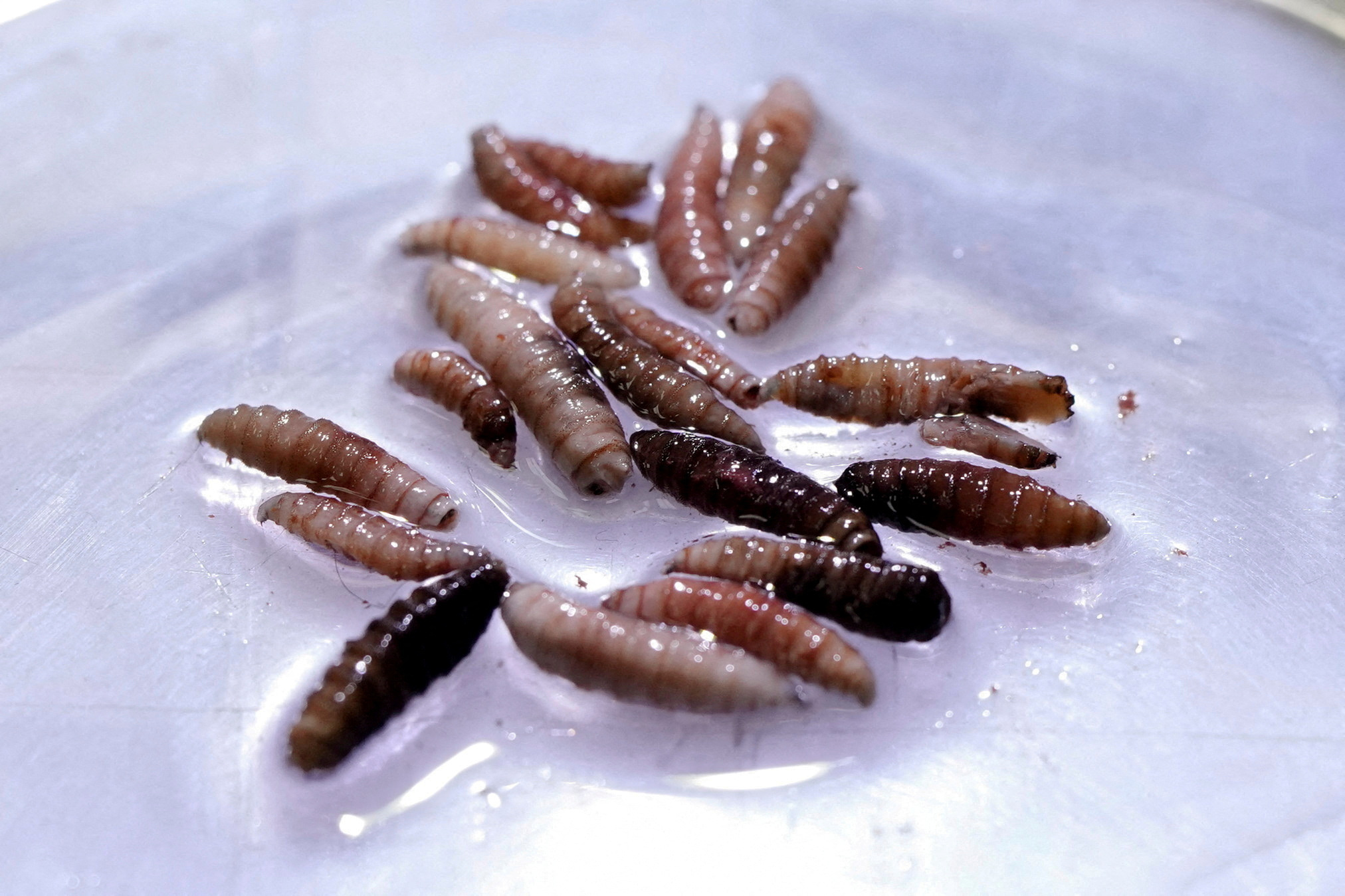 Larvae of the screwworm fly, collected from infected cows, at the COPEG sterile fly production plant, which fights the spread of the cattle screwworm, in Pacora, Panama, on June 11, 2025. (Enea Lebrun/Reuters)
Vickers said that an ivermectin additive can be mixed with deer corn to help protect the Texas deer population from parasites.
Vickers, who treated screwworm infections in cattle as a young veterinarian in the 1970s, said he remembers horrific cases in which livestock and wildlife were eaten alive by the parasite. He also recalls that several elderly people who were bedridden died after the flies laid eggs in their nostrils and crawled into their brain cavities.
“I know it’s a big problem,” said 83-year-old rancher Bill Hellen, who still runs a small cattle herd at his ranch in Hebbronville.
“We’re going to do our best to cope with it,” Hellen told The Epoch Times. “Basically, what we’re going to do is hunker down and watch our cattle a little better.”
He said he remembers how the screwworm devastated his father’s cattle herd during the last outbreak.
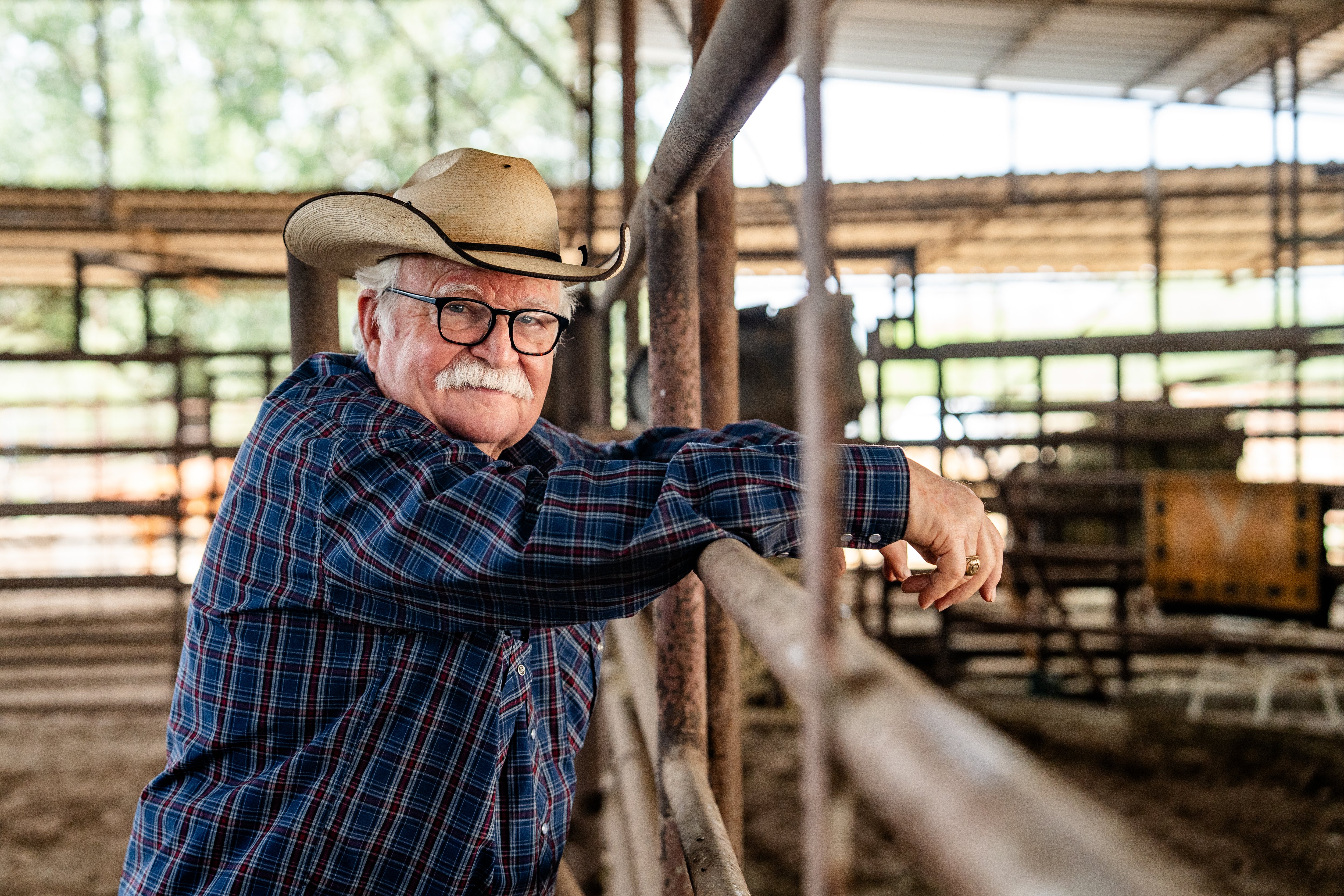 Veterinarian and rancher Michael Vickers at Las Palmas Veterinary Hospital in Falfurrias, Texas, on Oct. 8, 2025. (Samira Bouaou/The Epoch Times)
Back then, ranchers depended on their herd to make a living, so quarantining cattle meant financial loss. Hellen said that nowadays, most ranchers don’t depend on cattle as their sole livelihood, so the stakes aren’t as high.
Still, the concern is there. Ranchers are taking precautions, Hellen said, and he and his son plan to treat their small herd with Dectomax in a few days.
Another worry is the effect the screwworm could have on the lucrative Texas hunting industry. Hunters will pay tens of thousands of dollars to bag a trophy buck.
One of the main sources of income for the Hellen ranch in South Texas is the sale of hunting rights for dove, quail, and trophy deer.
Fighting the Fly
At the June 8 news conference, Agriculture Secretary Brooke Rollins and Texas Gov. Greg Abbott said a major focus is to speed up production of sterile flies at Moore Air Force Base in Texas.
The government’s main tool against the pest is the release of sterile flies, which eradicated the screwworm from Texas during the devastating infestation that arose about 60 years ago, officials said.
 Agriculture Secretary Brooke Rollins speaks to reporters in Washington on Feb. 12, 2026. (Anna Moneymaker/Getty Images)
Sterile males mate with females, causing them to lay eggs that are unviable, and this strategy was central to combating the infestation in the past.
An estimated 500 million sterile flies would need to be released weekly to push the screwworm back to the Darién Gap, according to officials.
However, currently, only 100 million such flies are produced each week, at a single plant in Panama, according to Department of Agriculture (USDA) officials.
Additional sterile flies should become available after a $21 million USDA renovation to a fruit fly production facility in Metapa, Mexico. The facility is expected to produce 100 million flies by the end of the year, according to officials.
The United States’ only sterile fly production facility is still under construction at Moore Air Force Base in Texas.
Rear Adm. Michael Schmoyer, a member of the USDA’s screwworm response team, said the facility is expected to be finished in November 2027 and will produce 100 million flies per week. In 2028, the plant is expected to produce an additional 200 million sterile flies per week.
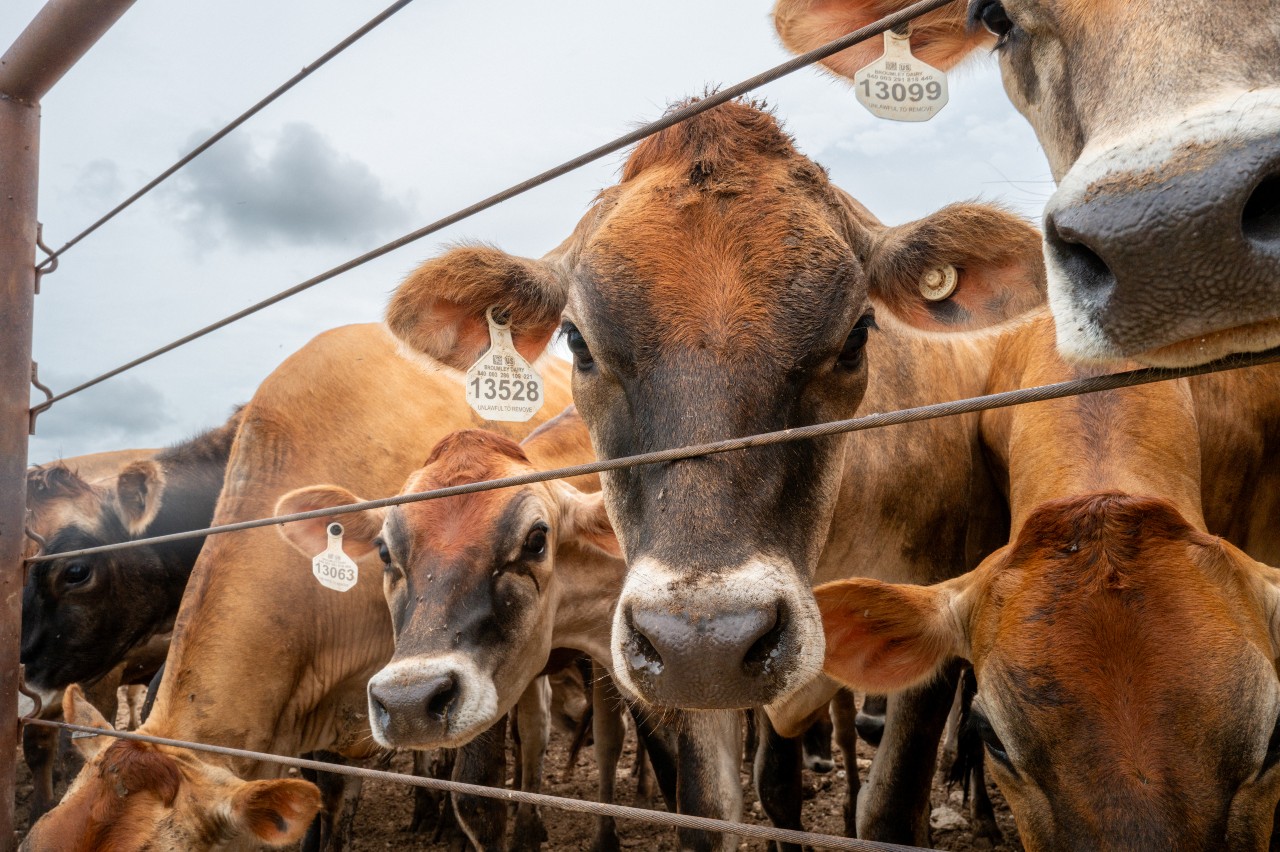 Cattle are herded in a stable in Hamilton, Texas, on June 5, 2026. U.S. Secretary of Agriculture Brooke Rollins has confirmed the detection of the New World screwworm—a parasitic fly whose larvae feed on the living tissue of warm-blooded animals—in a cow in Zavala County, Texas. (Brandon Bell/Getty Images)
But that could be too late to stop a serious outbreak, which has led federal officials to fast-track the facility.
Rollins said she received word from the War Department on June 8 that construction of the sterile fly facility at the airbase is proceeding at record speed.
“As of last Wednesday, they have now put one of their top commanders, Colonel Matthew Chase, on this as his sole project to help us combat the New World screwworm,” Rollins said. “This project already was on warp speed, but now it has been put at literally the very top priority for the Department of War and the Army Corps of Engineers.”
As construction is ongoing, the USDA activated aerial sterile fly dispersals from Moore Air Force Base on June 5.
At the June 8 news conference, Rollins and Abbott said the goal is to speed up the production of sterile flies while seeking innovative ways to combat screwworms.
 Texas Gov. Greg Abbott speaks during a news conference in the State Capitol in Austin on Aug. 15, 2025. (Brandon Bell/Getty Images)
One such innovation is the Novo fly, which was announced during the press conference.
Scott Hutchins, who serves as undersecretary for the research, education, and economics mission area of the USDA, said a technique is now available to double the number of sterile male flies being produced.
“It allows us to produce only male sterile flies,” he said.
Abbott pledged state resources and personnel, including those of Texas A&M, one of the world’s top animal research universities.
The governor said he is fearful that the state could be overrun if sterile flies can’t be released in sufficient numbers before next summer.
Breaching the Gap
Deep in the Darién Gap, hundreds of thousands of migrants trekked through one of Central America’s most remote and treacherous jungles on foot on their way to the U.S. southern border during the Biden administration.
The gap between Colombia and Panama, once a natural barrier to the devastating flesh-eating parasite, became a migration superhighway that peaked in 2023; half a million people crossed in that year alone.
“Now, this does trace back to the last administration and the open border policy and the movement of millions of people and their animals up through South America through Central America,” Rollins said at the June 8 news conference.
 Migrants at an immigration checkpoint after being ferried by canoe to Bajo Chiquito, Panama, on Feb. 18, 2024. Bajo Chiquito is the first migrant camp after crossing the Darien Gap from Colombia into Panama. (Bobby Sanchez for The Epoch Times)
“2022 is when the biological barrier in Panama at the Darién Gap was breached.”
Schmoyer said that for decades, operational practices have kept the flies at the gap between South America and Central America.
The cases in Central America reported before November 2024 and in Mexico afterward were related to the movement of infected animals, he said.
“These flies generally don’t fly very far by themselves,” he said.
However, larvae could reach the United States by hitching a ride on people, in luggage, or on backpacks, according to Vickers.
 Friends Read Free
Copy
Facebook
Tweet
Friends Read Free
Copy
Facebook
Tweet