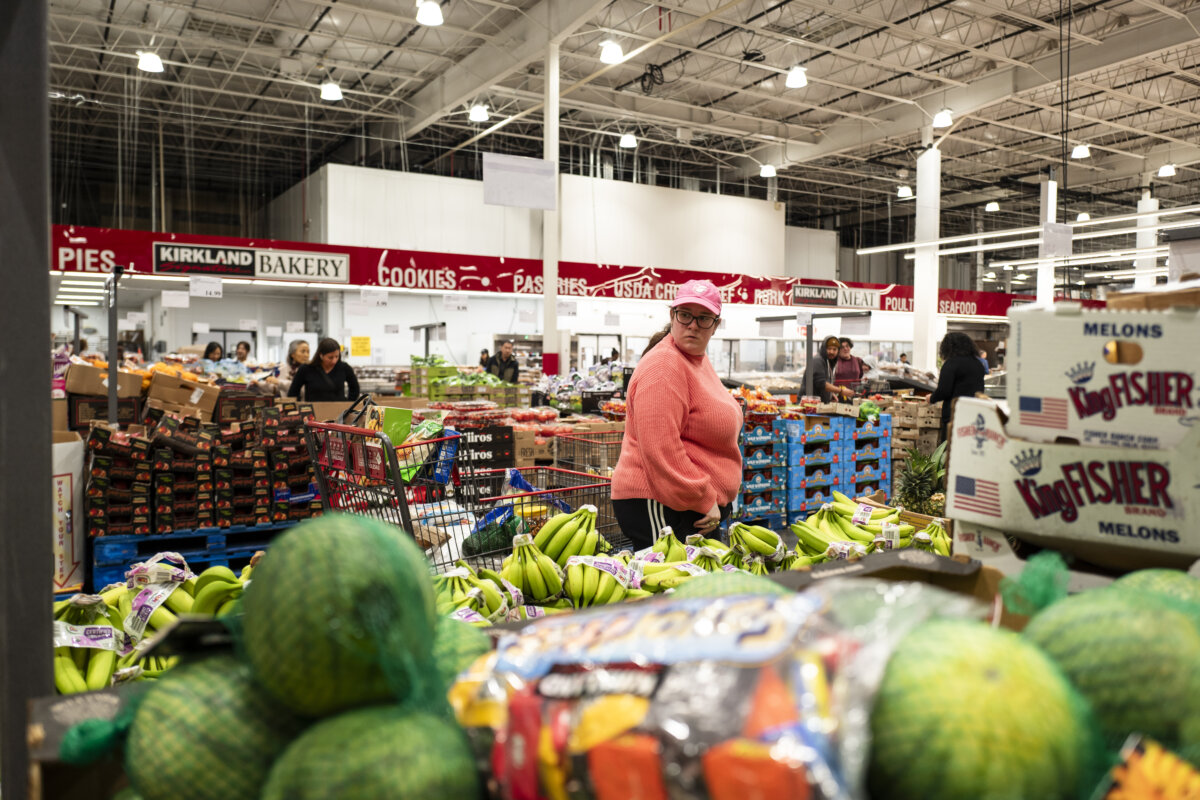

More than 41 million Americans will not receive federal help with buying groceries in November unless Congress reopens the government.
“The well has run dry,” the Department of Agriculture stated on its website on Oct. 27.
The department oversees the Supplemental Nutrition Assistance Program (SNAP), which serves about 12 percent of the U.S. population.
The government shutdown began on Oct. 1 after the Senate failed to advance a stopgap funding resolution introduced by Republicans, which would have temporarily funded the government while Congress completed 2026 spending legislation.
Nearly all Democrats have decided to reject the measure until Republicans come to terms on their proposals to extend health care funding expiring at the end of the year. Republicans contend that those negotiations should happen in the context of regular spending negotiations, not as a condition for reopening the government.
Here is a look at which states stand to lose the most if the shutdown is extended for another week, and how that could affect both parties.
States Receiving the Most Funding
SNAP funding totaled more than $7.8 billion in May 2025, the last month for which data are available.
Nearly half of all SNAP funds went to seven large-population states in the month of May.
California drew the largest share at more than $1 billion in federal funding, about 13 percent of the total.
New York received $647 million and Texas received $614 million. The next highest amounts went to Florida, at $536 million; Illinois, at $368 million; Pennsylvania, at $368 million; and Ohio, at $356 million.
Those states together received 49 percent of the food assistance benefit for May 2025, and they served about 49 percent of those receiving benefits.
Total spending for SNAP reached $99.8 billion in fiscal year 2024.
States are now preparing for the possibility of no SNAP funding in November.
A New York State Department of Social Services website states: “Due to the ongoing federal government shutdown, November SNAP benefits may be delayed. SNAP benefits cannot be issued for November unless the federal government shutdown ends or other federal action provides necessary funding.”
The site promises those receiving assistance an update by Nov. 1.
California Gov. Gavin Newsom warned residents of his state on Oct. 20 that food assistance funds would likely be delayed in November if the shutdown lasted beyond Oct. 23.
States With Highest Rates of Participation
On average, about 12 percent of Americans receive SNAP benefits. In some states, that percentage is much higher. These states stand to lose fewer federal dollars, but the impact could be greater, affecting a relatively larger share of each state’s population.
Sixteen states and the District of Columbia have higher-than-average participation in SNAP.
Of those, New Mexico has the highest rate, with 21 percent of its 2.1 million people receiving food assistance. The District of Columbia is next, with 20 percent of its 700,000 residents participating in SNAP. Oregon is next, with 18 percent participation, followed by Louisiana and Oklahoma at 17 percent each.
About 15 percent of the population receives SNAP benefits in West Virginia, Nevada, Massachusetts, Pennsylvania, New York, Illinois, and Michigan.
Political Speculation
Leaders in both political parties have blamed the other party for the impending loss of food aid.
“Forty-two million people across America are going to suffer from [losing] those SNAP benefits that they count on right before Thanksgiving because [Senate Minority Leader] Chuck Schumer [D-N.Y.] and Democrats are so angry with President [Donald] Trump that they just want to find a way to say no,” House Majority Whip Steve Scalise (R-La.) told reporters on Oct. 22.
Sen. Amy Klobuchar (D-Minn.) said in an Oct. 25 statement: “The Administration is choosing not to feed Americans in need—choosing to inflict pain on families—despite knowing that it has the authority to do so. That is unacceptable. Hunger isn’t a bargaining chip.”
Any loss of SNAP funding is expected to affect the constituencies of both parties similarly.
House Minority Leader Hakeem Jeffries (D-N.Y.) and Senate Minority Leader Chuck Schumer (D-N.Y.) are both Democrats from New York, a state that has higher-than-average participation in SNAP and ranks second-highest in total SNAP funding.
House Speaker Mike Johnson (R-La.) and Scalise are both Republicans from Louisiana, where 17 percent of the population receives SNAP assistance, well above the national average.
In states in which a majority voted for President Donald Trump in the 2024 presidential election, the combined rate of SNAP participation is 12 percent.
In states that voted for then-presidential candidate and Vice President Kamala Harris, the rate is slightly higher, at 13 percent.
The Trump administration has stated that “contingency funds are not legally available to cover regular benefits” for SNAP, so congressional action will be needed to prevent a loss of benefits.
And there is no legal pathway to reimburse states that expend their own money to cover November’s SNAP payments, should they choose to do so.
“Despite their willingness, States cannot cover the cost of benefits and be reimbursed,” the department said in a statement.
Jacob Burg contributed to this report.
 Friends Read Free
Copy
Facebook
Tweet
Friends Read Free
Copy
Facebook
Tweet