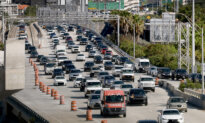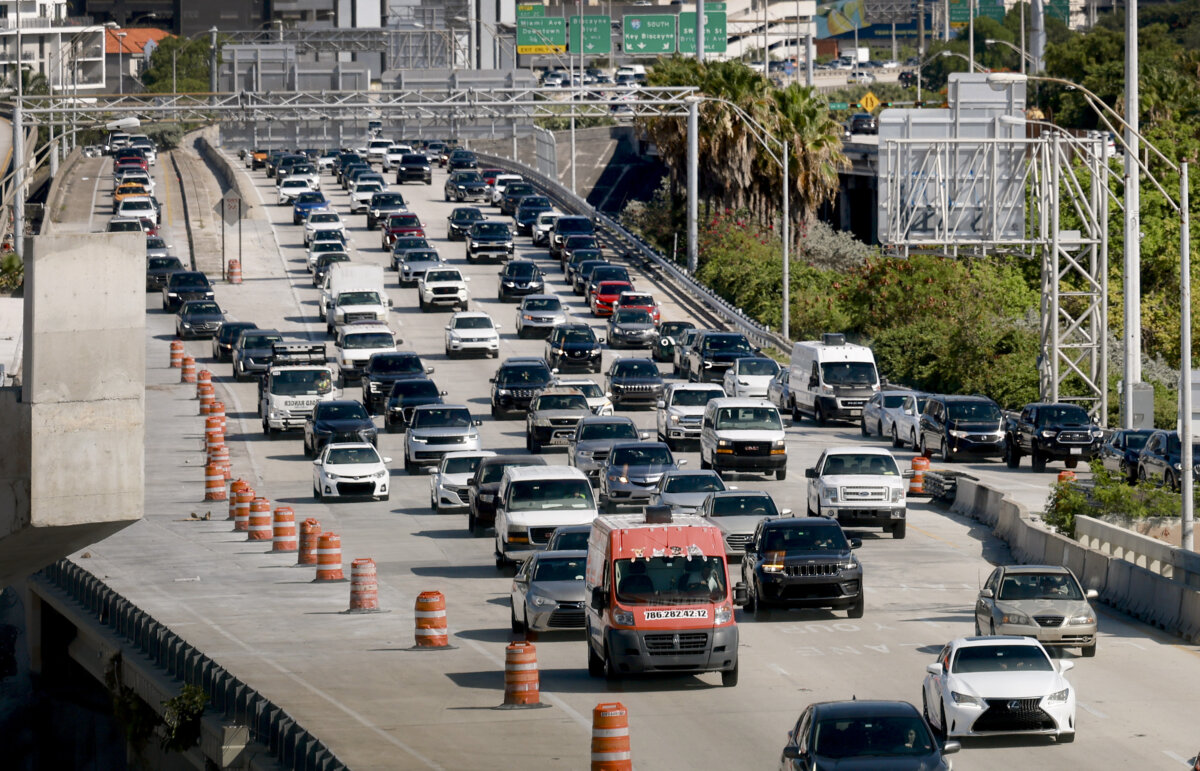

The Trump administration has finalized new fuel economy standards for cars and light trucks, sharply lowering Biden-era requirements in favor of makers of traditional gasoline-powered vehicles.
The National Highway Traffic Safety Administration (NHTSA) on Sept. 28 published the revised Corporate Average Fuel Economy, or CAFE, standards. Unlike mileage ratings for individual vehicles, CAFE rules set fuel-efficiency targets for an automaker’s entire yearly fleet.
Under the new rules, automakers will generally be required to make their new passenger-car and light-truck fleets up to 1 percent more fuel efficient each year. The agency estimates this will result in an industrywide average of about 34.9 miles per gallon (mpg) by model year 2031, up from 30.1 mpg in 2024.
That is well below the 50.4 mpg average projected under rules finalized in 2024 by the Biden administration. Those standards called for fuel economy to rise by 2 percent annually for passenger cars from model years 2027 through 2031 and for light trucks from 2029 through 2031.
NHTSA estimates that easing the requirements will reduce the average price of a new car by about $1,300 and save Americans $138 billion over the next five years.
“This administration is delivering relief to families and reviving the beating heart of American manufacturing,” Transportation Secretary Sean Duffy said in a statement announcing the change.
The Alliance for Automotive Innovation, which represents most major automakers, welcomed the change.
“The standards finalized under the previous administration effectively required a switchover to electric vehicles that was out of step with market realities and customer demand,” John Bozzella, the president and CEO of the alliance, said in a statement. “Today’s final rule is an appropriate course correction.”
Environmental groups, meanwhile, criticized the rollback, saying that lower fuel-efficiency requirements could leave motorists spending more on gasoline.
“Less fuel-efficient cars mean more gas burned, spending more at the pump, and dirtier air in our communities,” Katherine García, director of the Sierra Club’s Clean Transportation for All campaign, said in a statement.
The group said it plans to fight the new rules.
The federal EV tax credit of up to $7,500, which had been scheduled to remain available through 2032, was cut off for vehicles acquired after Sept. 30, 2025, under the One Big Beautiful Bill Act that President Donald Trump signed in July 2025.
The law also eliminated civil penalties for automakers that failed to meet certain CAFE requirements, including penalties tied to model years dating back to 2022.
Separately, Trump signed congressional resolutions in June 2025 overturning federal waivers that had allowed California to enforce several vehicle-emission programs that were stricter than federal requirements.
Most recently, in February, the Environmental Protection Agency rescinded the federal greenhouse-gas standards for highway vehicles. Rules covering traditional air pollutants such as smog-forming emissions were kept in place.
“Thanks to President Trump’s leadership, we have finally ended the illegal mandate that forced automakers to produce more expensive electric vehicles that American families didn’t want,” Duffy said on Sept. 28.
The change comes as American drivers face persistent high prices at the pump. The national average for regular gasoline stood at about $4.48 per gallon as of Sept. 28, according to AAA, compared with $3.13 a year earlier.
“Typically, the start of autumn brings lower gas prices, but lingering volatility in the Strait of Hormuz and the high cost of crude oil are driving up pump prices,” AAA said last week.
 Friends Read Free
Copy
Facebook
Tweet
Friends Read Free
Copy
Facebook
Tweet