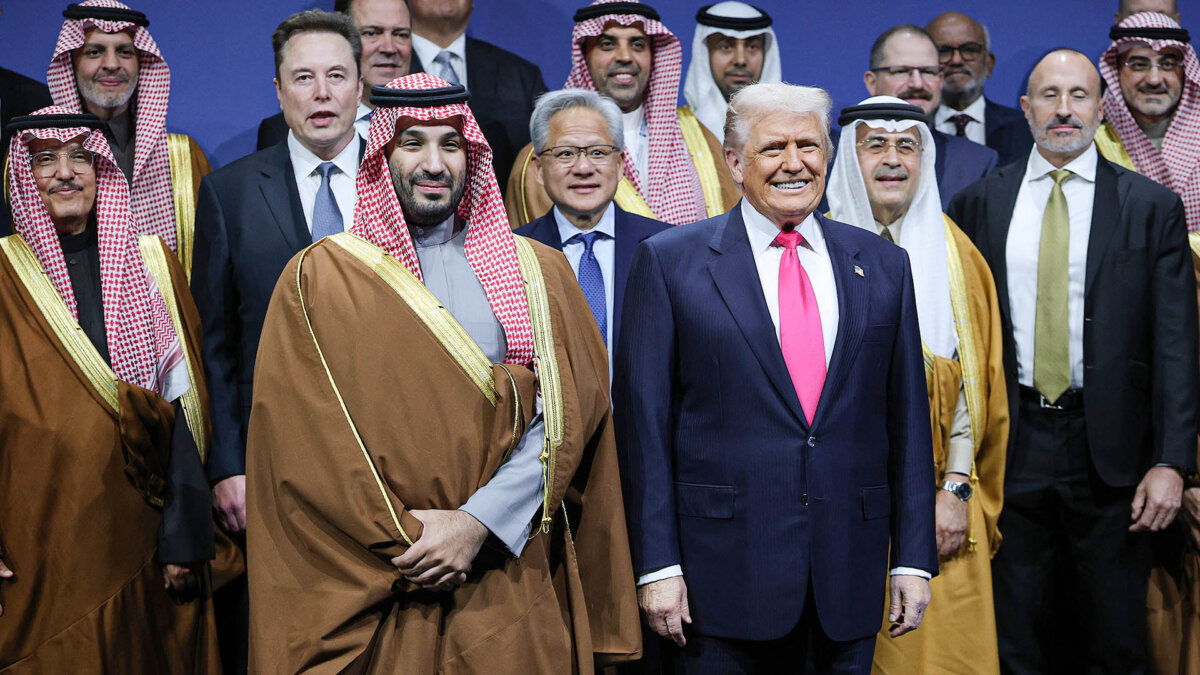

WASHINGTON—President Donald Trump told an audience that included Saudi Crown Prince Mohammed bin Salman on Nov. 19 that the United States is working to negotiate a deal to end internal conflicts in the African nation of Sudan.
“I didn’t think that that was one that was going to be so easy to do,” Trump said. “I thought it was something that was crazy and out of control, but I just see how important that is to you and to a lot of your friends in the room.”
He made the remarks during a speech to the U.S.–Saudi Investment Forum at the Kennedy Center, with hundreds in the crowd applauding in approval.
“His majesty would like me to do something very powerful, having to do with Sudan,” Trump said. “I viewed it as being just sort of a freelance, no government, no this, no that.”
Sudan is separated from Saudi Arabia by the Red Sea.
Fighting erupted between internal rivals affiliated with security forces in the third-largest African nation in 2023.
A contest for power between the Sudanese Armed Forces, the nation’s military, and its paramilitary unit known as the Rapid Support Forces has escalated into a battle for nationwide control of territory.
The crown prince explained the complexities of the situation to the president during their meeting at the White House on Nov. 18.
“It was very interesting to hear, really amazing, actually, to hear,” Trump said.
“I view it differently now than I did just a day ago.”
Trump highlighted his peacekeeping record, including what he described as the resolution of eight wars since taking office in January, noting that bin Salman thought that the issue in Sudan was potentially more important than the previous achievements.
“He said that would be the greatest thing you can do, that would be greater than what you’ve already done,” Trump said.
“We want the world to prosper. We want the world to be safe.”
Internal conflicts have persisted and festered since Omar al-Bashir took control of the country during a coup in 1989—he was subsequently forced out of office following pro-democracy movements in 2019—according to a May 2025 report from the U.S. Congress.
Civilian participation in representative government remains a point of contention as communities are engulfed by the civil war, the report states, noting that the nation’s agricultural production is negatively affected by the fighting, with territories switching hands repeatedly in recent years.
The situation represents the world’s largest humanitarian disaster in the number of people affected, the report concludes.
More than 15 million people are displaced because of the conflict, approximately 17 million children are missing schooling, and as many as 25 million individuals are lacking access to adequate nutrition, the report found.
Casualty counts are unclear, but congressional investigators estimated that up to 150,000 people were killed in the first year of fighting.
Humanitarian support needed in the area is estimated at $4.2 billion for 2025, with about 13 percent of the funding received, according to a December 2024 report from the U.N. Office for the Coordination of Humanitarian Affairs.
A 2006 report from the CIA described the political situation in Sudan as tenuous, with conflict rooted in “racial, cultural, and religious divergencies and political aspirations for separation.”
The report notes the challenges associated with ending the strife, given the intricacies and involvement of Israeli and Arab influences in the region.
 Friends Read Free
Copy
Facebook
Tweet
Friends Read Free
Copy
Facebook
Tweet