
News Analysis
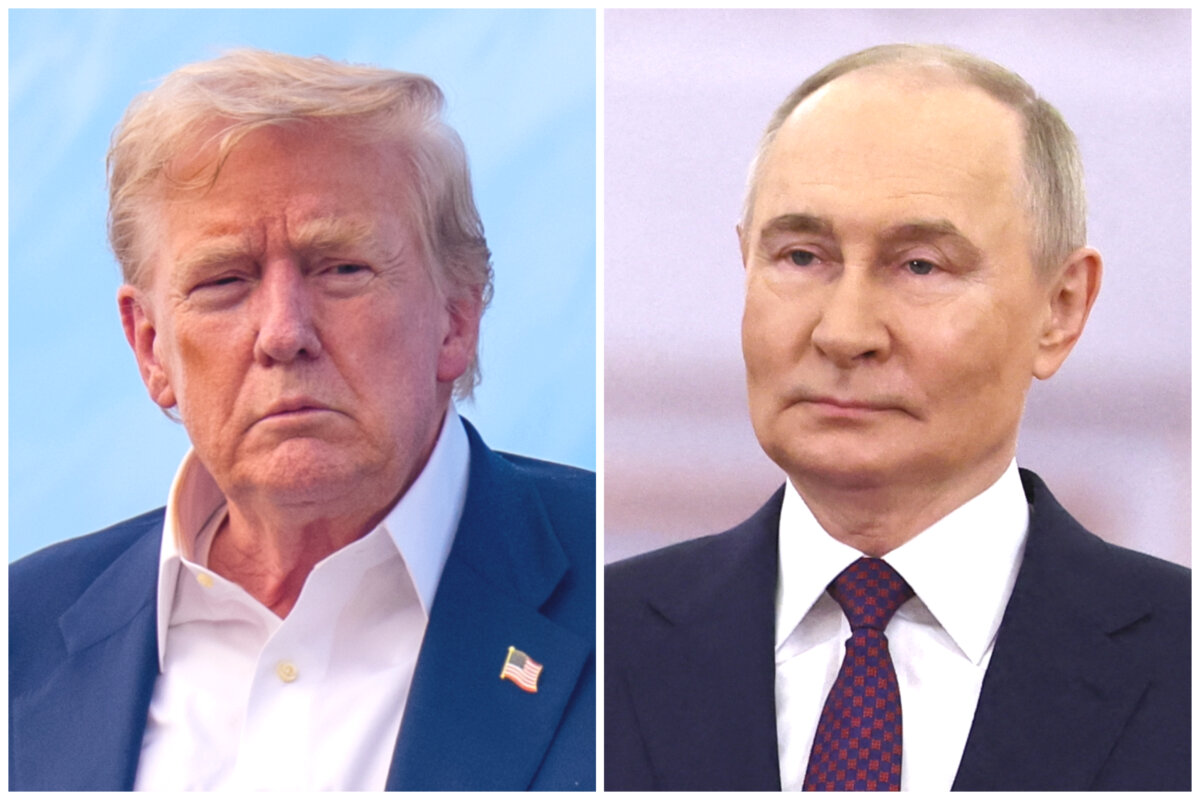
President Donald Trump is set to meet his Russian counterpart, Vladimir Putin, in Alaska on Aug. 15 amid limited expectations of any significant breakthroughs in peace negotiations in the Russia–Ukraine war.
In recent months, Kyiv and its Western supporters, including the United States, have called for a temporary halt to the fighting as a first step toward a permanent settlement.
Moscow, however, rejects the notion of a temporary cease-fire, which, it believes, would allow Kyiv to reconstitute its battered forces—and rearm—before a resumption of fighting.
Emboldened by ongoing gains on the battlefield, Moscow has stuck to its core conditions for peace, saying it wants a final, comprehensive settlement.
These conditions include the full withdrawal of Ukrainian forces from the Donetsk, Luhansk, Kherson, and Zaporizhzhia regions, all of which Moscow claimed to have annexed in 2022 and now views as Russian territory.
It also wants Kyiv to stop mobilizing its forces and halt the procurement of Western weapons, in addition to guarantees that Ukraine will never join NATO.
Although the Trump administration has hinted at a willingness to allow room for some—if not all—of these demands, Kyiv and its European backers reject any notion of ceding territory to Russia.
Trump himself has given few indications as to what he expects to come out of the summit.
“This is really a feel-out meeting,” he told reporters on Aug. 11.
‘Land-Swapping’
In recent remarks, Trump has said that both sides would have to cede territory as part of any permanent settlement.
“There’ll be some swapping of territories to the betterment of both [sides],” he told reporters on Aug. 8.
A day later, however, Ukrainian President Volodymyr Zelenskyy repeated his long-standing position that Ukrainians would “not gift their land to the occupiers,” which, he said, would violate Ukraine’s constitution.
In a video address, he said that any decision made at the summit without Kyiv’s consent would be “stillborn” and would “not achieve anything.”
The European Union, meanwhile, said that Ukraine must not be forced to make concessions, citing its “inherent right … to choose its own destiny.”
Nevertheless, on Aug. 11, Trump repeated his contention that at the upcoming summit, there would be “some land-swapping going on.”
He acknowledged that Russia had captured some “very prime territory.”
“We’re going to try to get some of that territory back,” Trump said.
Crimea
It remains unclear exactly what territory Trump is referring to.
There has been speculation that he may be prepared to offer Russia recognition of its sovereignty over Crimea, which Moscow claimed to have annexed in 2014 and has since regarded as Russian territory.
In April, Zelenskyy said Ukraine would never cede Crimea to Russia. Trump said in response that the assertion was “harmful” to ongoing peace talks.
In a social media post, Trump said that Crimea was “lost years ago” and was no longer “even a part of the discussion.”
In an interview with ABC News on Aug. 10, NATO Secretary-General Mark Rutte ruled out any legal recognition of Russian control over Ukrainian land.
He added, however, that Russia’s “de facto” control over certain territories—he did not specify which—could be part of a cease-fire deal.
NATO ‘Off the Table’
Another sticking point is Putin’s wish for a guarantee that Ukraine will never join NATO.
Shortly after Russia’s initial invasion in 2022, Ukraine formally applied for NATO membership, and Zelenskyy requested that the process be fast-tracked.
Since then, the Ukrainian leader has attended several key NATO events, at which most members of the alliance voiced support for Kyiv’s membership bid.
Notably, however, in June, Zelenskyy attended a NATO summit at The Hague, where—unlike at previous NATO events—Ukraine’s membership bid was hardly discussed.
In April, retired Gen. Keith Kellogg, Trump’s special envoy for Russia and Ukraine, said that Ukrainian NATO membership was “off the table.”
Trump has said that U.S. support for Ukrainian NATO accession was one primary cause of the conflict, for which he blamed his predecessor, President Joe Biden.
According to Moscow, Russia was forced to invade Ukraine to halt NATO’s eastward expansion after repeatedly warning that this was a “red line.”
Sanctions Relief
Although Russia continues to register marginal battlefield gains, it is feeling the pinch economically; its energy revenues are down by 20 percent year on year in the first seven months of 2025.
At the summit, Trump could offer Putin some sanctions relief in return for concessions in other areas.
But it is doubtful as to whether this alone would be enough to induce Moscow to moderate any of its core conditions for peace.
Since the conflict began in 2022, the EU has imposed 18 sanction packages on Russia, and it is currently preparing a 19th, but until now, these have taken a relatively limited toll on the country’s economy.
The United States also recently added secondary tariffs on countries that buy Russian oil.
US–Russia Normalization
Recent remarks by Russian officials suggest that Moscow may view the upcoming summit primarily as a means of normalizing ties with Washington after years of acrimony.
Since Trump returned to office in January, U.S. and Russian officials have met for two rounds of Istanbul-hosted talks aimed at normalizing inter-embassy relations.
The conflict in Ukraine was not discussed during either round of talks, which both sides have stressed were focused solely on issues pertaining to their diplomatic relations.
 Friends Read Free
Copy
Facebook
Tweet
Friends Read Free
Copy
Facebook
Tweet