
U.S. President Donald Trump has reiterated his opposition to Israeli annexation of the West Bank, days after Israel’s security cabinet advanced measures to reform land registration and property acquisition procedures in the territory.
“I am against annexation,” Trump said in an interview with Axios published on Feb. 10. “We have enough things to think about now. We don’t need to be dealing with the West Bank.”
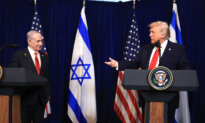
Israeli Prime Minister Benjamin Netanyahu arrived in Washington on Feb. 10 for talks expected to focus on Iran. Israel’s security cabinet approved the land reform and property acquisition measures on Feb. 9.
The changes repealed what Israeli Finance Minister Bezalel Smotrich described as outdated Jordanian provisions prohibiting the sale of land to Jews and requiring transaction permits.
The West Bank, captured by Israel from Jordan during the 1967 Six-Day War, has remained under varying degrees of Israeli military and administrative control.
Under the 1995 Oslo II Accord, the territory was divided into Areas A, B, and C. Area C, where most Israeli settlements are located, remains under full Israeli control, while Areas A and B fall under varying degrees of Palestinian civil authority.
The new measures appear aimed primarily at Area C, though Smotrich said enforcement activities would also be expanded in Areas A and B.
The Israeli Cabinet also decided to transfer building licensing authorities in the Jewish settlement in Hebron and at certain holy sites from Palestinian jurisdiction to Israel’s Civil Administration planning institutions.
Trump had previously urged de-escalation in the West Bank.
On Dec. 29, 2025, he acknowledged differences with Netanyahu over the issue. When asked whether Israeli settler violence could undermine his 20-point Gaza peace plan, Trump said he had discussed the West Bank with Netanyahu.
“I wouldn’t say we agree on the West Bank 100 percent,” Trump said at the time. “But we’ll come to a conclusion on the West Bank.”

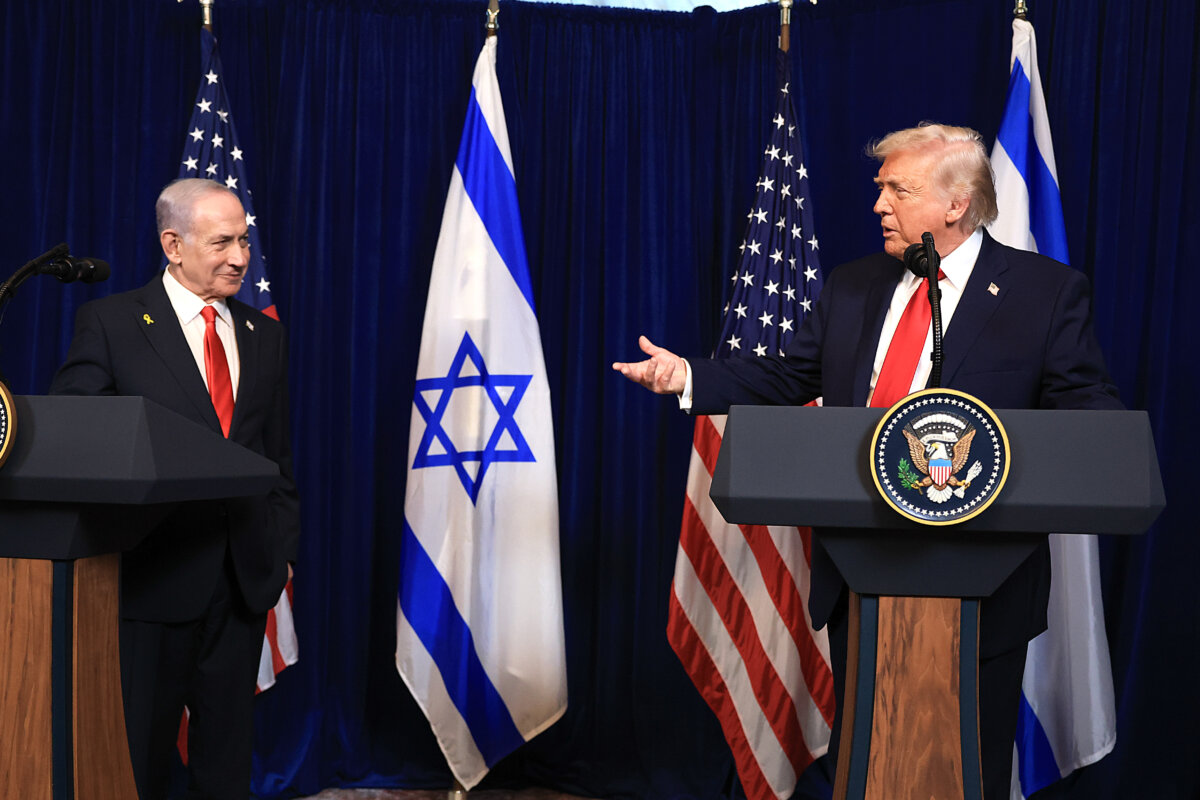
Trump will host Netanyahu at the White House on Feb. 11 amid ongoing tensions with Iran over its nuclear program.
Before departing for Washington, Netanyahu said his repeated visits to the United States reflected what he described as the unique closeness of the “extraordinary relationship” between Israel and the United States, as well as his personal relationship with the president, calling it “unprecedented” in Israel’s history.
Netanyahu added that discussions would cover Iran, Gaza, and broader regional issues.
He said he would present Israel’s “outlook regarding the principles of these negotiations—the essential principles which, in my opinion, are important not only to Israel, but to everyone around the world who wants peace and security in the Middle East.”
The president of the Palestinian National Authority, Mahmoud Abbas, in a Feb. 8 statement, called the decision “dangerous” and an “open Israeli attempt to legalize settlement expansion” and land confiscation. He called for the United States and the U.N. Security Council to intervene immediately.
In a joint Feb. 9 statement posted on X by Saudi Arabia’s foreign ministry, the foreign ministers of Saudi Arabia, Jordan, the United Arab Emirates, Qatar, Indonesia, Pakistan, Egypt, and Turkey described Israel’s actions in the West Bank as illegal.
“The Ministers warned against the continued expansionist Israeli policies and illegal measures pursued by the Israeli government in the occupied West Bank, which fuel violence and conflict in the region,” they wrote.
“The Ministers expressed their absolute rejection of these illegal actions, which constitute a blatant violation of international law, undermine the two-state solution, and represent an assault on the inalienable right of the Palestinian people to realize their independent and sovereign state on the 4 June 1967 lines, with occupied Jerusalem as its capital. Such actions also undermine the ongoing efforts for peace and stability in the region.”
The Associated Press contributed to this report.
 Friends Read Free
Copy
Facebook
Tweet
Friends Read Free
Copy
Facebook
Tweet