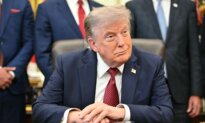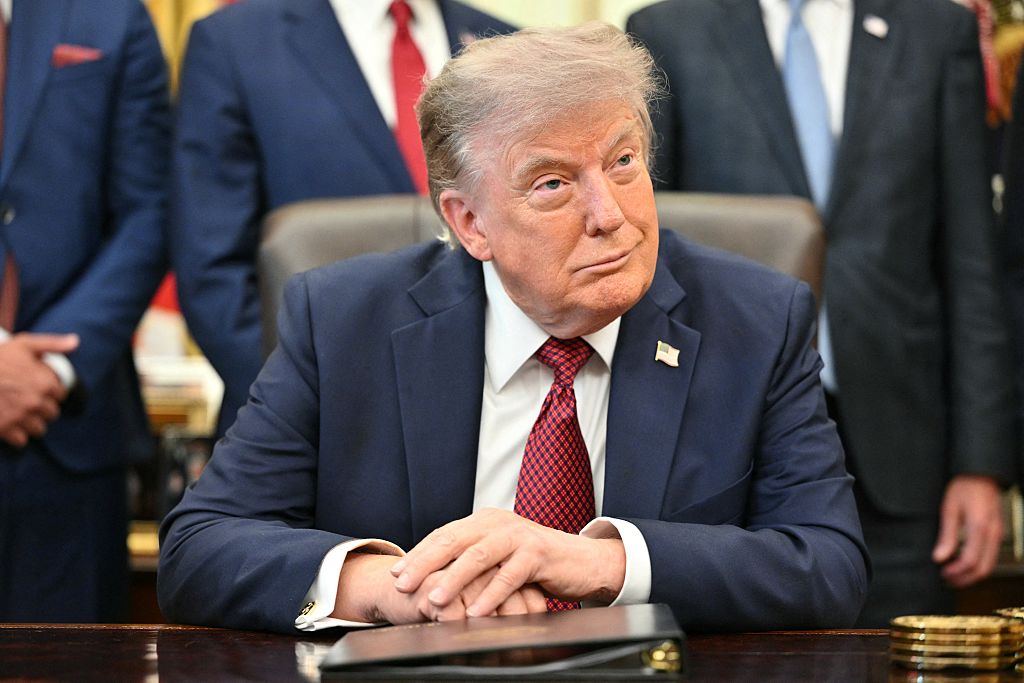

WASHINGTON—South Korean investors are pouring $200 billion in energy and infrastructure investments into the United States, U.S. President Donald Trump announced during an Oval Office ceremony on Sept. 30.
“The colossal package of investments we are announcing today is a major step toward securing our critical energy supply chain, ensuring American energy dominance, and making our partnership with South Korea and the entire Pacific region stronger than ever before,” Trump said during the event.
The projects unveiled on Sept. 30 include a range of energy facilities nationwide, including nuclear and gas-powered plants, and follow through on a $350 billion strategic investment commitment Trump secured last year in a trade agreement signed with South Korea in exchange for reduced tariffs, lowered to 15 percent from 25 percent.
“We make great deals,” Trump said. “It’s what we do.”
The deal also includes $54 billion to build a liquefied natural gas (LNG) project in Alaska. Completion of the 807-mile pipeline from the state’s North Slope to a terminal in the Nikiski area on the southern coast is expected to take three years, with the timeline for LNG exports estimated at five years.
“This alone will be one of the largest energy projects in American history and a gigantic win for the people of Alaska,” Trump said, highlighting 12,000 new construction jobs and 1,000 positions to operate the facilities.
Additional benefits to the state’s residents will include reduced energy costs, with savings of up to $2,000 per family each year, according to the president.
Once complete, the system’s capacity will total nearly 4 billion cubic feet of LNG every day and approximately 20 million metric tons of gas annually.
“This is the most important project in our state, by far,” Sen. Dan Sullivan (R-Alaska) said during the event. “This is the project that’s going to keep our kids and grandkids in Alaska with a bright future.”
Sullivan is facing Democrat challenger Mary Peltola in the midterms, with another Dan Sullivan also running as a Republican, a situation Trump repeatedly criticized and alleged to be an intentional attempt to confuse voters. The race could determine which party controls the Senate in what is fast becoming a tight battle for the upper chamber in the November elections.
Commerce Secretary Howard Lutnick highlighted the energy pact’s impact on the United States.
“This will change geopolitics,” Lutnick said. “All of Southeast Asia will be leaning on the president and the United States of America for their gas and natural resources, changing the way the world looks at America and works with America.”
A gas-fired power plant is planned for Encinal, Texas, at a cost of $22.3 billion, with energy produced intended for data center and semiconductor production consumption. The first phase of construction is aimed at a 2029 completion and continuous production of 1.4 gigawatts of power, each unit capable of powering between 750,000 and 1 million homes per year, and full build-out totaling 6.3 gigawatts expected by 2032.
The president described the operation as “among the largest ever built anywhere in the world.”
Eight nuclear power plants planned for Kentucky, Ohio, South Carolina, and Tennessee make up the remainder of the investment package, totaling $120 billion. Still in the negotiation phase, details are limited, but Trump said the reactors will “solidify our position as the world’s leading producer of nuclear power.”
With investments driving data center developments across the country and increasing energy demands, the new developments are intended to ease pressure on existing power grids, according to administration officials.
 Friends Read Free
Copy
Facebook
Tweet
Friends Read Free
Copy
Facebook
Tweet