U.S. President Donald Trump on Oct. 15 confirmed that he has authorized covert CIA operations in Venezuela.
The decision would expand U.S. assets deployed to Venezuela, placing added pressure on the regime of Venezuelan leader Nicolás Maduro.
The development is the latest in a series of events amid growing tensions between the United States and Venezuela, including U.S. tariffs on countries that buy Venezuelan oil and strikes on boats off the waters of Venezuela, which the Trump administration stated were trafficking drugs.
The New York Times originally reported on the operations in a report citing unnamed U.S. officials. The administration accused Maduro of leading a narco-state that is facilitating the flow of drugs into the United States and has outlined a strategic goal of deposing Maduro, who has denied the accusations against him.
Trump said he authorized the operations for two reasons: criminals and drug trafficking.
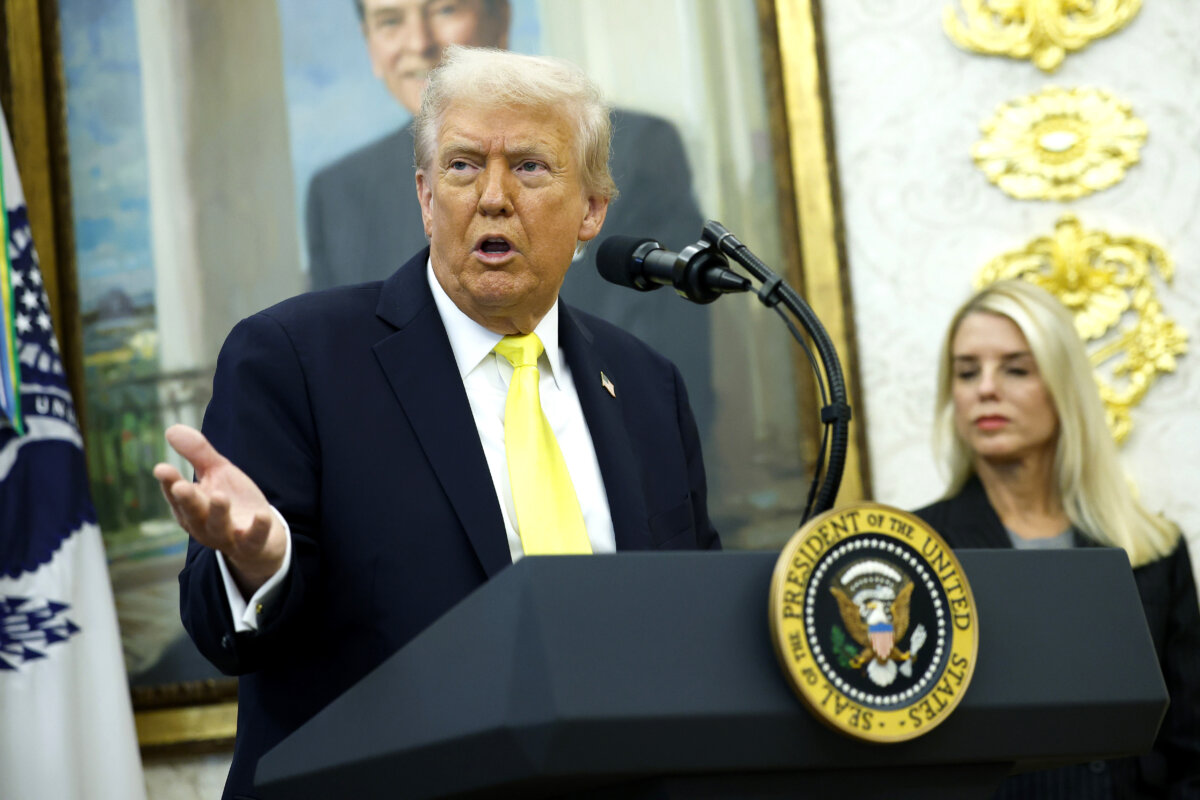
“They have emptied their prisons into the United States of America … they came in through the border. They came in because we had an open border,” he told reporters in the Oval Office.
Trump has accused the Maduro government of releasing criminals from their prisons with the goal of getting them into the United States.
The United States has already placed pressure on Maduro via economic sanctions, diplomatic isolation, and legal actions.
The U.S. State Department, in August, doubled to $50 million its reward for information leading to Maduro’s arrest and conviction on drug trafficking charges. The bounty was originally set at $15 million in 2020.
Trump has also said that he is looking at potential land strikes on Venezuela to deter drug trafficking.
“We are looking at land now, because we’ve got the sea very well under control,” Trump said during a press briefing with FBI Director Kash Patel on Oct. 15.
Trump dismissed Coast Guard interdiction methods as “politically correct” but not working, as the administration continues to approach counter-narcotics as a national security imperative. A Pentagon disclosure recently made to Congress stated that U.S. engagements with drug cartels are a “non-international armed conflict.”
An increase in U.S. forces in the southern Caribbean Sea has seen American troops complete at least five strikes on vessels that the Trump administration stated were tied to drug trafficking.
When asked whether the CIA’s mandate includes the authority to assassinate Maduro, the president said, “I think Venezuela is feeling heat.”
Venezuela responded to Trump’s comments, alleging them to be a violation of international law and an effort to effect a “regime change” in pursuit of oil resources.
“Our Permanent Mission to the U.N. will raise this complaint with the Security Council and the Secretary-General tomorrow, demanding accountability from the United States government,” Venezuela said in a statement released by Foreign Minister Yván Gil on his Telegram account.
Although Venezuela’s economy remains brittle because of U.S. sanctions—as its gross domestic product has fallen by three-quarters between 2014 and 2021—Maduro has maintained his grip on power by manipulating elections and suppressing dissent.
Last week, Venezuelan opposition politician and former presidential candidate María Corina Machado won a Nobel Peace Prize “for her tireless work promoting democratic rights for the people of Venezuela.”
The Norwegian Nobel Committee said in a statement that Machado was “a brave and committed champion of peace” and a woman who “keeps the flame of democracy burning amid a growing darkness.”
Ahead of last year’s Venezuelan presidential election, Maduro’s socialist regime allegedly targeted its political opponents. Machado was forced into hiding and has not been seen in public since January.
Reuters contributed to this report.
 Friends Read Free
Copy
Facebook
Tweet
Friends Read Free
Copy
Facebook
Tweet