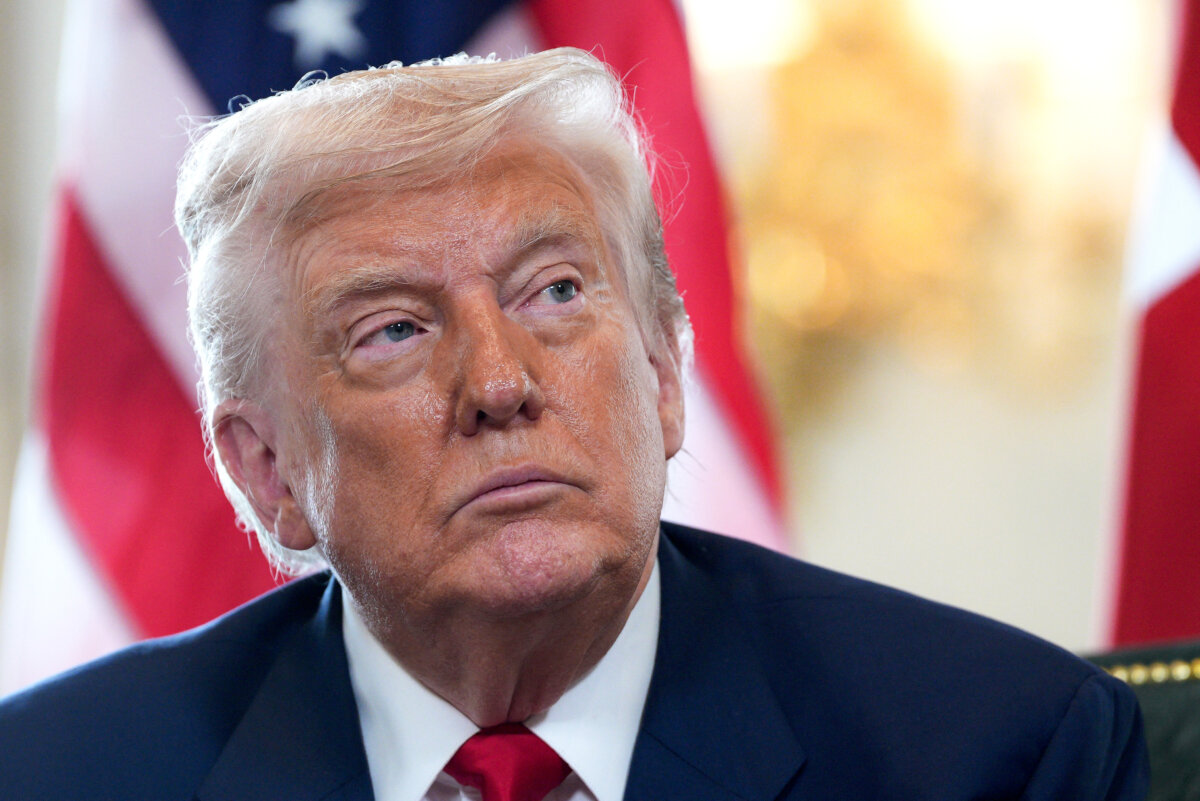

President Donald Trump said on July 29 that he may skip the upcoming Group of 20 (G20) summit in Johannesburg, South Africa, citing his disapproval of the country’s policies.
The president told reporters aboard Air Force One that “maybe I’ll send somebody else” to the November meeting.
“I’ve had a lot of problems with South Africa. They have some very bad policies,” he said.
Trump has criticized South Africa’s domestic and foreign policies, including its land expropriation law and its accusations that Israel committed genocide in Gaza. Israel denies the accusations.
Since the end of apartheid, Pretoria has implemented what it calls affirmative action and Black Economic Empowerment policies, but the South African government has denied seizing land belonging to white citizens.
South Africa holds the rotating G20 presidency from December 2024 to November 2025. South African President Cyril Ramaphosa said in May that he expects Trump to attend the G20 summit to ensure the smooth handover of the G20 presidency to the United States.
“I want to hand over the [G20] presidency to President Trump in November,” Ramaphosa said. “He needs to be there. I don’t want to hand it over to an empty chair. I expect him to be coming to South Africa.”
Earlier this year, Secretary of State Marco Rubio announced a boycott of a G20 gathering of foreign ministers.
Writing on X on Feb. 5, Rubio criticized South Africa for “expropriating private property” and for using the G20 platform to promote “solidarity, equality, & sustainability.”
“In other words: DEI and climate change,” Rubio said, adding that it was not in the United States’ interest to waste taxpayer money or “coddle anti-Americanism.”
Land Expropriation
On Feb. 7, Trump signed an executive order freezing aid to South Africa over its controversial Expropriation Act, which allows for the redistribution of certain unused land. South Africa says the law aims to address racial disparities in land ownership.
The White House wrote in a fact sheet accompanying the order, “The government of South Africa blatantly discriminates against ethnic minority Afrikaners.”
The fact sheet stated, “As long as South Africa continues to support bad actors on the world stage and allows violent attacks on innocent disfavored minority farmers, the United States will stop aid and assistance to the country.”
It added that the president would also work to resettle white South African farmers and their families. The first such refugees arrived in the United States in May.
Trump wrote in the executive order that the Expropriation Act “follows countless government policies designed to dismantle equal opportunity in employment, education, and business, and hateful rhetoric and government actions fueling disproportionate violence against racially disfavored landowners.”
He said South Africa had also “taken aggressive positions towards the United States and its allies, including accusing Israel, not Hamas, of genocide in the International Court of Justice, and reinvigorating its relations with Iran to develop commercial, military, and nuclear arrangements.”
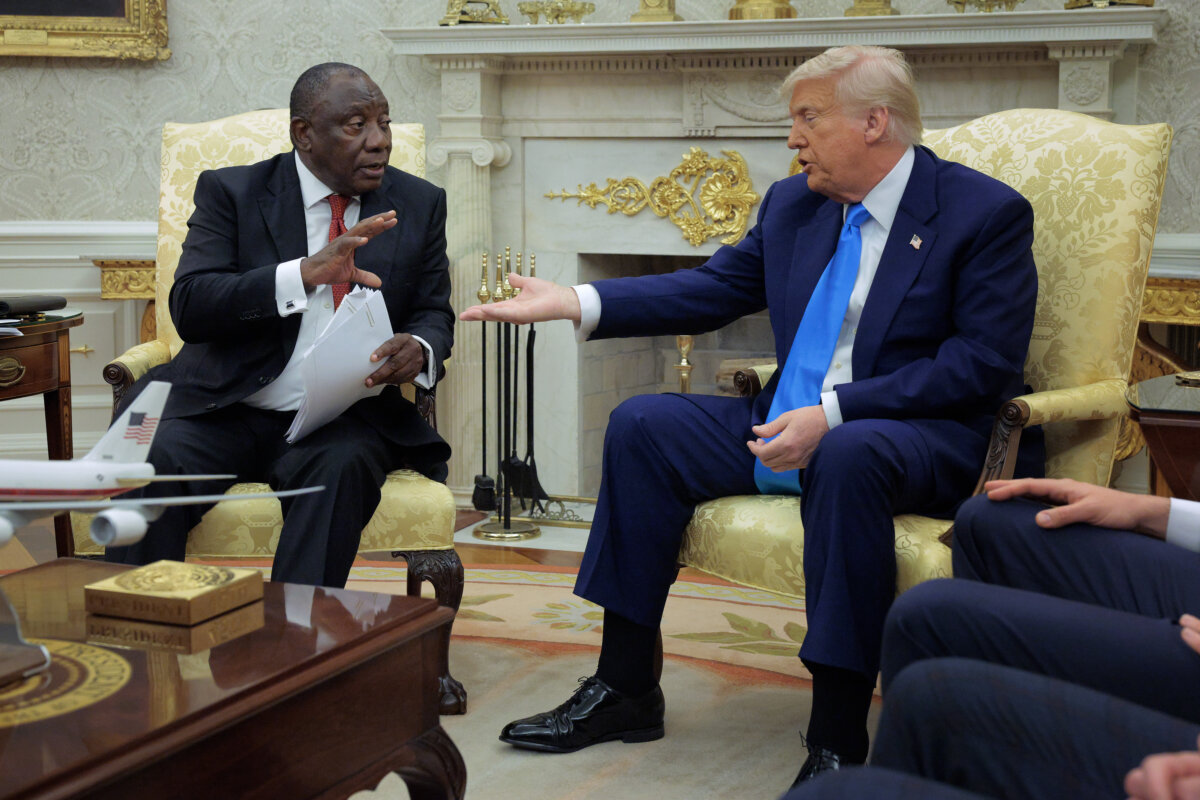
On May 21, Trump and Ramaphosa clashed during a bilateral meeting in the Oval Office after Trump presented to the South African leader what he said was evidence of “Afrikaner genocide.”
Ramaphosa, who has been president of South Africa since 2018 and is the leader of the ruling African National Congress, rejected the accusation.
Relations between the United States and South Africa have been deteriorating under both the Trump and Biden administrations, with Washington accusing Pretoria of siding with U.S. adversaries, including China, Iran, and Russia.
South Africa is a member of the BRICS economic bloc and has strong economic ties with China.
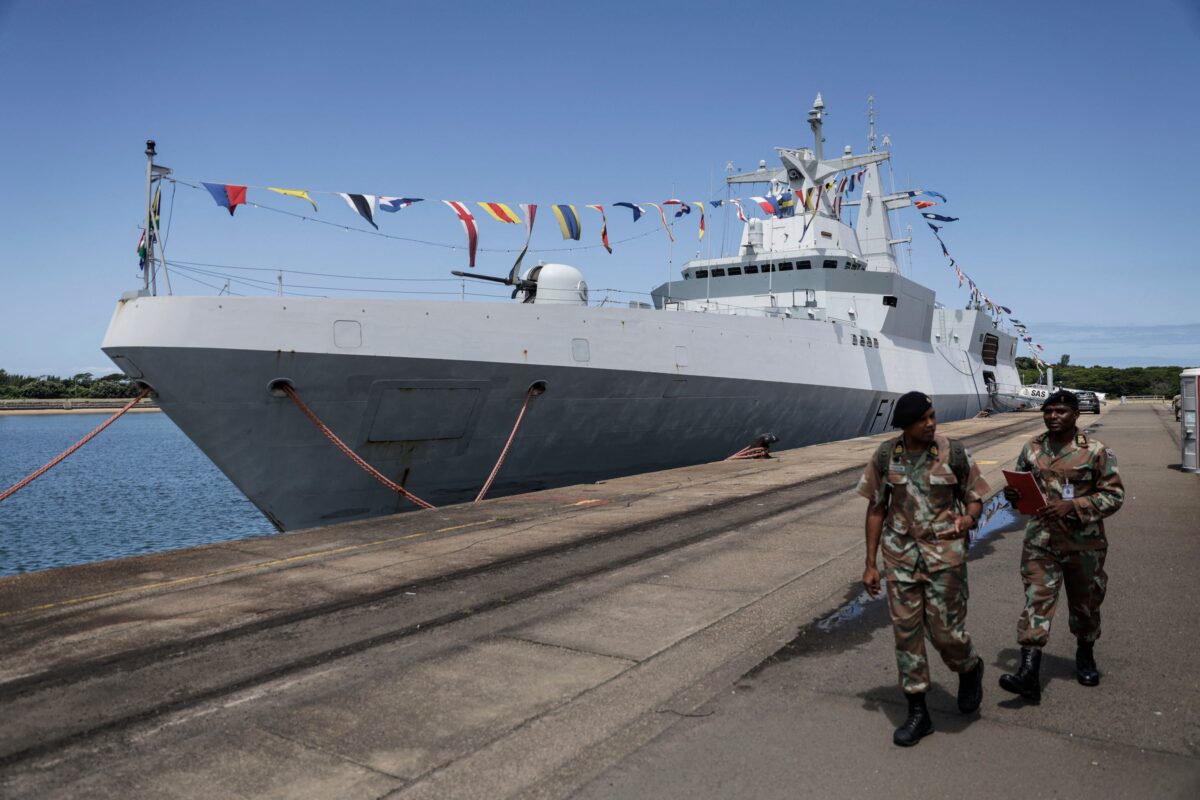
In February 2023, South Africa conducted a 10-day joint military exercise with China and Russia. The exercise coincided with the anniversary of Russia’s invasion of Ukraine.
Emel Akan and Reuters contributed to this report.
 Friends Read Free
Copy
Facebook
Tweet
Friends Read Free
Copy
Facebook
Tweet