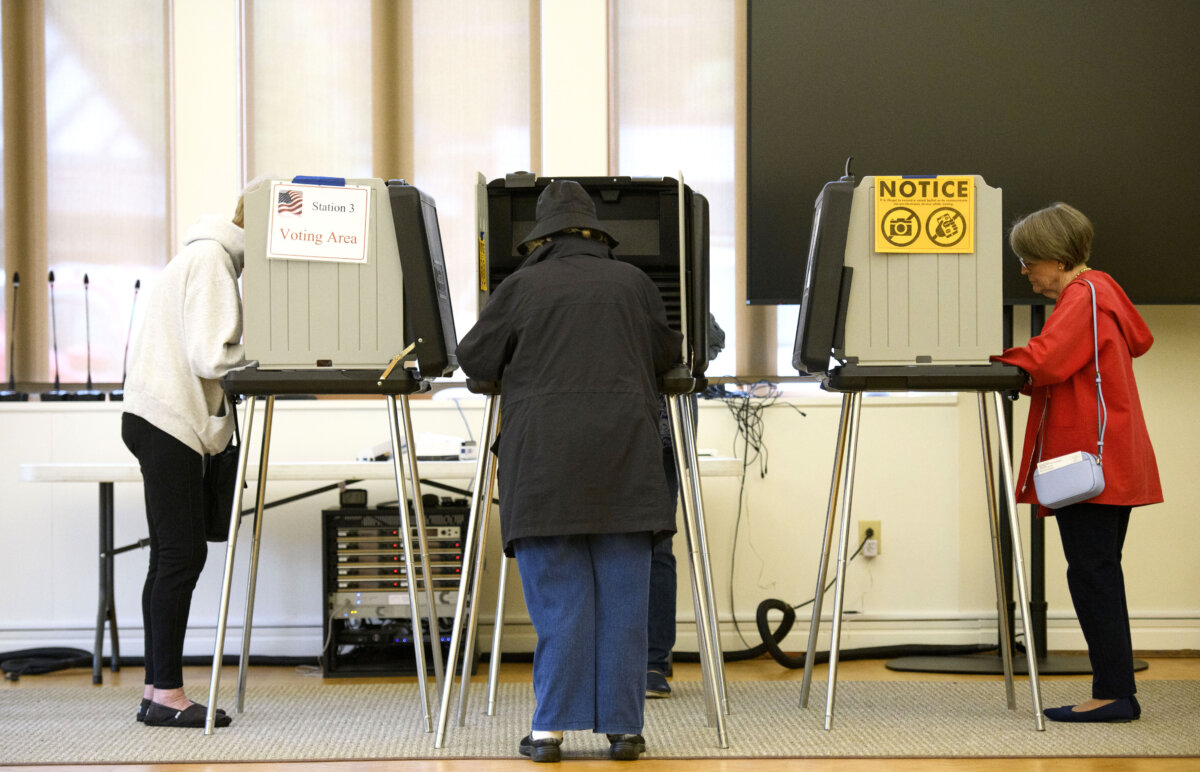

President Donald Trump said in a Truth Social post on Feb. 13 that he plans to sign an executive order requiring voter ID for midterm elections this year, as the SAVE Act remained on life support in the Senate.
“We cannot let the Democrats get away with NO VOTER I.D. any longer,” Trump wrote. “Even Democrat Voters agree, 85 percent, that there should be Voter I.D.”
“This is an issue that must be fought, and must be fought, NOW! If we can’t get it through Congress, there are Legal reasons why this SCAM is not permitted,” he wrote. “I will be presenting them shortly, in the form of an Executive Order.”
The U.S. House passed the SAVE America Act on Feb. 11. Rep. Chip Roy (R-Texas) led the legislation that would require Americans to prove their citizenship when registering to vote.
Under the bill, citizens would have to show a photo identification when casting ballots, including mail-in ballots.
The bill faces an uncertain future in the Senate, where Majority Leader John Thune (R-S.D.) said this week there aren’t enough votes to drop the filibuster to advance the bill.
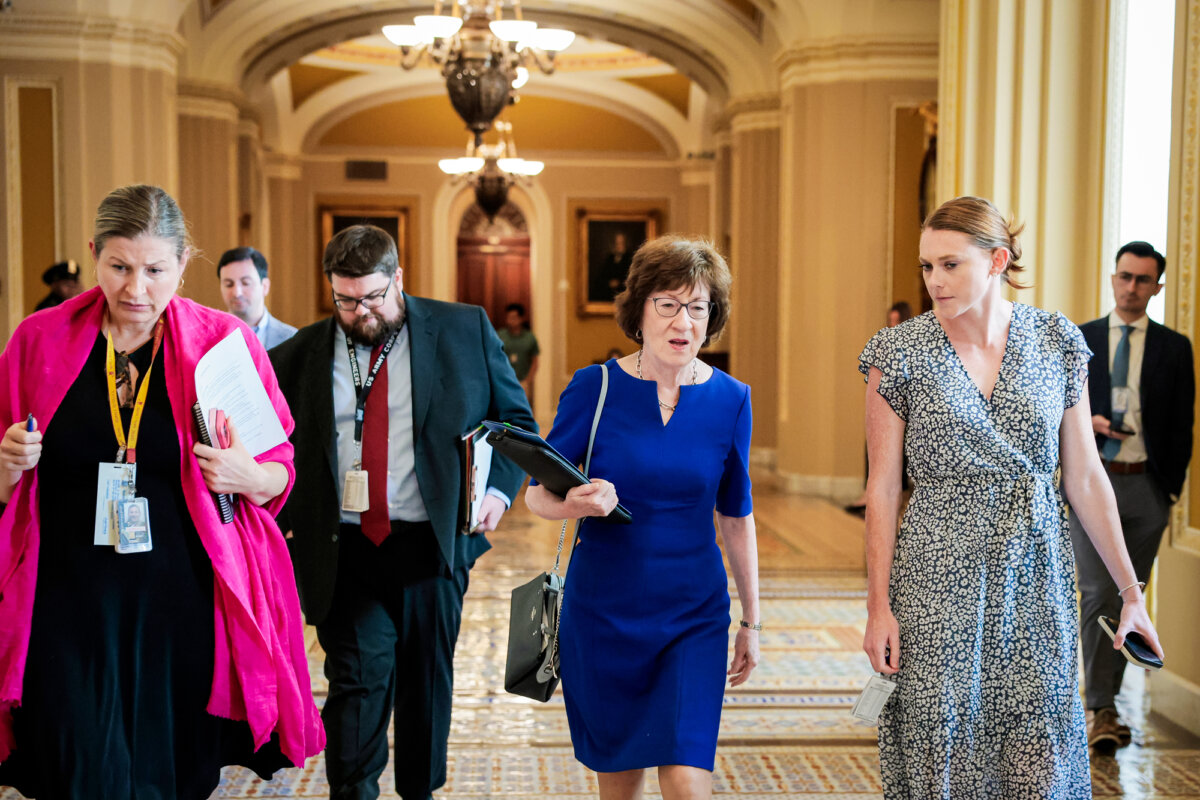
Trump’s announcement came hours after Sen. Susan Collins (R-Maine) became the latest holdout to throw her weight behind the SAVE Act, according to a statement to The Maine Wire. She is the 50th senator to back the legislation. However, she said she would not support breaking the filibuster rule.
Democratic officials have criticized the SAVE Act as racist and have labeled it “voter suppression.”
Senate Minority Leader Chuck Schumer (D-N.Y.) said the bill was “dead on arrival.”
“The goal of the SAVE Act is the same: disenfranchising American citizens and making it harder for eligible people to vote, particularly low-income Americans and people of color,” Schumer said in a speech on the Senate floor on Feb. 9.
Rep. April McClain Delaney (D-Md.) said the bill would affect millions of people, including women whose married names don’t match their birth certificates, a claim that has been debunked.
The bill allows several valid forms of proof, including a U.S. passport; a REAL ID, or enhanced driver’s license; government-issued photo identification, such as a passport card; and a U.S. military ID shown alongside a military record of service showing the United States as the applicant’s birthplace.
Several left-wing and progressive organizations, including the American Civil Liberties Union, the League of Women Voters, the Leadership Conference on Civil and Human Rights, and the Brennan Center for Justice, came out against the Voter ID requirement this week.
Sen. John Fetterman (D-Pa.) broke party lines this week to support photo ID voting requirements, but he told Dasha Burns on Politico’s “The Conversation” that his support did not extend to the House-passed bill.
Sen. Lisa Murkowski (R-Alaska), who often votes against her party, became the first Republican to speak out against the bill on Feb. 10. The senator claimed that the bill would federalize elections.
 Friends Read Free
Copy
Facebook
Tweet
Friends Read Free
Copy
Facebook
Tweet