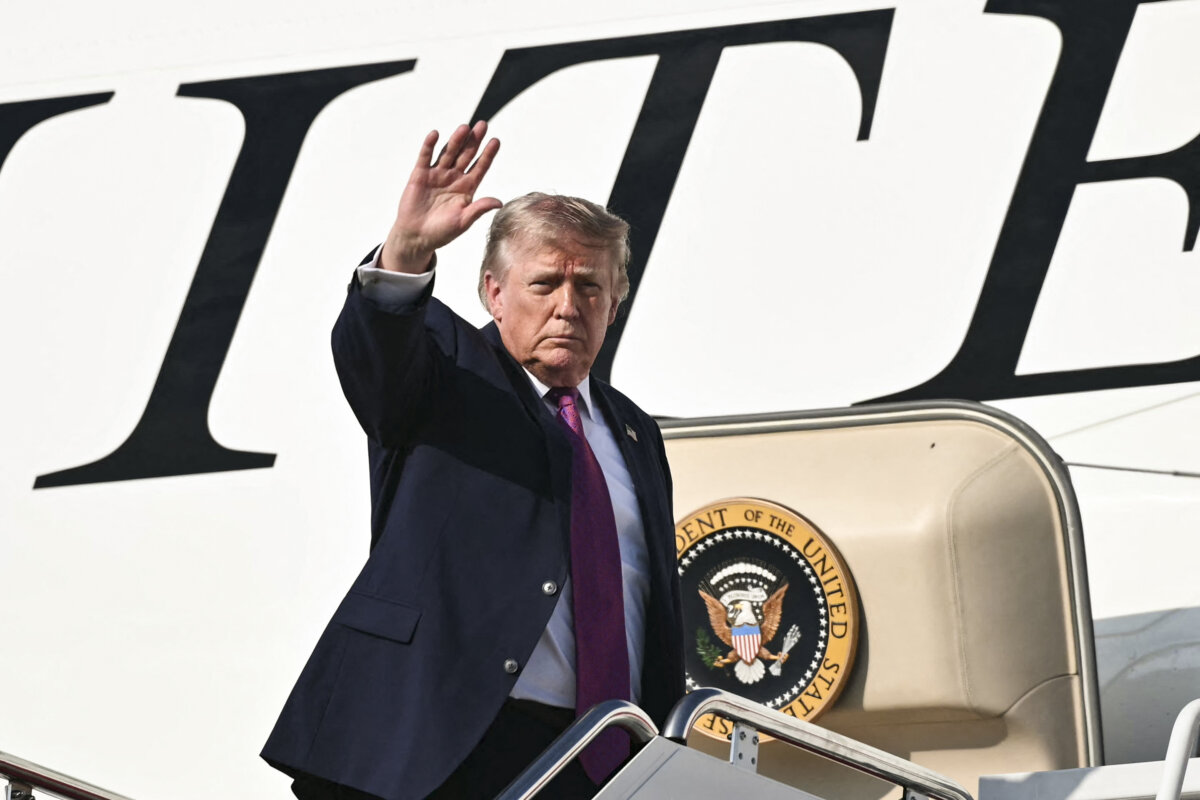

President Donald Trump said on July 10 that he will not sign a housing bill passed by members of both parties in Congress.
“I will not sign the Housing Bill, which has been fully approved by Congress and sent to the White House, in PROTEST over the fact that the United States Senate is not capable of passing THE SAVE AMERICA ACT,” Trump wrote on Truth Social.
Asked whether that meant Trump would veto the legislation, the White House declined to answer in an email to The Epoch Times.
The president’s deadline to veto the 21st Century ROAD to Housing Act is Friday. If he does not veto the bill, it will automatically become law once the deadline passes.
If he does veto it, two-thirds of each chamber would be needed to override the veto.
“Millions of Americans are being crushed by housing costs,” Senate Minority Leader Chuck Schumer (D-N.Y.) wrote on X.
“Donald Trump called their crisis ‘a big yawn’—then refused to sign the most significant bipartisan housing bill in decades. His priorities couldn’t be clearer: higher costs for families and more power for himself.”
Congress passed the housing bill in the Senate by an 85–5 vote and in the House by a 358–32 vote.
The bill is designed to lower home prices in part by making it easier to build houses through reductions in review and permitting times,
The real estate company Redfin said recently that the median sales price of a home hit a record high of $400,894, and it has estimated that Americans need to earn $116,780 or more a year to afford the typical U.S. home for sale, up from around $100,000 in January 2023.
Trump previously canceled a scheduled signing of the housing bill in order to try to force Congress to approve the SAVE America Act, which would require people to prove U.S. citizenship to vote in federal elections.
The House of Representatives has passed the act, but the Senate has voted against it. Because Republicans hold only 53 seats in the upper chamber and need 60 votes to pass legislation, even if all GOP senators vote yes, at least seven Democrats would need to approve the bill.
Several Republicans, including Sen. Mitch McConnell (R-Ky.), have voted no.
Trump has advocated abolishing the Senate filibuster, which would allow Republicans to pass legislation with a simple majority, but Republicans have not moved to do so. Abolishing the filibuster would require at least 60 votes, according to the Brookings Institution.
 Friends Read Free
Copy
Facebook
Tweet
Friends Read Free
Copy
Facebook
Tweet