
President Donald Trump on June 24 canceled the scheduled signing of a bipartisan housing bill aimed at lowering home prices, saying that an election integrity bill should be passed by Congress first.
“Today’s Housing News Conference and Signing is hereby cancelled until such time as we pass the desperately needed SAVE AMERICA ACT, which I consider to be a National Emergency,” Trump posted on Truth Social.
The SAVE America Act would require voters to prove their U.S. citizenship to vote in federal elections. The House has passed the legislation, while the Senate has struggled to get the necessary 60 votes to overcome a filibuster. Democrats have objected to the bill, arguing its measures amount to voter suppression.
Trump has called on the Senate to remove the filibuster to get the bill passed, but Senate Majority Leader John Thune (R-S.D.) has maintained that Republicans lack the votes to do so.
Trump was expected to sign the 21st Century Road to Housing Act in the U.S. Capitol at midday. The bill, Congress’s first major housing legislation in decades, aims to boost housing supply and lower prices.
The president will attend a lunch with Republican senators later today, where he is expected to discuss the SAVE Act and other legislative priorities.
In a subsequent Truth Social post, Trump said the housing bill “pales in comparison to passing the SAVE America Act.” He reiterated his call for Senate Republicans to abolish the filibuster and pass the legislation and other measures “Republicans have ever dreamed of.” He warned that Senate Democrats would abolish the filibuster if they were to take power.
The bill received strong bipartisan support in Congress. It passed the House of Representatives by a vote of 358–32, one day before the signing ceremony, after previously clearing the Senate with an 85–5 vote.
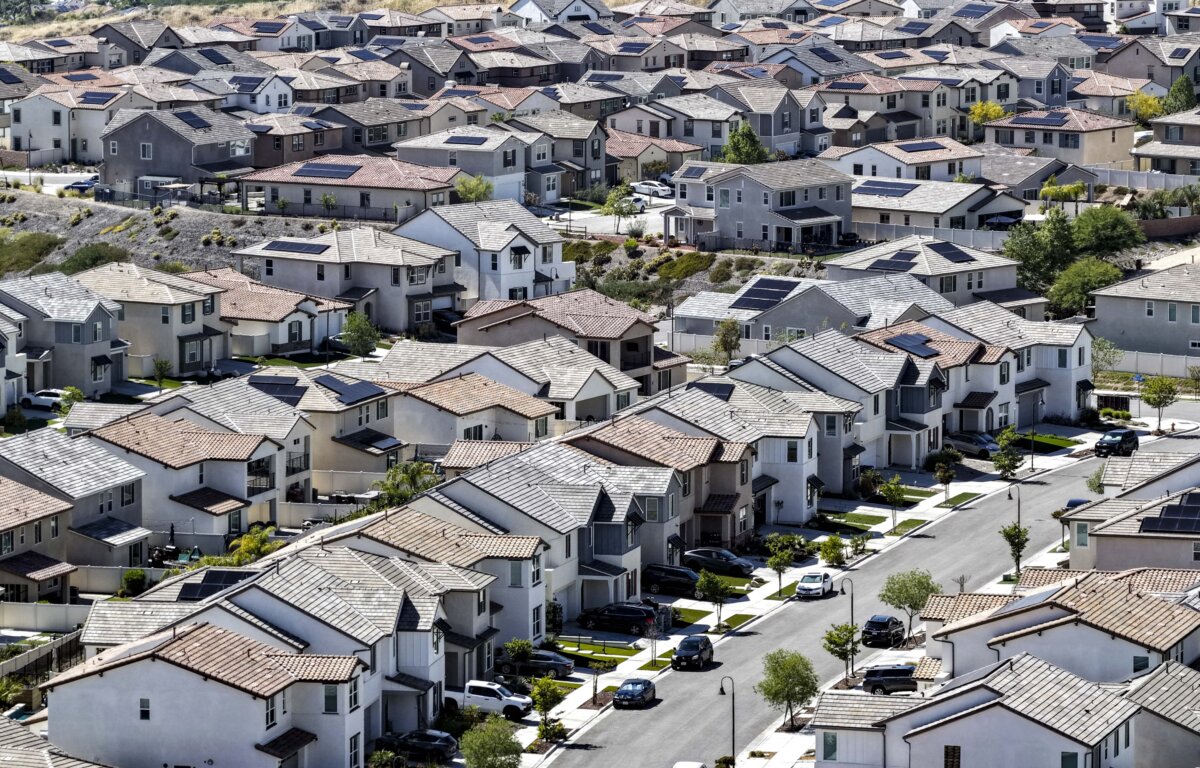
Lawmakers from both parties have increasingly focused on housing reform as home prices and rental costs have risen sharply since the COVID-19 pandemic. Limited housing inventory and homeowners holding onto low-interest-rate mortgages have contributed to higher costs and reduced market activity.
Supporters argue that the bill would help lower housing expenses by reducing federal regulations, accelerating environmental reviews, streamlining construction approvals, and encouraging the development of new homes.
The legislation also includes measures aimed at limiting the influence of large corporate investors in the single-family housing market.
The final bill emerged after months of negotiations that combined dozens of separate proposals into a single package. One of the most debated issues involved restrictions on institutional investors purchasing single-family homes.
While the Senate favored requiring build-to-rent developers to sell properties within seven years, the House supported a less restrictive approach. The final compromise maintains a 350-unit cap but removes the mandatory seven-year sales requirement.
In addition to housing-related reforms, the law offers financial incentives to state and local governments, shortens permitting timelines, and eases certain regulations for smaller banks and credit unions to support mortgage lending. Together, these provisions are intended to boost housing construction and increase available inventory.
Housing shortages remain a major concern nationwide. Recent studies estimate that the United States lacks millions of homes needed to meet demand, particularly among younger households.
At the same time, housing costs remain elevated. The median monthly housing payment recently reached approximately $2,647, driven by rising home prices and mortgage rates, according to Redfin. Although mortgage rates have declined somewhat compared with a year ago, they remain high enough to discourage many buyers.
Home sales have also remained weak, hovering near a 4-million annual pace since 2023, well below historical averages. Reports from both government and academic researchers continue to highlight significant housing shortages, growing affordability pressures, and increasing financial burdens for renters and homeowners alike.
The legislation also contains a provision unrelated to housing that prohibits the Federal Reserve from issuing a central bank digital currency (CBDC), often referred to as a digital dollar, until 2030. The measure reinforces a previous executive order signed by Trump in January 2025 that opposed the creation of a CBDC.
“The Board of Governors of the Federal Reserve System or a Federal Reserve Bank may not issue or create a central bank digital currency or any digital asset that is substantially similar to a central bank digital currency directly or indirectly through a financial institution or other intermediary,” the text of the bill stated.
Overall, supporters from both political parties view the legislation as a meaningful step toward addressing the nation’s affordability crisis by expanding housing supply, reducing regulatory barriers, and improving access to homeownership.
Correction: A previous version of this article misstated the housing affordability bill’s vote outcome in the Senate. The Epoch Times regrets the error.
 Friends Read Free
Copy
Facebook
Tweet
Friends Read Free
Copy
Facebook
Tweet