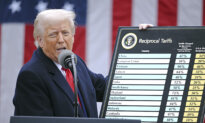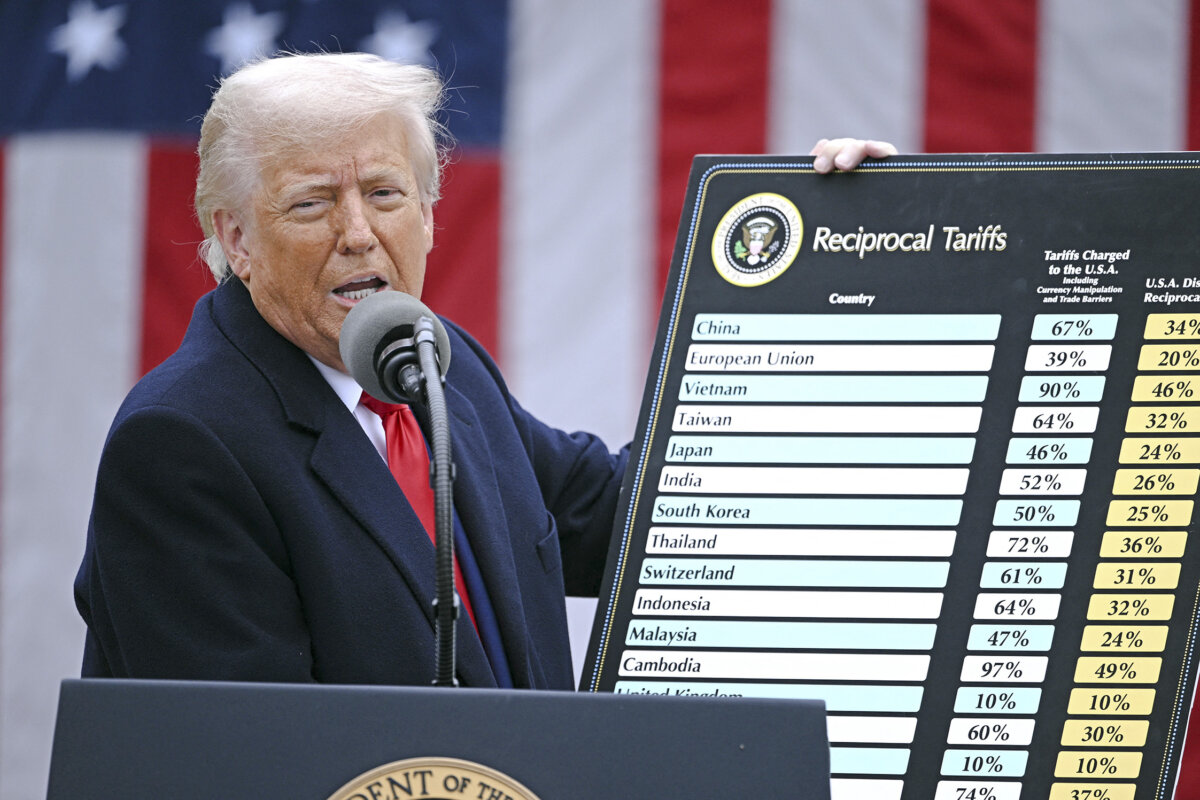

President Donald Trump declared on July 8 that he will grant no further extensions beyond Aug. 1 for countries to begin paying reciprocal tariffs, signaling a firm stance, after previously hinting at flexibility for trading partners willing to grant significant concessions or make unique proposals in trade negotiations.
“As per letters sent to various countries yesterday, in addition to letters that will be sent today, tomorrow, and for the next short period of time, TARIFFS WILL START BEING PAID ON AUGUST 1, 2025,” Trump wrote in a post on Truth Social. “There has been no change to this date, and there will be no change. In other words, all money will be due and payable starting AUGUST 1, 2025—No extensions will be granted.”
The announcement follows the president’s executive order on July 7, which formally extended the previous tariff negotiation deadline from July 9 to Aug. 1. That extension preserved the current lower tariff rate of 10 percent for many countries during the negotiation window—a reprieve from higher rates Trump first announced in April but decided to suspend for 90 days to give other countries time to negotiate.
Trump called the deadline extension “necessary and appropriate,” suggesting that talks with other countries were moving forward but needed more time.
“I have determined, based on additional information and recommendations from various senior officials, including information on the status of discussions with trading partners, that it is necessary and appropriate to extend the suspension,” Trump wrote in the order.
The president’s insistence on the firm Aug. 1 deadline follows July 7 comments to reporters suggesting there could still be flexibility for some trading partners under unique circumstances.
“I would say firm, but not 100 percent firm,” Trump said when asked by a reporter whether there’s any chance he might consider moving the Aug. 1 deadline. “If they call up and they say ‘We’d like to do something a different way,’ we’re going to be open to that.”
Though he did not elaborate on what circumstances might prompt further extensions, Trump’s remarks fueled speculation that the Aug. 1 deadline would remain negotiable. However, his latest post on Truth Social appears to shut down that speculation.
On July 7, Trump sent letters to 14 countries, notifying them of specific tariff rates that would take effect on Aug. 1 if no agreements were reached. He warned that levies could be raised if nations impose new trade barriers or fail to address longstanding trade imbalances with the United States.
Overall, the president announced new tariffs as follows: 25 percent on Japan, Kazakhstan, Malaysia, South Korea, and Tunisia; 30 percent on Bosnia and Herzegovina and South Africa; 32 percent on Indonesia; 35 percent on Bangladesh and Serbia; 36 percent on Cambodia and Thailand; and 40 percent on Burma (also known as Myanmar) and Laos.
In each letter, Trump noted that the tariffs might be lowered if countries open their markets and reduce non-tariff barriers, emphasizing that persistent trade deficits pose “a major threat” to U.S. economic and national security.
So far, the United States has reached trade agreements with India, China, and the UK, while negotiations with Canada, Mexico, and the European Union remain ongoing, according to the White House.
Trump has portrayed his tariff strategy as an effort to reshape global trade and compel foreign governments to negotiate terms he considers fairer to American businesses and workers.
Since Trump returned to office in January, Customs and Border Protection has collected more than $106 billion in customs revenue—with $81.5 billion attributed directly to tariffs imposed under the president’s trade agenda, according to the Department of Homeland Security.
During a July 8 Cabinet meeting, Trump said that “big money” would start flowing into government coffers starting Aug. 1. He said that has been made clear by the letters that his administration has already sent out.
 Friends Read Free
Copy
Facebook
Tweet
Friends Read Free
Copy
Facebook
Tweet