
President Donald Trump revealed on Thursday that his administration is taking steps to solve the high prices of beef, and that he expects a fall in costs.
The president did not disclose further information on the initiatives being taken as beef prices remain at record highs.
The price of beef is “higher than we want it, and that’s going to be coming down pretty soon too. We did something,” Trump told reporters at the White House. “We are working on beef, and I think we have a deal on beef,” he said.
Cattle ranchers have produced less beef as a multi-year drought grips the western parts of the United States.
According to data from U.S. government agencies, the national cattle inventory had declined to 86.7 million head by the beginning of the year—the smallest number for that seasonal benchmark since 1951.
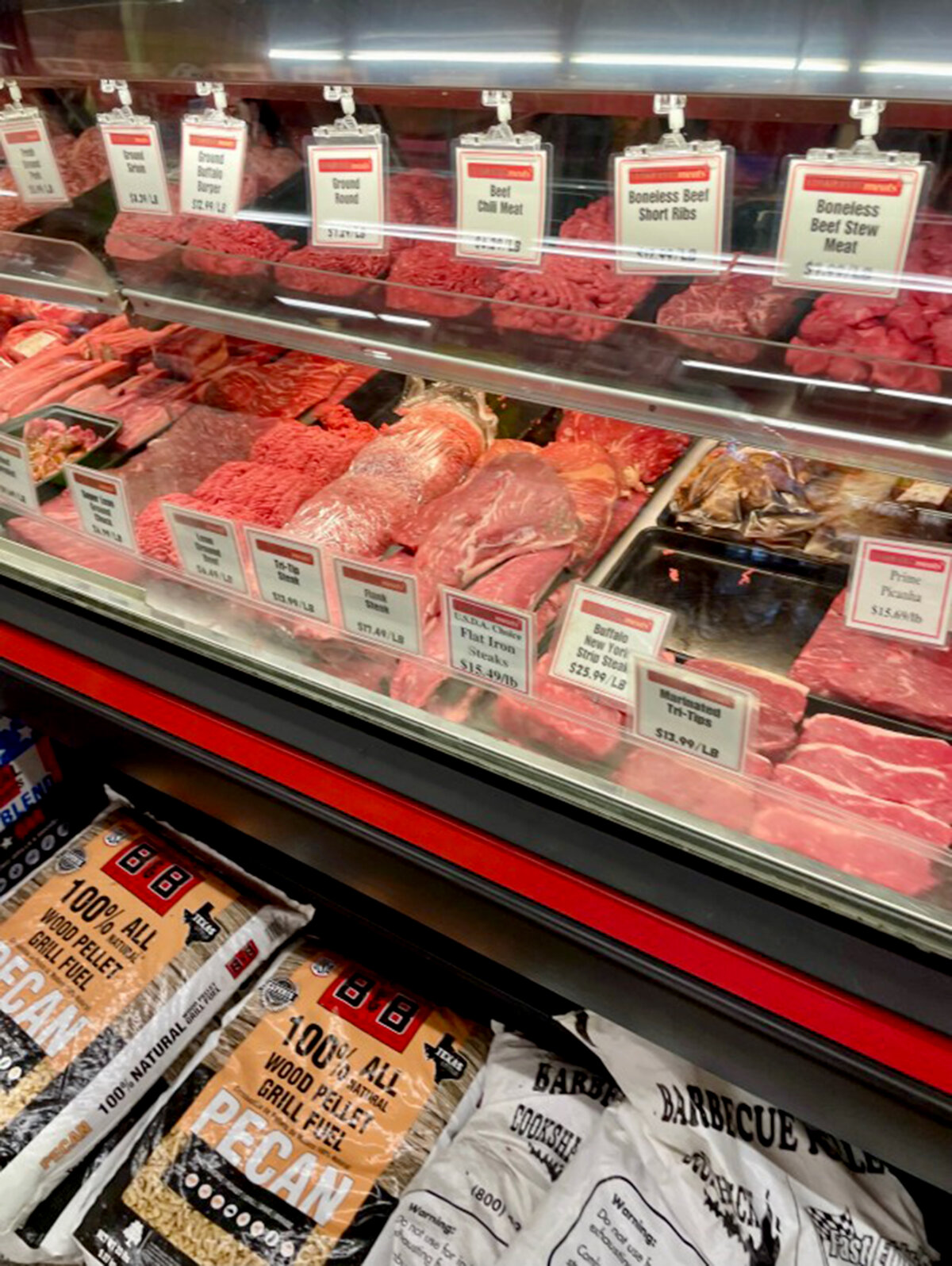
Lean and extra lean ground beef reached an all-time high of $8.04 per pound in July before easing slightly to $7.95 in August—a 32 percent increase from the $6.09 low in 2015 and over 42 percent above the 2017 trough of $5.64.
Similarly, boneless USDA Choice sirloin steaks climbed to $14.32 per pound in August, more than 77 percent higher than the $8.07 recorded in 2017 and nearly double the $8.49 from 2015, while all uncooked beef roasts averaged $8.72, up from $5.87 a decade ago.
In response to the president’s comments, the Meat Institute, an organization advocating for meatpacking enterprises, called for greater clarity on the measures being taken.
The previous administration of former President Joe Biden blamed meatpacking companies for contributing to elevated food prices due to their business practices. Biden spearheaded a $1 billion package for small meat producers in 2022.
In the past week alone, prominent processors Tyson Foods and Cargill reached an agreement to pay a total of $87.5 million in a settlement resolving a federal lawsuit initiated by consumers. The suit alleged that the firms coordinated on artificially boosting beef prices by decreasing available supply. Both entities continue to reject the claims.
Meanwhile, meatpacking operations continue to face profitability issues with their beef products. As highlighted by the Federal Reserve, decreased cattle inventories have led processors to pay higher prices to obtain animals for processing, causing slimmer margins.
Supply constraints worsened earlier in the year after the U.S. Department of Agriculture stopped imports of livestock from Mexico. This was done to mitigate the risk of introducing a destructive pest, the New World Screwworm, into the United States from Mexico. Mexican cattle played a significant role in the U.S. supply chain, being transported to American feedlots for fattening and subsequent processing.
Duties levied on Brazilian imports under Trump have also decreased the import of Brazilian beef, and thus reduced the availability of certain products.
American ranchers, however, have slowly begun to expand their herds, which could take two years to provide relief due to the time it takes to rear cattle to maturity.
Last month, U.S. Agriculture Secretary Brooke Rollins announced that the Department of Agriculture will release comprehensive outlines in mid-October for a strategy aimed at restoring the cattle population without providing financial assistance to producers.
Reuters contributed to this report.
 Friends Read Free
Copy
Facebook
Tweet
Friends Read Free
Copy
Facebook
Tweet