
Colleges and universities that receive federal funding will be required to share information and data about their admissions practices with the public under President Donald Trump’s new directive to the Department of Education.
The order, titled, Ensuring Accountability in Higher Education, was announced on Aug. 7. It expands the federal data reporting system to include admission criteria at schools.
Websites of colleges and universities, as well as the Center for Education Statistics website, break down overall acceptance rates and enrollment figures by gender and race. There is also data noting average grade point averages and SAT (Scholastic Aptitude Tests).
Higher learning institutions also have data on the racial breakdowns for accepted and rejected students, average grade point averages, and standardized test scores. If that information is shared, the public can gauge whether schools are still considering race in admissions, which is illegal. Whether that information is released at the request of the federal government remains to be seen.
Institutions that fail to share information on time could lose federal funding.
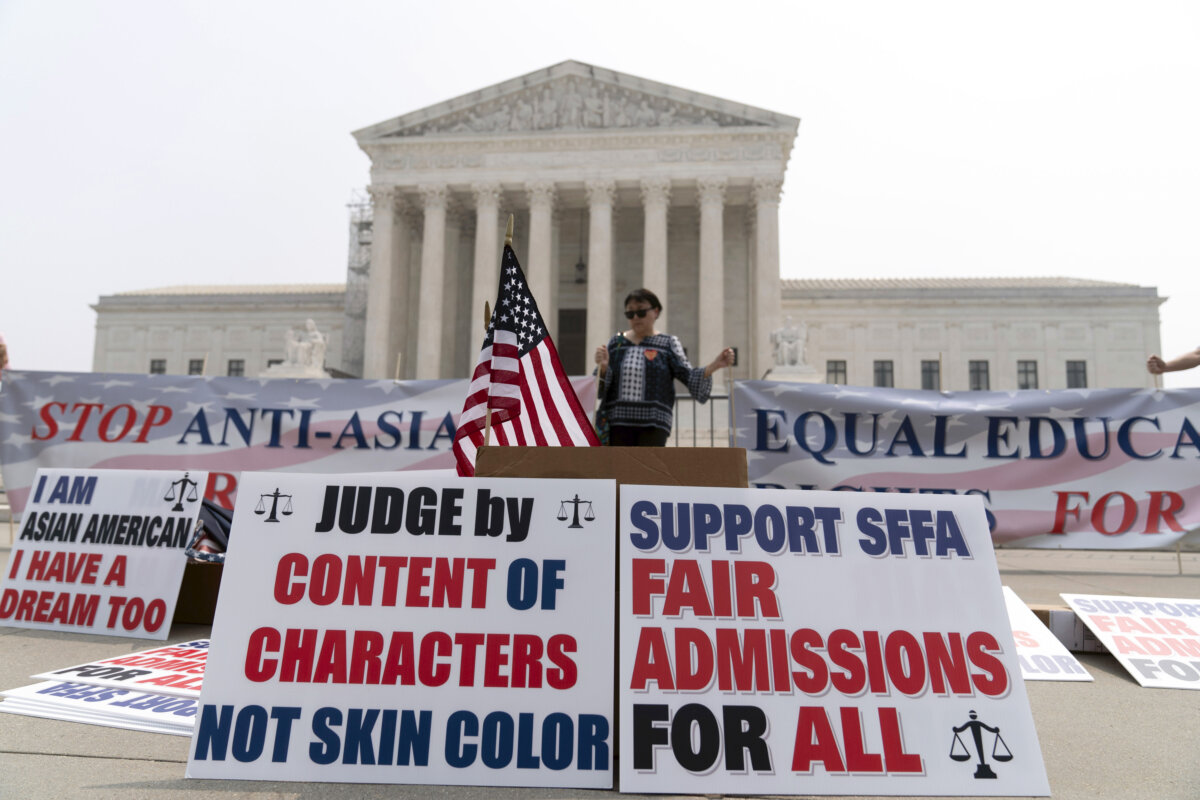
The order reaffirms the end of discriminatory race-based admissions practices, which the U.S. Supreme Court deemed illegal and unconstitutional in a 2023 decision. Trump’s order is aimed at removing all diversity statements from higher learning institutions and what he calls other “overt and hidden racial proxies.”
“American students and taxpayers deserve confidence in the fairness and integrity of our Nation’s institutions of higher education, including confidence that they are recruiting and training capable future doctors, engineers, scientists, and other critical workers vital to the next generations of American prosperity,” the memorandum said.
“Race-based admissions practices are not only unfair, but also threaten our national security and well-being. It is therefore the policy of my Administration to ensure institutions of higher education receiving Federal financial assistance are transparent in their admissions practices.”
Trump previously issued executive orders prohibiting diversity, equity, and inclusion (DEI) practices such as consideration of race in admissions or hiring, mandatory diversity training, affinity groups, and ideological instruction aimed at certain races or religions.
There were additional executive orders for combating campus anti-Semitism and prohibiting biological males from competing in women’s sports or using women’s facilities.
A White House fact sheet issued ahead of Trump’s announcement noted the president’s previous resolutions with Columbia University, University of Pennsylvania, and Brown University, all of which acknowledged wrongdoing related to anti-Semitism or Title IX violations.
The fact sheet also noted Trump’s efforts to suspend Harvard University’s visa program for international students in the interest of national security.
The successful plaintiffs in the 2023 Supreme Court case, Students for Fair Admissions, alleged that Harvard University denied admission to high-performing Asian applicants because Asians already made up a disproportionate percentage of the student body there.
The organization, with 20,000 members, has also filed lawsuits against the military academies (Army, Navy, and Air Force), the University of North Carolina, and the University of Texas. Anyone rejected from a school can submit a complaint on the website.
Following the Supreme Court decision, affirmative action proponents publicized other ways to boost campus diversity. The Stanford Center for Racial Justice, for example, encourages test-optional admissions policies or public university guarantees for students who graduate in the top percentile of their class.
Colleges and universities can also require essays or personal interviews as part of the admissions process. Those requirements can be more subjective and are not attached to reportable metrics such as test scores or grade point averages.
 Friends Read Free
Copy
Facebook
Tweet
Friends Read Free
Copy
Facebook
Tweet