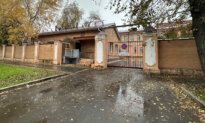

The Trump administration is replacing all six members of the Commission of Fine Arts, which reviews historical building projects, including the new ballroom at the White House.
“[The administration is] preparing to appoint a new slate of members to the commission that are more aligned with President [Donald] Trump’s America First Policies,” reads an Oct. 29 White House statement emailed to The Epoch Times.
Established by Congress more than 100 years ago, the commission is made up of architects and urban planners who advise on construction projects on Capitol Hill and surrounding areas.
The Commission of Fine Arts is an independent federal agency that was created to advise the federal government on design and aesthetics in the nation’s capital, but its primary function is to review and make recommendations on the design of government buildings, monuments, memorials, and public spaces in Washington.
The group does not “approve” projects, but its opinion carries significant weight, especially with the National Capital Planning Commission, Architect of the Capitol, and General Services Administration.
Construction of the new ballroom officially began in September, but demolition on the East Wing of the White House, the site of the new ballroom, began on Oct. 20.
The 90,000-square-foot ballroom will seat between 650 and 1,000 people, and the entire project is expected to cost about $300 million. It will be paid for by private donors and President Donald Trump himself.
This will be the first major change to the historic White House in decades.
Some critics have voiced concern about the change and the lack of approval from outside agencies.
The White House stated on Oct. 21 that it would submit plans to the National Capital Planning Commission at a later date.
At an Oct. 23 press briefing, White House press secretary Karoline Leavitt answered questions about the demolition and why the project proceeded before plans were submitted to the National Capital Planning Commission.
She said a “submission is not required legally” for demolition, only for “vertical construction,” and that the administration will make a submission when it is required.
Leavitt expressed gratitude for the modifications made by presidents in the past.
“We’re all grateful,” she said.
“In due time, the East Wing is going to be more beautiful and modern than ever before. And in addition, there will be a big, beautiful ballroom that can hold big parties and state visits for generations to come.”
The East Room, the largest event space on the property, fits about 200 guests. The State Dining Room, used for formal dinners and receptions, holds 140 people. As a result, large gatherings are often hosted in temporary tents built on the South Lawn, which Trump has described as “not a pretty sight.”
Questions about jurisdiction over the building project have been brought to the forefront, based on provisions of the National Historic Preservation Act of 1966, which can require a review of projects that affect historic buildings.
However, a carve-out for the White House, the U.S. Capitol, and the Supreme Court, as well as their grounds, allows the president to move forward with the project.
Emel Akan contributed to this report.
 Friends Read Free
Copy
Facebook
Tweet
Friends Read Free
Copy
Facebook
Tweet