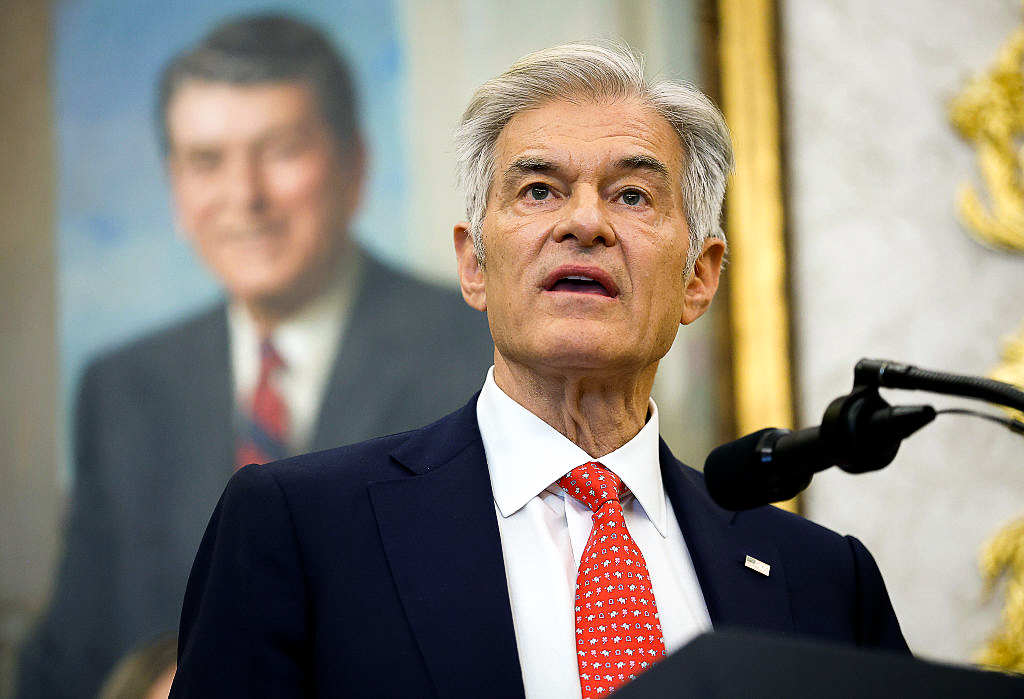

TrumpRx, the government clearinghouse for consumer prescription drug purchases, has been expanded by an additional 160 medications, Dr. Mehmet Oz, administrator of the Centers for Medicare and Medicaid Services said in a press briefing on June 2.
The addition brings the number of drugs available for direct consumer purchase to more than 750.
“It’s a transparency site. It gives everybody the ability to make important decisions about medications they’re purchasing with full knowledge of what the cost of those medications are,” Oz said.
The new additions mean that four out of five medications that are most commonly prescribed to Americans are now available for comparison shopping through TrumpRx.gov, Oz said.
GLP-1 medications, which are commonly used to treat diabetes or for weight loss, will be available to Medicare beneficiaries for $50 per month beginning July 1, Oz said.
Drugs of that type are commonly offered for $1,000 per month, Oz said. However, he did not mention the overall amount Medicare would pay for them as opposed to the $50 copayment charged to beneficiaries.
Since President Donald Trump announced the first expansion of TrumpRx on May 18, there have been about 12 million unique visitors to the site, according to the White House.
Estimated savings have been about $500 million and are “climbing rapidly as more Americans learn about the program,” said Oz.
Most-Favored-Nation Drug Pricing
The website is part of the most-favored-nation prescription drug pricing program, a longer-term administration strategy to reduce wholesale drug pricing.
The Council of Economic Advisers estimated that the negotiated drug pricing program will save Americans around $600 billion over the next 10 years.
The 17 largest pharmaceutical companies accounted for more than 80 percent of the branded drug market, according to Oz.
“Every single one of them agreed to a most-favored-nation drug pricing strategy,” he said. “These medications, especially going into the future, will be priced at the same amount as the rest of the world.”
Before the pricing strategy, U.S. drug prices were inflated about three times higher, on average, than the same products manufactured in the same facilities but sold abroad.
To ensure these savings persist beyond the current administration, there is a push to turn these negotiated deals into permanent law.
Trump aims to codify the most-favored-nation plan so it remains in place well into the future, Oz said.
Anti-Fraud Efforts
Oz also commented on recent efforts to combat fraud and waste in the Medicare and Medicaid programs using data analysis coordinated with the Office of Inspector General, the FBI, and the Department of Justice.
Personal care services have been particularly vulnerable to fraud schemes perpetrated by organized criminal syndicates, according to Oz, who said “personal care attendant” is now the most common job in California.
In California, payments were suspended to 800 facilities—nearly half of all hospices in the state—due to suspicious growth and lack of oversight.
“When one-third of all the hospices of the entire country are in Los Angeles, not even California—in Los Angeles—that creates issues,” said Oz.
A six-month federal moratorium on seven types of durable medical equipment suppliers took effect in February.
Florida became the first state to implement a parallel ban. In South Florida, durable medical equipment suppliers outnumber McDonald’s restaurants two to one, according to Dr. Oz.
In Minnesota, non-emergency medical transportation was canceled after costs ballooned from $1 million to more than $100 million annually due to fraud.
“Our goal is to stop the money from ever leaving the building. That is the best way to protect the American taxpayer,” Oz said.
 Friends Read Free
Copy
Facebook
Tweet
Friends Read Free
Copy
Facebook
Tweet