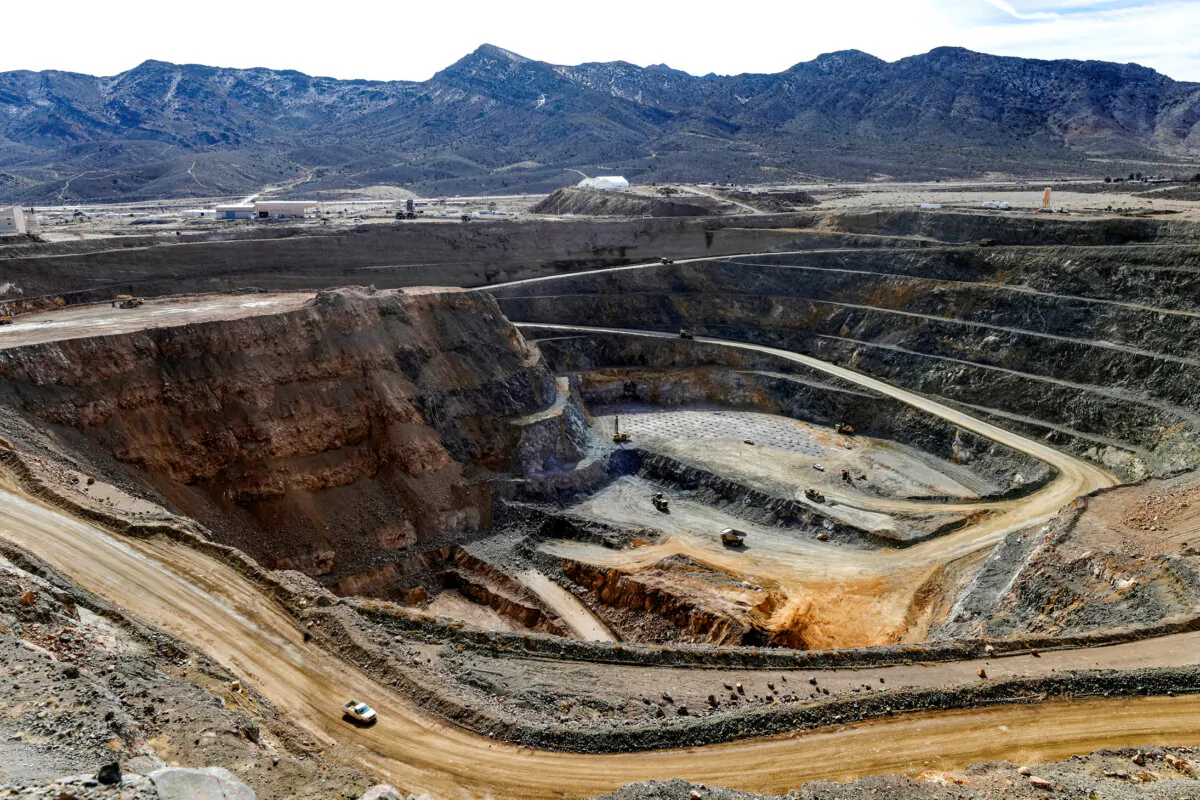

The Department of the Interior (DOI) is adopting new policies to speed up the exploration and development of critical minerals located offshore to strengthen U.S. supply chains and protect the United States’ energy, security, and tech needs, the agency said in a June 25 statement.
Critical minerals, as determined by the secretary of the interior, include minerals such as aluminum, chromium, cobalt, gallium, iridium, magnesium, neodymium, nickel, palladium, platinum, vanadium, and zinc.
According to the DOI, the Bureau of Ocean Energy Management (BOEM) and the Bureau of Safety and Environmental Enforcement, two agencies operating within the Interior Department, are updating mineral policies “across all stages of development,” right from early exploration to production and operations.
“These updates are designed to reduce delays, improve coordination, and provide greater certainty for industry, all while upholding key environmental safeguards,” the statement reads.
BOEM plans to extend the duration of prospecting permits from the current three years to five, which would give companies “more time to complete their work without unnecessary interruptions,” DOI said.
In order to speed up the leasing process, BOEM intends to identify potential areas for development earlier without wasting time on procedures such as forming a joint task force with other agencies. This is estimated to save up to one year on projects. BOEM also plans to offer favorable lease terms to interested parties, such as waiving certain rental charges.
When a lease is issued, BOEM and the Bureau of Safety and Environmental Enforcement will consider the projects under DOI’s emergency permitting procedures, which speed up the review and approval of projects. This reduces the overall time taken for permitting procedures from several years to a maximum of 28 days.
Approvals for mapping, testing, and site development will be “fast-tracked,” ditching unnecessary compliance steps, according to the department.
The policy updates are expected to secure access to essential resources for the United States as well as support emerging technologies and bolster the country’s defenses.
“We’re making decisive moves to secure America’s leadership in critical minerals—resources that power our economy, protect our national security, and support modern life,” acting Assistant Secretary for Land and Minerals Management Adam Suess said.
“By eliminating unnecessary delays and maintaining strong environmental protections, we’re creating a clear path for responsible development that strengthens both our communities and our country.”
The latest actions are in line with the Trump administration’s push to streamline the approval process and cut red tape in the critical minerals sector, DOI said.
On April 24, President Donald Trump signed an executive order titled “Unleashing America’s Offshore Critical Minerals and Resources.”
“The United States faces unprecedented economic and national security challenges in securing reliable supplies of critical minerals independent of foreign adversary control,” the order states.
“Vast offshore seabed areas hold critical minerals and energy resources. These resources are key to strengthening our economy, securing our energy future, and reducing dependence on foreign suppliers for critical minerals.”
China Dependence Risk
On Dec. 11, the House Select Committee on the Chinese Communist Party released a report after evaluating the United States’ reliance on China for critical minerals.
The report warned that China supplies more than 50 percent of the U.S. demand for 24 critical minerals. This includes supplying more than 90 percent of the United States’ demand for rare earths.
“The PRC deliberately manipulates the market to maintain its dominance and weaponizes supply chains for its strategic advantage,” the report states, using the official acronym for the People’s Republic of China. “It uses price controls, vertical integration, and substantial barriers to entry to preclude competition from resilient, U.S.-led supply chains.
“The PRC has also leveraged export controls—for example, restricting the export of gallium, germanium, graphite, and antimony—to retaliate against the United States and entrench its strategic advantage.”
China employed such tactics in April when its Ministry of Commerce added seven rare earth minerals to its export control list. The move came amid U.S.–China trade tensions.
Trump later announced on June 11 that Washington had reached a deal with Beijing, which included China ensuring the supply of rare earths and magnets to the United States.
 Friends Read Free
Copy
Facebook
Tweet
Friends Read Free
Copy
Facebook
Tweet