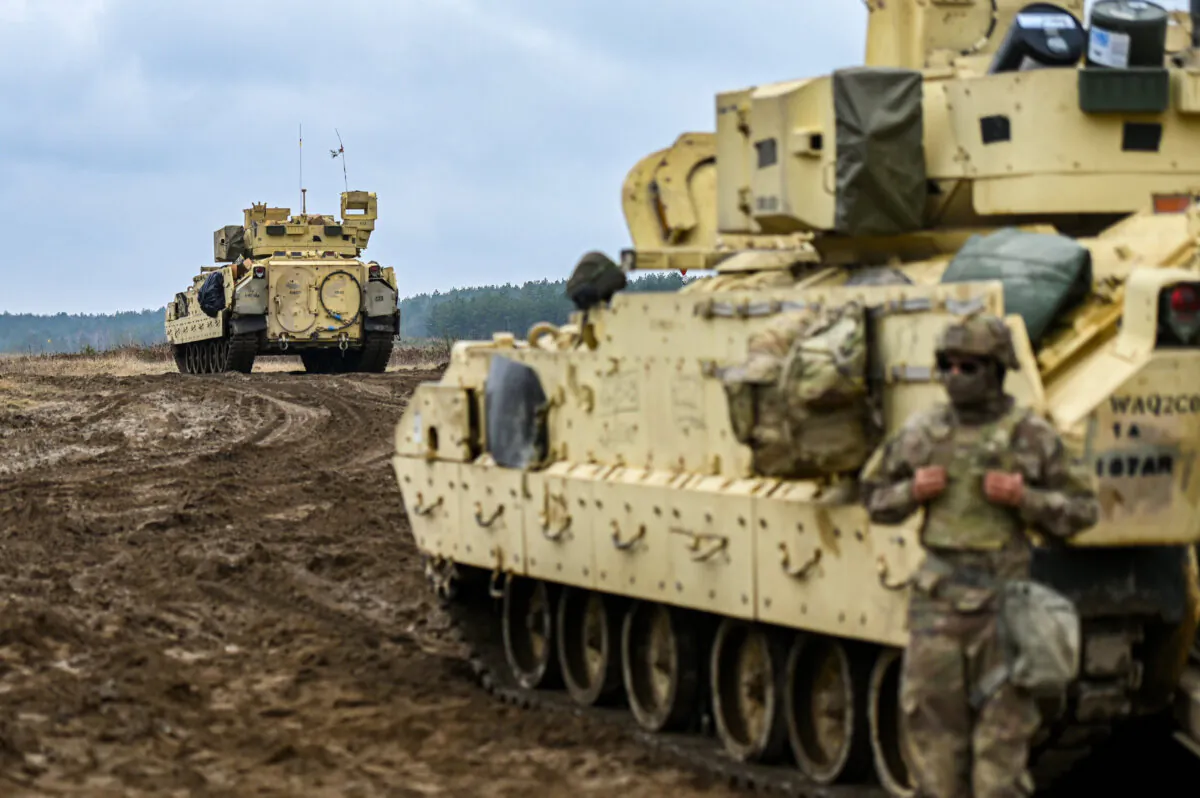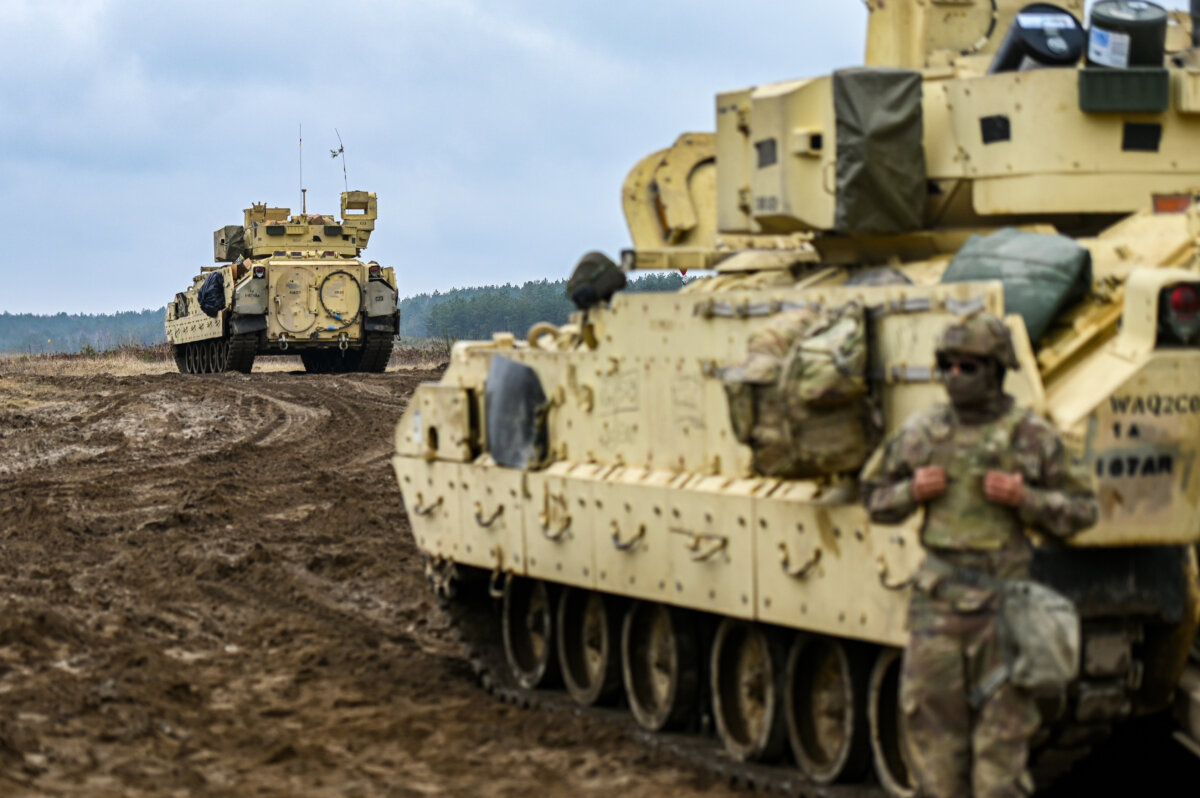

The U.S. Army said on Oct. 14 that it is launching a program to deploy small nuclear power reactors at military bases in the United States.
The Army said in a statement that the Janus Program “will deliver resilient, secure, and assured energy” to support national defense installations and critical missions.
The program was unveiled during the Association of the U.S. Army’s Annual Meeting and Exposition and announced by Secretary of the Army Dan Driscoll.
“This is about warfighting power,” Driscoll said. “Project Janus ensures our warfighters can train, deploy, and fight with the certainty that power will never be the limiting factor in victory.”
The program will enable the military to transition away from other forms of energy during operations, such as diesel fuel, which comes with its own logistical and supply issues.
The Army said that reliable energy is critical for conducting global operations and will provide power to installations for its networks, weapons systems, and command nodes used for coordinating military operations.
Janus will operate separately from the civilian power grid and provide energy stability during adversarial attacks and natural disasters, the Army said.
The project will build commercially owned and operated reactors in partnership with the Defense Innovation Unit, with the Army providing technical oversight and assistance, including supporting the nuclear supply chain.
Project Pele
The U.S. Army said the Janus Program will be building off the lessons learned from Project Pele. Department of Energy laboratory teams who worked on Pele will also be working closely on Janus.
Project Pele was a plan unveiled in April 2022 that proposed building an advanced transportable nuclear microreactor prototype at the Idaho National Laboratory. Officials at the time said it would take around three years to build and test it.
Jeff Waksman, principal deputy assistant secretary of the Army for installations, energy, and environment, led Project Pele and will be overseeing the Janus Program.
“By leveraging Army’s program management and oversight capabilities with the accomplishments of Project Pele, the U.S. Army is ready to move forward at lightning speed to make next-generation nuclear power a reality,” Waksman said.
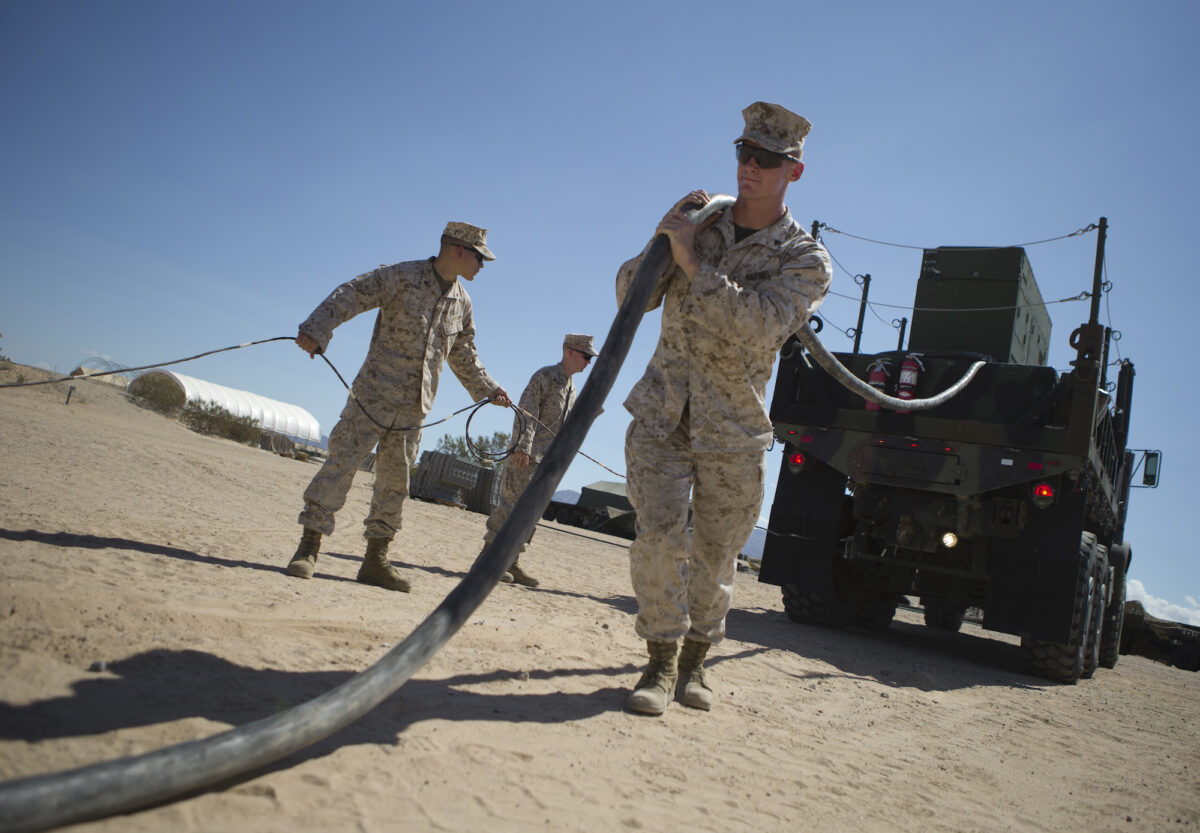
Energy Secretary Chris Wright was also present during Oct. 14’s announcement. He highlighted the history of defense and energy departments collaborating on projects that not only advance national security but also contribute to the United States’s civilian technological advances.
“Since the Manhattan Project, the Department of Energy and the Department of War have forged one of the defining partnerships in American history—advancing the science, engineering, and industrial capability that power our national security,” Wright said.
“What began as a wartime effort became the backbone of America’s peacetime strength. Under President Trump’s leadership, we’re extending that legacy through initiatives like the Janus Program, accelerating next-generation reactor deployment and strengthening the nuclear foundations of American energy and defense.”
Executive Order
The Army said the Janus Program fulfills President Donald Trump’s May 23 executive order calling for the installation of a small nuclear reactor at a domestic base by no later than Sept. 30, 2028.
A White House fact sheet said at the time that access to energy is critical for military installations, particularly those in locations that cannot be reliably served by forms of power other than nuclear.
The White House said that “uninterruptible, dispatchable, high-density power of the type that advanced nuclear reactors can provide because of their unique size and generation capabilities” is “critical for readiness and national security.”
 Friends Read Free
Copy
Facebook
Tweet
Friends Read Free
Copy
Facebook
Tweet