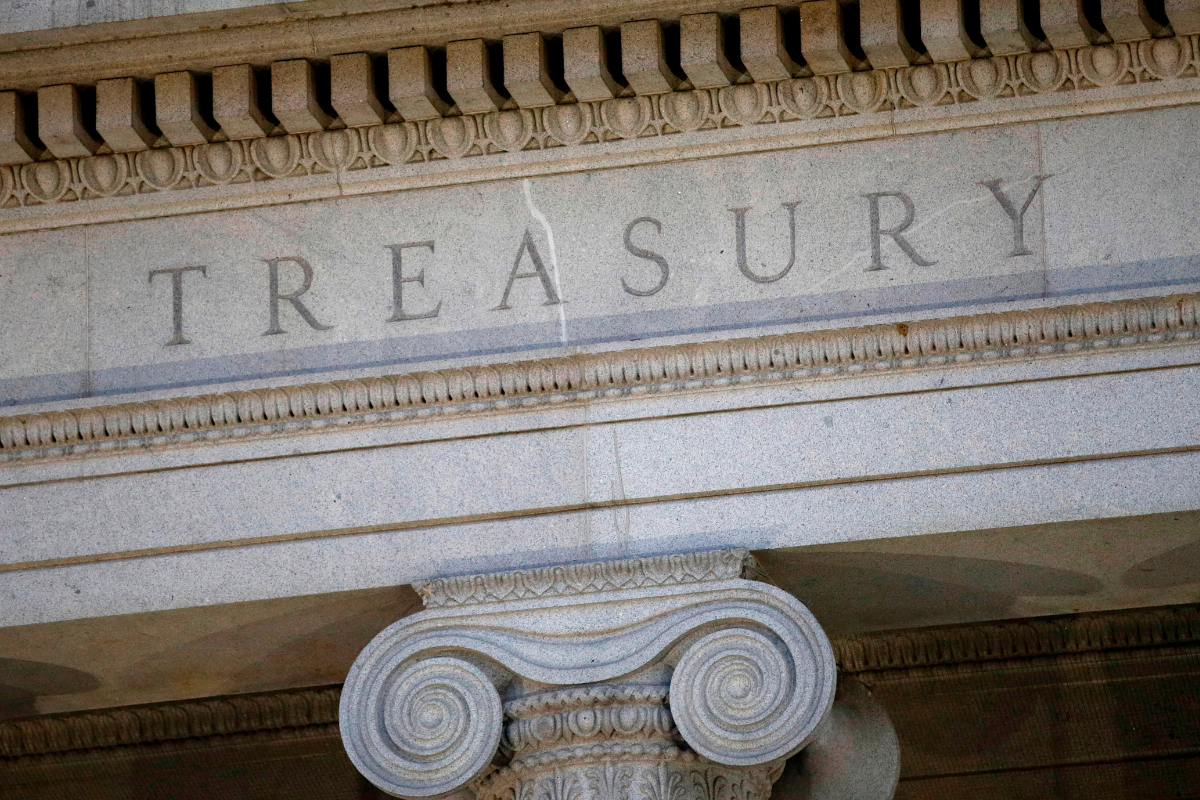

The U.S. Treasury Department blacklisted nine Hezbollah-affiliated individuals Thursday, accusing them of blocking Lebanon’s peace process and stalling disarmament.
The individuals include named sitting Lebanese government security officers for the first time.
The sanctions deny the individuals any access to property or assets in the United States.
The nine include four Hezbollah members, including Mohamed Abdel-Mottaleb Fanich, a leader in the terrorist group’s executive council; Nizammeddine Fadlallah, one of the group’s elected members of the Lebanese parliament; and longtime officials Ibrahim al-Moussawi and Hussein al-Hajj Hassan.
Also on the list was Iranian ambassador-designate to Lebanon, Mohammad Reza Sheibani, and two security officials with the Hezbollah-allied Amal Movement, Ahmad Asaad Baalbaki and Ali Ahmad Safawi.
Meanwhile, branch chief with the Lebanese Armed Forces, Samir Hamadi, and Khattar Nasser Eldin, a top official with the General Directorate for General Security, were sanctioned for allegedly sharing “important intelligence” with the terrorist group over the past year.
The State Department simultaneously announced a reward of up to $10 million for information leading to the disruption of Hezbollah’s financial networks.
“Hezbollah is a terrorist organization and must be fully disarmed,” Treasury Secretary Scott Bessent said in a statement. “Treasury will continue to take action against officials who have infiltrated the Lebanese government and are enabling Hezbollah to wage its senseless campaign of violence against the Lebanese people and obstruct lasting peace.”
Hezbollah has been designated a foreign terrorist organization under U.S. law since 1997.
The group holds seats in Lebanon’s parliament, operates a vast social services network, and maintains a military wing backed by Iran—making it deeply embedded in Lebanese institutions.
Thursday’s sanctions are the Treasury’s latest effort to cut off the financial pipelines that keep Hezbollah armed and operational.
In February 2026, the United States sanctioned financial operatives and entities linked to Hezbollah through a joint Treasury and State Department announcement, designating four entities and two individuals accused of supporting the Iran-backed group’s global financing operations.
In March 2025, the Treasury’s Office of Foreign Assets Control designated five individuals and three associated companies involved in a Lebanon-based sanctions-evasion network supporting Hezbollah’s finance team, including a Lebanese firm called Ravee SARL, described as generating profits for Hezbollah through veterinary product trade.
In July 2025, the United States again expanded designations, targeting a network that smuggled Iranian oil disguised as Iraqi-origin crude alongside a Hezbollah-controlled financial institution.
The Associated Press contributed to this report.
 Friends Read Free
Copy
Facebook
Tweet
Friends Read Free
Copy
Facebook
Tweet