
The United States and China announced a tariff reduction plan of $30 billion in goods from each country following the Chinese leader’s state visit to Washington, covering non-sensitive goods.
The Chinese Foreign Ministry confirmed the agreement in a statement on Saturday, following the release of a fact sheet from the White House the day before.
The announcements came after talks between President Donald Trump and Chinese leader Xi Jinping produced common positions on Iran’s nuclear program and international waterway tolls, along with plans for a dialogue on risks and benefits related to artificial intelligence.
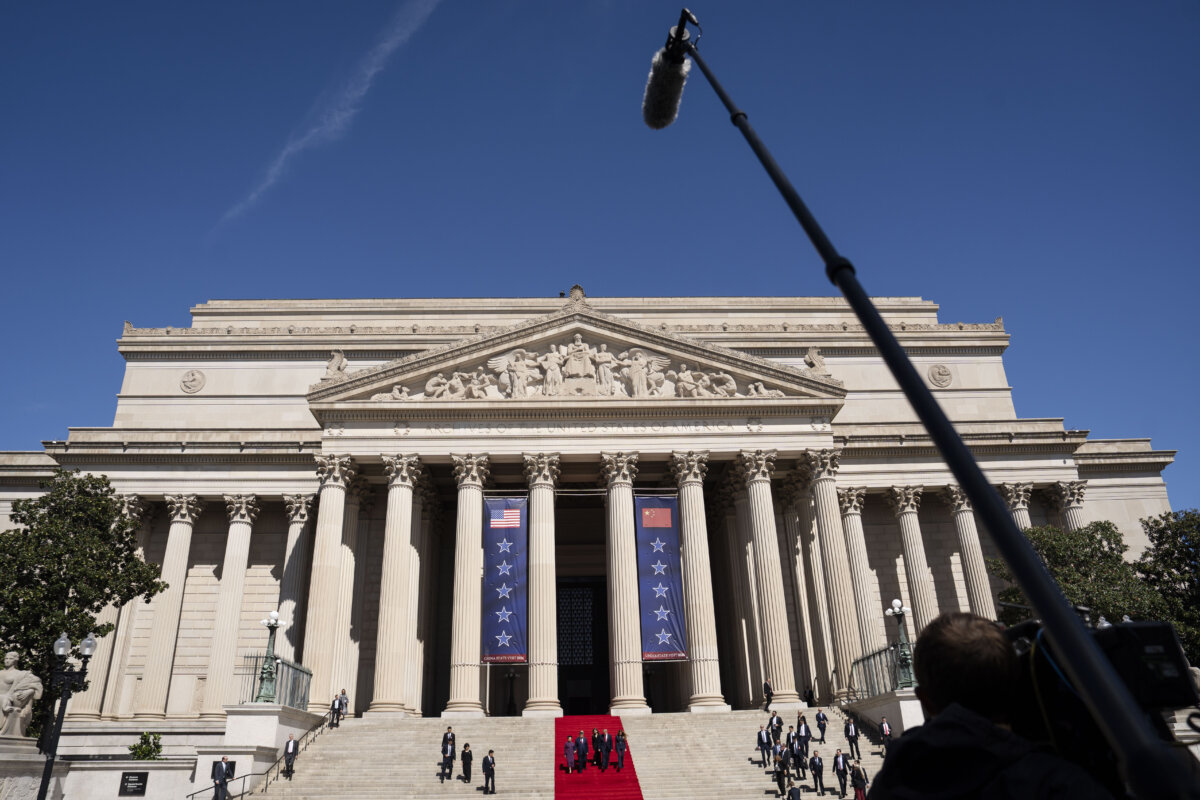
Xi departed on Sept. 25 after a visit that included a military welcome, bilateral talks, and a state dinner. Before leaving, Xi and his wife, Peng Liyuan, joined Trump and First Lady Melania Trump for tea and a visit to the National Archives.
“A lot of very positive things happened,” Trump told reporters during the tea meeting.
The two leaders “discussed fostering peace and prosperity to enhance confidence for businesses and consumers around the world,” the White House said, adding that the United States and China would pursue “a constructive relationship of strategic stability.”
Tariff Details Still Pending
The tariff recommendations cover $30 billion in non-sensitive goods moving in each direction, according to the White House.
U.S. exports to China noted in the White House readout include agricultural goods, fish and seafood, logs and wood products, cosmetics, and medical devices. Imports from China to the United States include small appliances, toys, holiday decorations, and children’s car seats.
Neither statement specified how much tariffs would fall or when the changes would take effect.
U.S. Trade Representative Jamieson Greer told CNBC on Sept. 25 that more details would be released on Monday.
The United States and China extended their existing trade truce before the leaders met. Treasury Secretary Scott Bessent said on Sept. 23 that it would run through Jan. 10, allowing more time to pursue a broader economic agreement.
The White House said the leaders put trade and investment mechanisms that had been chartered during their May summit into operation. A new working group will address market-access barriers in the agricultural sector, while an investment board will discuss investment opportunities and obstacles.
It also said China would import at least 10 million metric tons of U.S. coal in each of 2027 and 2028. Beijing’s statement did not mention the coal commitment.
Rare-earth supplies remain unresolved. The White House said the countries continued working to address U.S. concerns about shortages of rare earths and other critical minerals and restore shipment levels to “appropriate levels.”
Agreement on Iran, Waterway Tolls
Both leaders agreed that Iran must not have nuclear weapons and that no country or institution should impose tolls on international waterways, according to the readouts from both countries.
China said Iran should fulfill its commitment not to develop nuclear armaments, while the White House said Iran “can never have a nuclear weapon.”
Neither statement named the Strait of Hormuz in its provision on waterway tolls.
David Perdue, the U.S. ambassador to China, told CNBC on Saturday that Trump had warned Xi that direct or indirect Chinese support for Iran, including intelligence, parts, or military equipment, was unacceptable.
Security, Technology, Drug Enforcement
The White House also said Trump urged Xi to increase refined-petroleum production to stabilize global supplies and advocated arms-control talks among the United States, Russia, and China.
Beijing said in its readout that the two militaries agreed to sign a memorandum on strengthening crisis communication and prevention as soon as possible.
Both countries also announced a technology dialogue focused on the risks and benefits of artificial intelligence. The White House statement said the two countries had agreed to use the term “‘super intelligence’ rather than ‘artificial intelligence.’” They also agreed to set up a communication channel for incidents related to this emerging technology.
The White House readout also welcomed China’s new export controls on two additional fentanyl precursor chemicals. Both statements highlighted cooperation between the two countries regarding recent arrests in cases involving drugs and precursor chemicals.
Emel Akan and Arthur Zhang contributed to this report.
 Friends Read Free
Copy
Facebook
Tweet
Friends Read Free
Copy
Facebook
Tweet