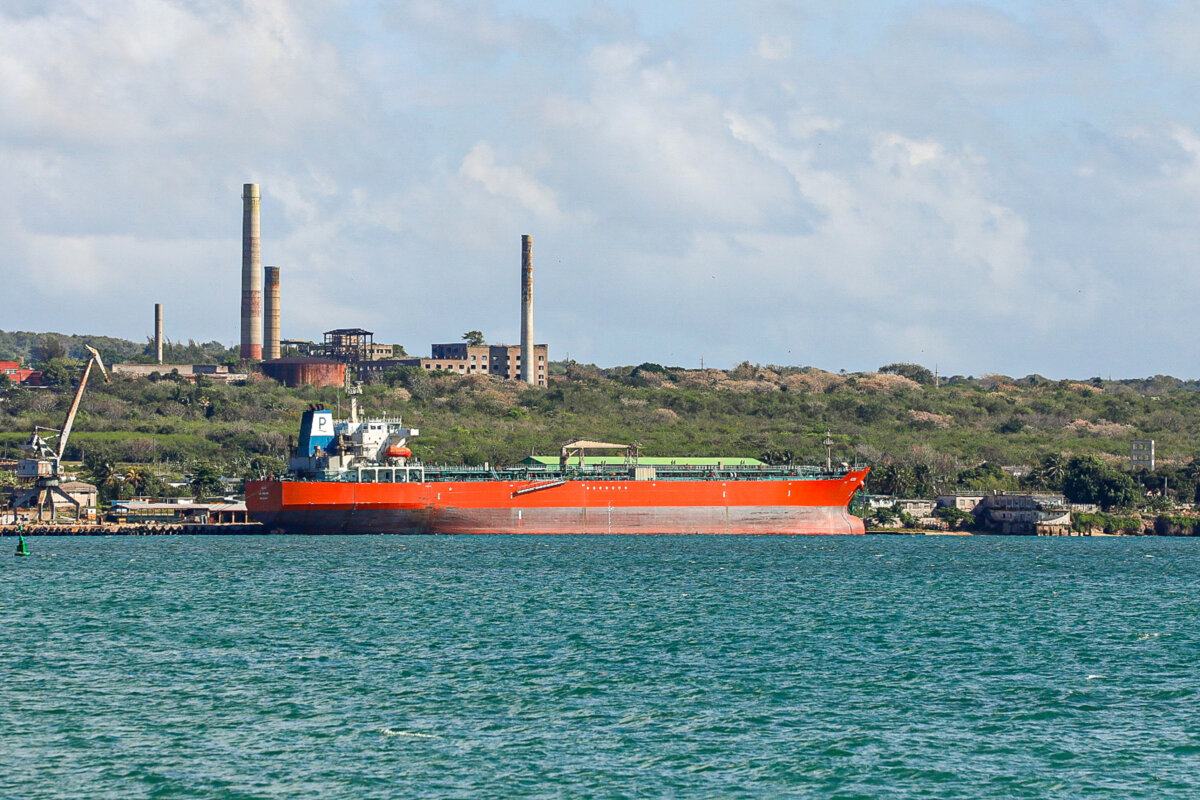

U.S. President Donald Trump said on March 29 that he has no issue with a Russian oil tanker supplying fuel to Cuba, despite U.S. sanctions targeting countries that provide oil to the island.
“We have a tanker out there. We don’t mind having somebody get a boatload because they need [it]. They have to survive,” Trump told reporters aboard Air Force One.
“I told them, if a country wants to send some oil into Cuba right now, I have no problem with that, whether it’s Russia or not.”
Tracking site MarineTraffic shows that a Russian-flagged oil tanker carrying about 730,000 barrels of oil was heading to the Port of Matanzas in Cuba and is expected to arrive by March 31.
When asked whether the Russian oil shipment to Cuba would contribute to Russian President Vladimir Putin’s war in Ukraine, Trump said he didn’t think so and signaled willingness to allow other countries to do the same.
“It doesn’t help [Putin]. He loses one boatload of oil, that’s all it is. If he wants to do that, and if other countries want to do it, it doesn’t bother me much. It’s not going to have an impact. Cuba’s finished,” Trump said.
“They have very bad and corrupt leadership, and whether or not they get a boat of oil, it’s not going to matter. I’d prefer letting it in, whether it’s Russia or anybody else, because the people need heat and cooling and all the other things that you need.”
Cuba has relied on Venezuela’s oil supply for decades, but supplies had been cut after U.S. forces captured then-Venezuelan leader Nicolás Maduro in a Jan. 3 operation, with interim leader Delcy Rodríguez redirecting oil deliveries to the United States.
Trump signed an executive order late January imposing tariffs on any country that “directly or indirectly provides oil to Cuba,” a move that exacerbated fuel shortages in the Caribbean island nation.
In his order, Trump accused the Cuban regime of aligning itself with “hostile countries, transnational terrorist groups, and malign actors,” including Russia, China, and Iran, as well as U.S.-designated foreign terrorist groups Hamas and Hezbollah.
Cuban leader Miguel Díaz-Canel acknowledged the impact of Trump’s actions in a national address in February and called for “unity.” He said the island nation had not received petroleum shipments for three months, resulting in widespread power outages.
Trump suggested earlier in March that Cuba may be subject to a “friendly takeover” but later said that “it may not be a friendly takeover.”
In a statement on March 13, Díaz-Canel said his government had been negotiating with U.S. officials to identify and resolve any bilateral issues with the United States.
“These conversations have been aimed at seeking solutions, through dialogue, to bilateral differences that exist between the two nations,” Díaz-Canel said, according to a statement posted by Cuban Foreign Minister Bruno Rodríguez Parrilla on social media. “There are international factors that have facilitated these exchanges.”
Díaz-Canel said his officials have expressed that negotiations must be held “on the basis of equality and respect for the political systems of both states,” as well as their sovereignty.
Chris Summers contributed to this report.
 Friends Read Free
Copy
Facebook
Tweet
Friends Read Free
Copy
Facebook
Tweet