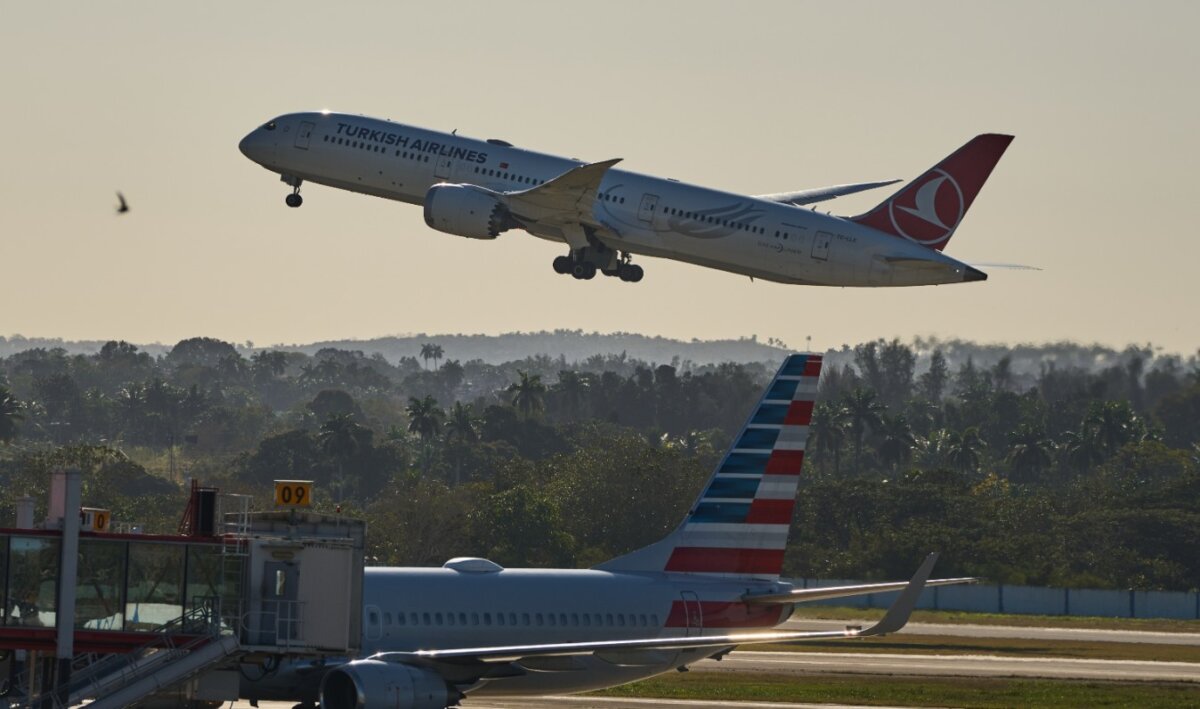
Cuba has warned airlines that there is insufficient aviation fuel for refueling on the island, following efforts by the Trump administration to cut off Havana’s oil supplies.
Air Canada announced on Feb. 9 that it was suspending its services to Cuba and would fly to the island only to collect 3,000 customers already there and bring them home, while several airlines have warned of delays and stopovers in the Dominican Republic.
The Cuban government warned pilots and airlines that jet fuel would not be available at nine airports, including José Martí International Airport in Havana, from Feb. 10 through at least March 11.
However, the Cuban Air Navigation Corp. stated on its Facebook page that it reiterated “its firm commitment to air connectivity and the nation’s development.”
“We continue working tirelessly to guarantee the safety, fluidity, and order of the airspace, supporting airline operations and ensuring that aviation in Cuba maintains the levels of reliability that characterize us,” it stated.
Cuba’s economy is heavily reliant on tourism, and if flights from Canada, Europe, and other regions were to be paused, it would exacerbate the crisis facing the regime in Havana.
Following the capture of Venezuelan leader Nicolás Maduro on Jan. 3, U.S. President Donald Trump has persuaded Maduro’s replacement, Delcy Rodríguez, to stop oil and gas exports to Cuba and then put pressure on Mexico to choke off its supplies.
Last year, Venezuela was Cuba’s largest oil supplier, providing the Caribbean nation with 26,500 barrels per day, roughly one-third of Cuba’s daily needs. Mexico came in second, with 5,000 barrels per day.
Cuban Leader Addresses Energy Crisis
Cuban leader Miguel Díaz-Canel Bermúdez delivered a two-hour speech on national television on Feb. 5, in which he acknowledged the impact of U.S. measures and called for “unity.”
On Jan. 31, Trump said that his administration had “started talking with Cuba” and admitted that it faced a humanitarian crisis. The following day, Cuban Deputy Foreign Minister Carlos Fernández de Cossío said that the regime in Havana was “ready to have a serious, meaningful and responsible dialogue.”
U.S. Rep. Carlos A. Giménez (R-Fla.), chairman of the U.S. House Subcommittee on Transportation and Maritime Security, sent a letter to the CEOs of American Airlines and Delta Air Lines on Feb. 5 that urged them to cancel their services to Cuba, citing national security and public safety concerns.
Direct international flights between the United States and several airports in Cuba have been allowed since May 2022, with American Airlines and Delta flying to Havana from New York City and Miami.
This was unaffected by the executive order Trump signed on Jan. 29, which states that Cuba constitutes an “unusual and extraordinary threat” to the national security of the United States.
That executive order threatens to impose tariffs on goods from countries that choose to sell or provide oil to Cuba.
The Cuban government announced on Feb. 9 that cultural events, including the Havana International Book Fair, have been suspended and bank hours reduced as it seeks to cut back on nonessential activity amid daily power outages.
The public bus system has virtually ground to a halt in Havana, and fuel distribution companies across the country have stated that sales will be limited to 20 liters (5.28 gallons) per person and will be made only in dollars, not the local peso.
Cuba’s state-owned Granma newspaper reported that Cuban Public Health Minister José Ángel Portal announced measures on Feb. 9 to address the energy crisis in the country’s hospitals, including reducing the number of surgeries performed.
The Associated Press and Reuters contributed to this report.
 Friends Read Free
Copy
Facebook
Tweet
Friends Read Free
Copy
Facebook
Tweet