
The United States and Japan have unveiled an action plan to secure critical minerals and rare-earth supply chains, which focuses on a trade system that will set minimum prices for such imports.
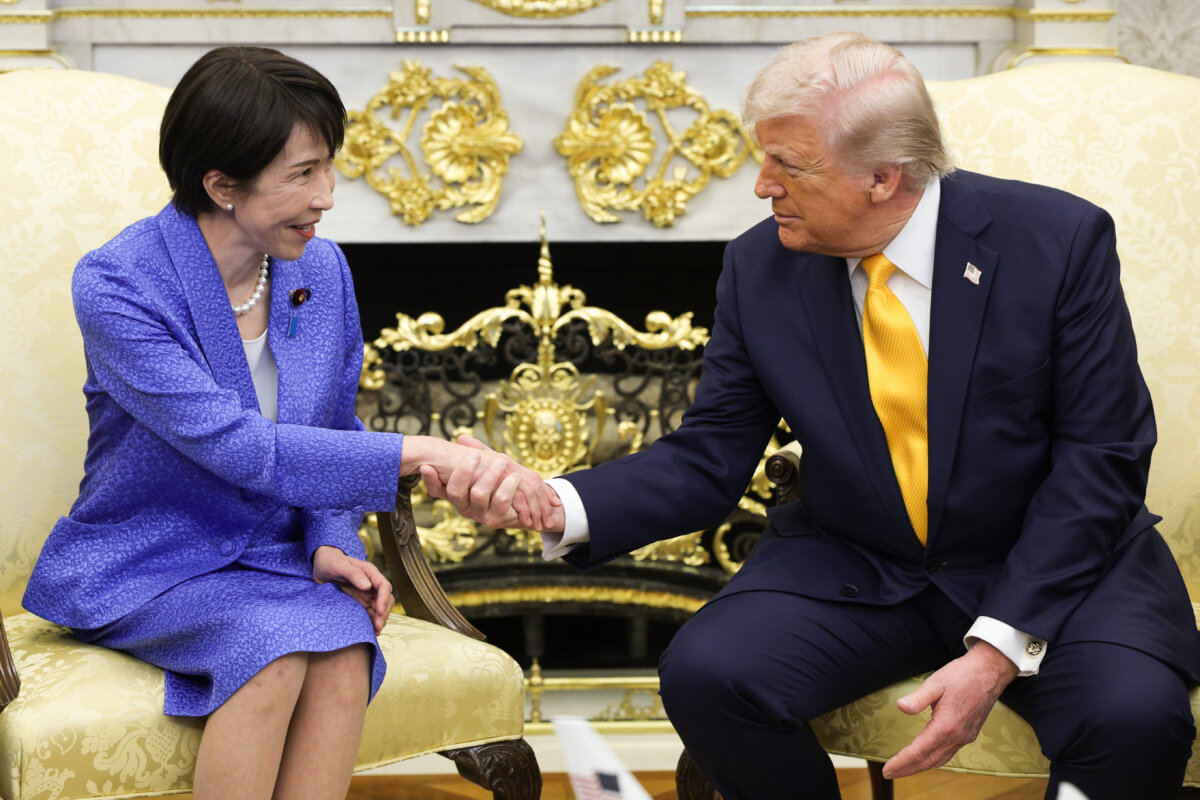
The U.S. Trade Representative’s (USTR) Office issued the action plan following a meeting between President Donald Trump and Japanese Prime Minister Sanae Takaichi at the White House on March 19.
The plan calls for discussions between the two sides on the potential development of coordinated trade policies such as “border-adjusted price floors,” which would establish a minimum pricing threshold for “a select group of critical minerals.”
The two countries will consult on how border-adjusted price floors could be incorporated into a critical minerals trade agreement involving other countries, along with any other provisions necessary to ensure supply chain resilience for participating countries, according to the plan.
Such provisions may include mining standards, technical and regulatory cooperation, coordination on geological mapping, joint responses to prevent disruptions and crises in critical minerals supply chains, coordinated stockpiling of critical minerals, and cooperation on measures to address economic coercion.
The two nations seek to develop strategic trade policies and border measures to curb supply chain vulnerabilities and protect downstream industries that depend on critical mineral imports, according to the USTR.
“The United States and Japan are taking an important step to expand the production and diversity of critical minerals, laying the foundation for a binding plurilateral agreement supported by price floors and other measures,” U.S. Trade Representative Jamieson Greer said in a statement. “Today’s announcement reinforces our supply chain resilience and energy security with a key partner in the Indo-Pacific region.”
Under the action plan, the two countries will identify specific mining, processing, and manufacturing projects for critical minerals of mutual interest in either country or in third countries, provided those projects meet internationally recognized responsible business conduct standards and prioritize financing and other policy support.
During his visit to Tokyo last year, Trump signed an agreement with Takaichi on cooperation to secure the supply of critical minerals and rare earth metals.
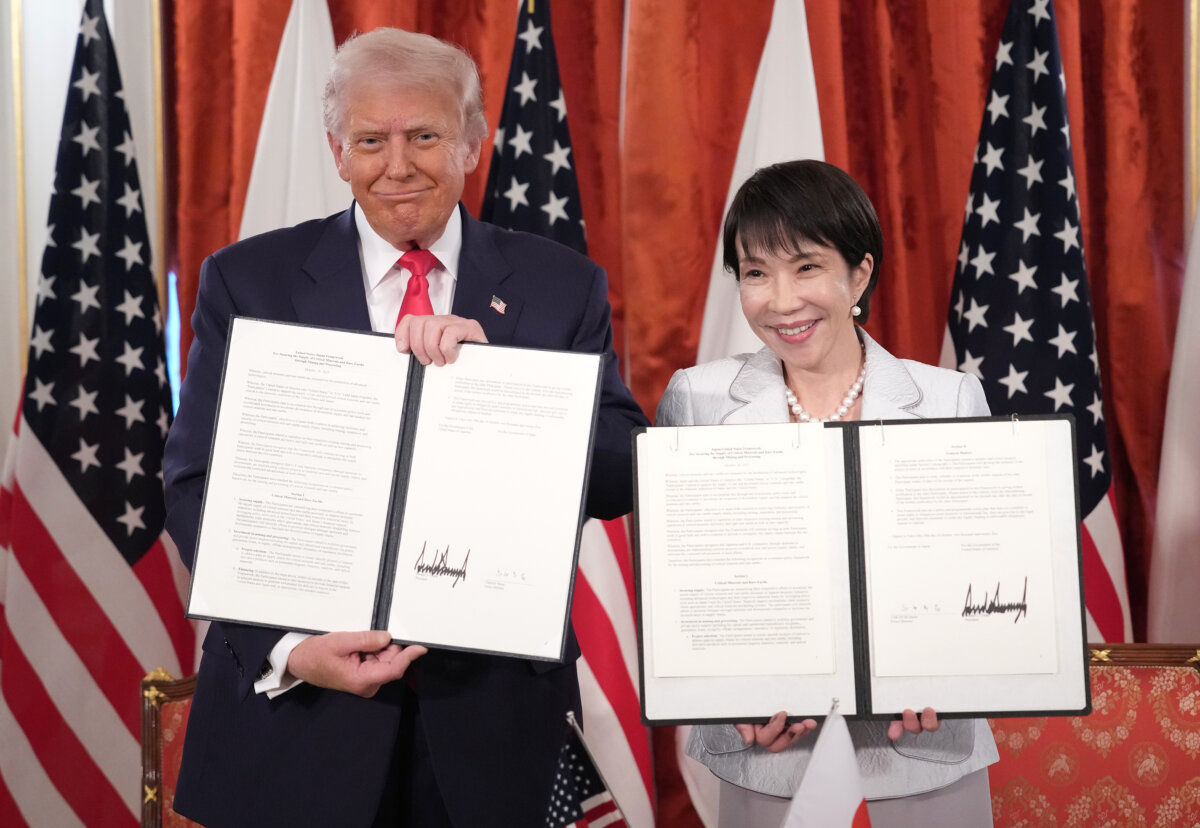
Under the agreement, both nations agreed to coordinate investment to accelerate development of “diversified, liquid, and fair markets for critical minerals and rare earths.”
The two countries also agreed to mobilize government and private sector support and jointly identify projects to address supply chain gaps in critical minerals and rare earths, including derivative products such as permanent magnets, batteries, catalysts, and optical materials.
The plan also follows a joint statement by the United States, Japan, and the European Commission last month, which said they will develop action plans to enhance critical minerals supply chain resilience, including trade policies such as price floors on critical mineral imports.
 Friends Read Free
Copy
Facebook
Tweet
Friends Read Free
Copy
Facebook
Tweet