
President Donald Trump said on March 27 that the United States likely doesn’t have to “be there” for NATO and that the alliance has provided little to no material support to U.S. military efforts against the Iranian regime.
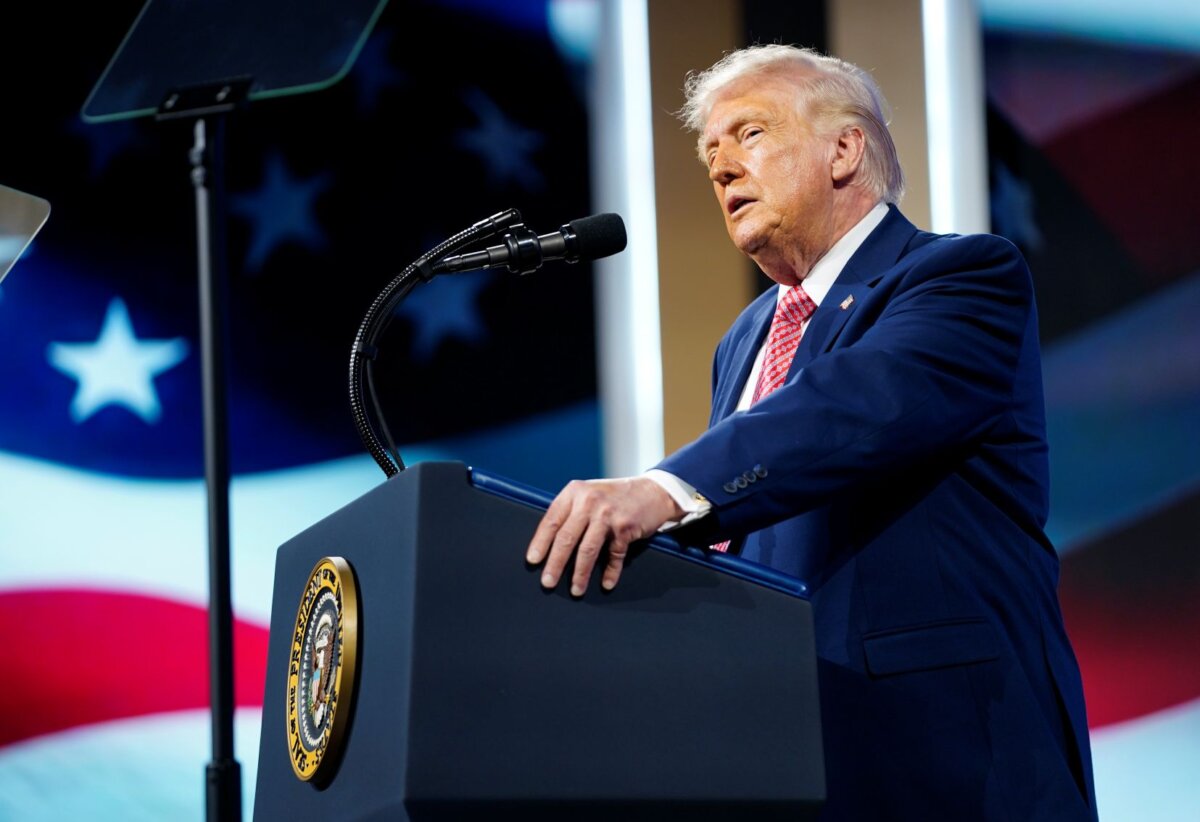
Trump made the comments while addressing questions at the Future Investment Initiative Institute summit at the Faena Forum in Miami Beach, Florida.
”I think a tremendous mistake was when NATO just wasn’t there. They just weren’t there. It’s going to make a lot of money for the United States because we spend hundreds of billions of dollars a year on NATO—protecting them,” Trump said. “We would have always been there for them, but now, based on their actions, I guess we don’t have to be, do we?”
“Why would we be there for them if they’re not there for us?” he said.
The comments stem directly from the ongoing U.S. military operation against Iran.
U.S. forces and the Israeli military launched military operations against the Iranian regime on Feb. 28. Many alliance leaders publicly opposed the U.S.–Israeli effort against Iran and offered no troops, aircraft, or logistical aid. Later, Washington sought help in reopening the Strait of Hormuz, and eventually, at least 22 countries, mainly NATO members, pledged support for safe passage of the critical waterway.
Trump has repeatedly voiced disappointment with the transatlantic alliance.
In a March 26 Cabinet meeting in Washington, the president also expressed surprise at the stance of several traditional partners. He said he received more support from Middle Eastern nations than from longtime NATO allies, such as the UK.
“[UK Prime Minister Keir Starmer] didn’t want to help us. Australia too was not great; I was a little surprised by Australia,” Trump told reporters.
European capitals cited the absence of consultation and disagreement with the operation’s scope as reasons for staying on the sidelines.
Early on, the Spanish government blocked U.S. forces from using military bases in Spain to support operations against Iran, and it said the conflict is at odds with the U.N. Charter.
The German government has also questioned the case for becoming involved in the conflict.
“This is not our war; we have not started it,” German Defense Minister Boris Pistorius told reporters on March 16.
Trump noted at the summit that Starmer had denied his request to dispatch two aircraft carriers to the Middle East.
French President Emmanuel Macron, by contrast, dispatched an aircraft carrier to the eastern Mediterranean just days into the conflict.
“We are not party to the conflict,“ Macron said on March 17. ”But we are ready in the Strait of Hormuz, with our partners, to guarantee freedom of navigation when conditions permit.”
Ryan Morgan contributed to this report.
 Friends Read Free
Copy
Facebook
Tweet
Friends Read Free
Copy
Facebook
Tweet