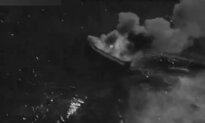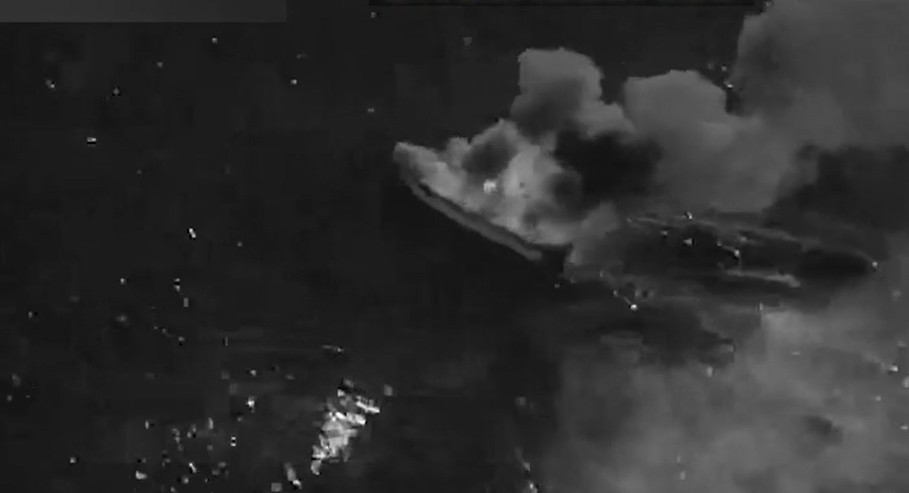
The U.S. military destroyed two drug-smuggling vessels and killed five traffickers in the eastern Pacific Ocean, the Southern Command (SOUTHCOM) said on April 12.
“On April 11, at the direction of SOUTHCOM commander Gen. Francis L. Donovan, Joint Task Force Southern Spear conducted two lethal kinetic strikes on two vessels operated by Designated Terrorist Organizations,” SOUTHCOM said in a post on X.
“Intelligence confirmed the vessels were transiting along known narco-trafficking routes in the Eastern Pacific and were engaged in narco-trafficking operations.”
They said two traffickers were killed in the first strike and three more were killed in the second strike. One trafficker survived the first strike.
SOUTHCOM said it immediately notified the U.S. Coast Guard to activate a search-and-rescue operation for the survivor.
On Jan. 20, 2025, President Donald Trump signed an executive order designating several narcotics cartels based in Latin America as terrorist organizations.
These include the Sinaloa cartel, CJNG, and several other Mexican organized crime groups, as well as Tren de Aragua from Venezuela and the El Salvador-based MS-13.
‘Total Systemic Friction’
In its April 12 post on X, SOUTHCOM said it was “applying total systemic friction on the cartels.”
Since September 2025, the U.S. military has carried out dozens of strikes on suspected drug-trafficking boats in the Caribbean Sea and eastern Pacific Ocean in a bid to stave off drug trafficking to the United States.
On March 20, SOUTHCOM said it destroyed another drug trafficking vessel in the Eastern Pacific.
The strikes have drawn controversy in Congress. Some Democrats have asserted that the U.S. military strikes are not effective, and some have argued that the strikes are illegal because they were initiated without congressional approval.
Last month, Rep. Jamie Raskin (D-Md.) said in the House that the Caribbean and Pacific strikes “also fundamentally weaken [the United States’] ability to bring cases against drug kingpins” because those in lower-level operations who are killed in the strikes cannot testify against drug lords.
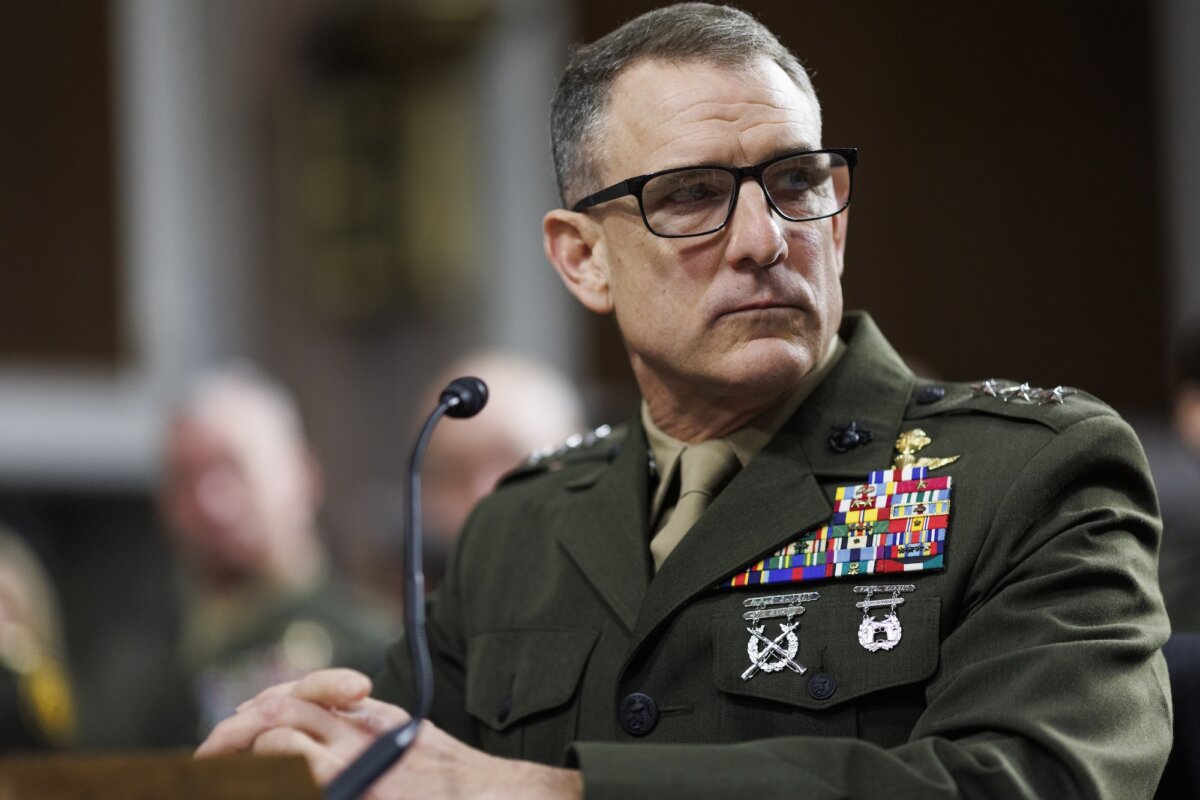
On March 17 and 19, Gen. Francis L. Donovan, the commander of SOUTHCOM who authorized the April 9 strike, testified to the Senate’s armed forces committee.
He said that he believed that military strikes on drug boats may not be a long-term solution to the problem.
“We’ve seen changes in the narco-traffickers’ patterns,” he told the Senate.
“Looking forward, senator, the boat strikes aren’t the answer.”
But the Trump administration has stated that the United States is in “armed conflict” with cartels in Latin America and has said the attacks are a necessary measure to stem the flow of drugs into the country.
“Although friendly foreign nations have made significant efforts to combat these organizations, suffering significant losses of life, these groups are now transnational and conduct ongoing attacks throughout the Western Hemisphere as organized cartels,” an October 2025 White House memo said.
The U.N. Office on Drugs and Crime said in its 2023 global report on cocaine, citing figures from the U.S. Drug Enforcement Administration, that 74 percent of cocaine flowing north out of South America uses the Pacific route.
A report in March 2025 by the U.S. State Department’s Bureau of International Narcotics and Law Enforcement Affairs said airborne operations are regularly scheduled using surveillance aircraft over the 42 million square miles of the Caribbean and Eastern Pacific Ocean known as the “transit zone.”
The Ecuador Connection
One of the countries that is a major source of cocaine trafficking is Ecuador, the report said.
“While Ecuador is not a major drug producing country, its extensive coastline on the Pacific Ocean, dollarized economy, and geographical position between major drug producers Colombia and Peru, renders Ecuador an attractive target for transnational and local criminal organizations to exploit its porous land, air, and sea ports of entry,” the report said.
Last month, Ecuadorian and U.S. military forces conducted joint operations against “designated terrorist organizations” in Ecuador.
Donovan also visited the country and met Ecuadorian President Daniel Noboa and senior Ecuadorian defense officials.
Reuters contributed to this report.
 Friends Read Free
Copy
Facebook
Tweet
Friends Read Free
Copy
Facebook
Tweet