
The U.S military is developing a small-scale pilot refinery in Idaho to domestically process a critical mineral needed for national security as efforts to break China’s hold on the critical minerals market expand.
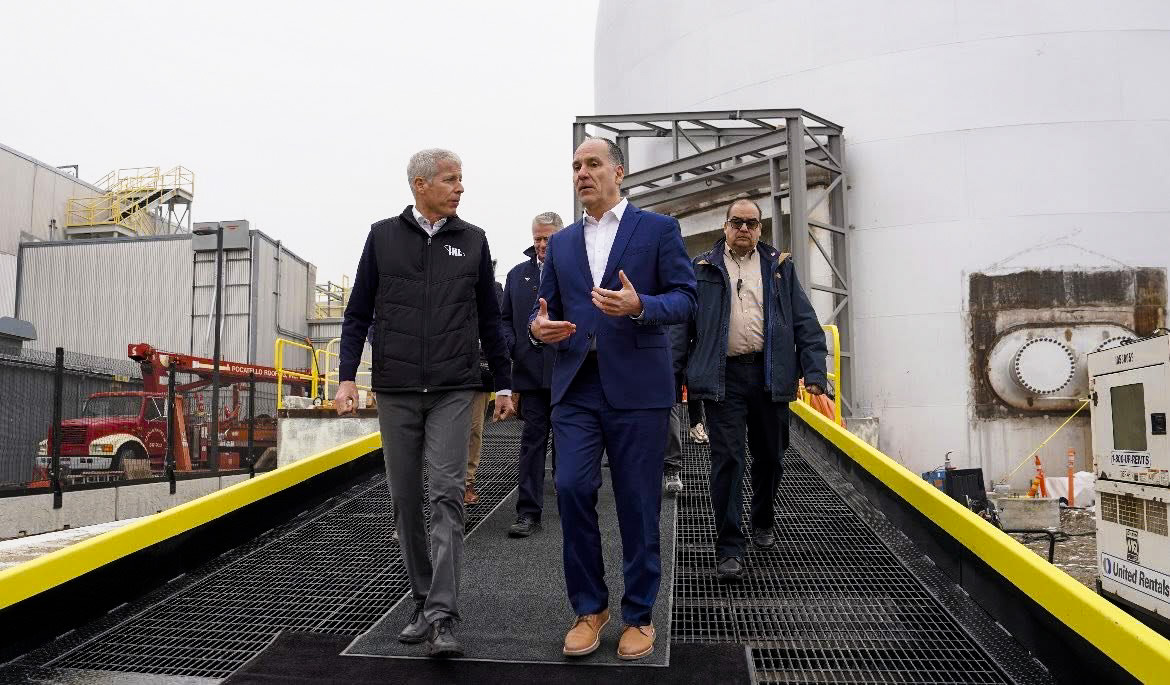
Plans for the test refinery are being developed with Perpetua Resources Corp. and the Idaho National Laboratory. The lab will host, commission, and operate a modular plant that is expected to recover critical and defense-related materials from Perpetua’s Stibnite gold mining project in central Idaho.
“Establishing domestic production capabilities for antimony trisulfide essential for munitions and defense systems strengthens America’s supply chain resilience while advancing Idaho’s leadership in critical minerals and workforce development,” Idaho National Laboratory Director John Wagner said in a statement.
Perpetua—backed by JPMorgan Chase and billionaire investor John Paulson—started construction this year to reopen the Yellow Pine mine to extract gold, silver, and stibnite.
The stibnite will be processed into military-grade antimony trisulfide—used in ammunition and explosives—and is the first mineral the military plans to refine domestically. The government currently gets most of the antimony trisulfide it needs from foreign sources mostly controlled by China and Russia.
The metal enhances the hardness of lead alloys used in ammunition manufacturing and has flame-retardant characteristics that are crucial for military vehicle components and equipment. The critical mineral can also serve a role in specialized military electronics for advanced guidance systems and communications equipment.
The pilot program is part of a larger partnership between Perpetua Resources and the U.S. Army to secure domestic sources of critical minerals. The company has secured more than $22 million in federal grants to help the Army establish a domestic antimony trisulfide supply chain.
Rep. Mike Simpson (R-Idaho) applauded the announcement.
“Idaho has the potential to provide our country with a domestic source of critical minerals that are essential to our national security needs,” he said. “This partnership is a win for Idaho, and I am pleased to see our great state once again play such a pivotal role on the world stage.”
Perpetua Resources’ refinery project could produce 7 to 10 metric tons of antimony trisulfide each year, which would supply a steady stream of it and make reliance on commercial refineries unnecessary.
This type of antimony has not been produced domestically for more than 60 years.
The Trump administration has stated that it hopes to develop other mineral refineries if the Idaho project is successful.
“We need to come up with a way to make our own [critical minerals] domestically that we can actually monitor and control within our borders,” said Mark Mezger, a munitions procurement adviser for the U.S. Army.
The U.S. Army spent $30 million developing the refinery program to produce antimony trisulfide after discovering in 2021 that China had stopped shipping the material, making domestic production crucial, according to Mezger.
The pilot project will use a small refinery designed by Canadian mineral processing company Westpro Machinery that can be transported in four shipping containers. The portable refinery is designed to crush rock and perform other processes.
The Idaho National Laboratory will test the refining facility for the next six months and, if it is successful, will operate it for the Army and Perpetua.
President Donald Trump signed an executive order in March to boost the mining and production of critical minerals domestically.
Last month, the Trump administration finalized a new list of minerals that are crucial to national security and the economy. The Interior Department and the U.S. Geological Survey identified 60 minerals, including 15 rare-earth elements.
Ten new minerals added to this year’s list are silver, copper, uranium, boron, potash, phosphate, lead, rhenium, silicon, and metallurgical coal.
The new list features critical minerals to power everything from advanced tech and smartphones to defense systems and energy grids.
In a similar project in Alaska, Nova Minerals Ltd. announced in October that it had secured a 43-acre site west of Anchorage to build an antimony refinery for military and domestic uses.
Also in October, a private initiative to mine antimony was launched by Sunshine Silver Mining and Refining. The project aims to revive a silver mine, also in Idaho, to build a commercial, large-scale silver antimony refinery.
The company expects to supply about 40 percent of the United States’ yearly antimony demand by 2028 and up to 80 percent by 2031 when the refinery is in full operation, according to the company.
Reuters contributed to this report.
 Friends Read Free
Copy
Facebook
Tweet
Friends Read Free
Copy
Facebook
Tweet