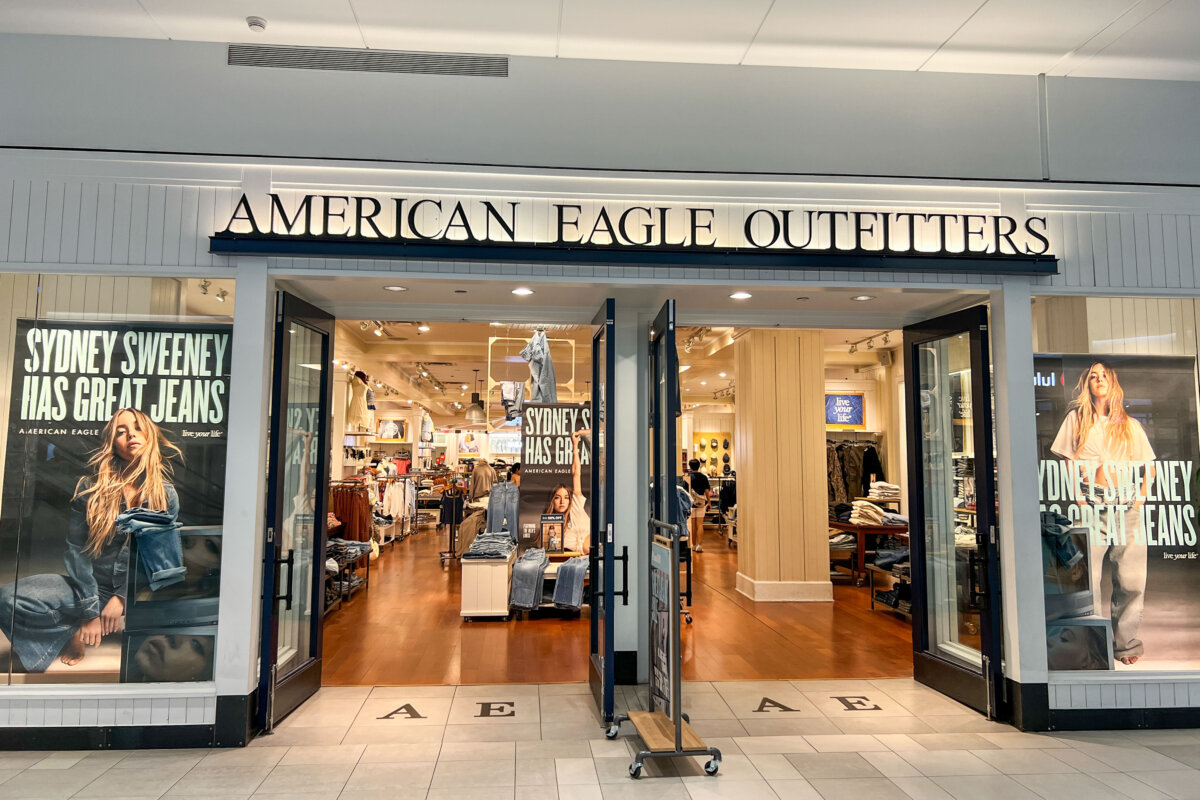

U.S. consumers continued opening their wallets this summer as spending at the retail level increased for the second consecutive month, new data show.
Retail sales rose by 0.5 percent in July following an upwardly adjusted 0.9 percent increase in June, according to advance estimates from the Department of Commerce’s Census Bureau released on Aug. 15.
As consumer sentiment cratered this past spring, retail sales declined by 0.1 percent in April and by 0.9 percent in May. Consumer confidence has since rebounded, with the Trump administration’s trade policy stabilizing after reaching peak uncertainty four months ago.
Last month’s reading was in line with the consensus estimate. The numbers are seasonally adjusted but not changed for inflation.
Sales at motor vehicle and parts dealers were the primary driver of higher receipts—rising by 1.8 percent—as motorists attempted to get ahead of potential tariff-related price increases in the coming months.
Cash registers at furniture and home furnishing stores also posted a 1.4 percent increase.
Others recorded notable increases, including digital retailers (0.8 percent), apparel stores (0.7 percent), and gasoline stations (0.7 percent), highlighting broad-based gains across the U.S. marketplace.
At the same time, sales fell at miscellaneous store retailers (negative 1.7 percent), building material and garden equipment locations (negative 1 percent), and electronics and appliance stores (negative 0.6 percent).
Total sales in the 12-month period were up by 3.9 percent, down from the upwardly revised 4.4 percent in the previous month.
Additionally, the retail sales control group—a key gauge that contributes to gross domestic product calculations and excludes auto dealers, building materials stores, food services, and gas stations—rose at a higher-than-expected pace of 0.5 percent.
“Retail sales growth slowed a bit in July, perhaps illustrating that the tariff pull-forward effect is waning,” Ted Rossman, senior industry analyst at Bankrate, said in a statement to The Epoch Times.
“Consumer spending continues to be more resilient than many expected, even as credit card balances and rates hover near record highs.”
Price Check on Aisle 1
A flurry of recent inflation data suggests that businesses have yet to fully pass on the cost of tariffs to consumers, absorbing the higher import duties.
The consumer price index (CPI) rose by 0.2 percent in July, while the headline annual inflation rate was unchanged for the second straight month at 2.7 percent.
While consumer inflation figures remained steady, two pipeline inflation indicators raised concerns that higher prices could be on the way.
According to the Bureau of Labor Statistics, import prices increased by 0.4 percent, up from the 0.1 percent drop in June, and higher than the goose egg estimate. Export prices increased by 0.1 percent, down from the 0.5 percent increase in the previous month.
The July producer price index (PPI)—a key metric economists monitor for possible future inflationary trends—unexpectedly increased by 0.9 percent. Core wholesale inflation, which strips out food and energy, also advanced by 0.9 percent.
These numbers may suggest that levies are traversing through the value chain, says Comerica Bank chief economist Bill Adams.
“Businesses were hesitant to raise prices charged to consumers last month, but the prices they charge each other are rising faster, with big increases touching many categories of goods and services,” Adams said in a note emailed to The Epoch Times.
This could also signal a larger reading for the Federal Reserve’s preferred personal consumption expenditure (PCE) price index, which will be released later this month.
The Cleveland Fed Inflation Nowcasting Model points to an annual PCE inflation rate of 2.6 percent for July.
But while retailers are absorbing much of the higher tariffs so far, Rossman notes this trend “likely can’t continue forever.”
“This week’s producer price index could foreshadow higher prices on store shelves in the months to come, which could be a headwind for consumer spending and the economy,” he said.
Opening Their Wallets
A resilient consumer has been one of the U.S. economy’s key strengths since emerging from the COVID-19 pandemic, surprising market watchers. Despite potential renewed price pressures and slowing employment conditions, households are still spending and maintaining solid balance sheets, says the Bank of America.
Total credit and debit card spending per household rose by 1.8 percent year over year in July, the highest increase since January. After seasonal adjustments, spending per household jumped by 0.6 percent monthly, up from a 0.4 percent increase in June.
“Will this forward momentum continue? An improvement in consumer discretionary spending is encouraging, but the data also reflected some temporary boosts, such as online retail promotions and back-to-school spending,” the bank said in an Aug. 12 report.
Meanwhile, the solid retail sales reading is a good start to the third quarter—and a promising sign for the gross domestic product.
The latest Atlanta Fed GDPNow Model indicates economic growth of 2.5 percent for the July–September period.
 Friends Read Free
Copy
Facebook
Tweet
Friends Read Free
Copy
Facebook
Tweet