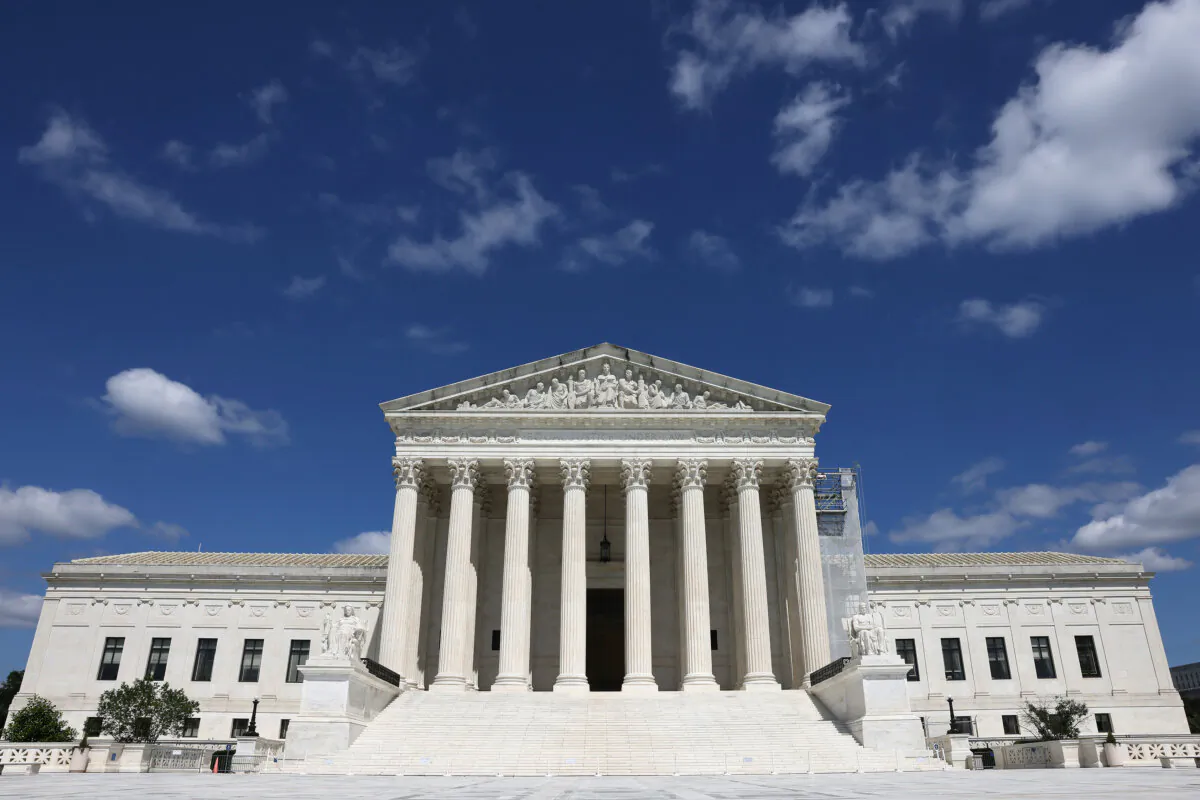

The U.S. Supreme Court on Friday declined a petition to expedite a challenge to the U.S. tariffs President Donald Trump announced in April, although the court did not indicate whether it will ultimately review the matter or not.
The justices wrote in a brief, unsigned order on Friday that a “motion of petitioners to expedite consideration of the petition for a writ of certiorari before judgment is denied,” responding to a request filed by companies to expedite the high court decision-making process on whether to take up their lawsuit against the Trump administration’s tariffs in a speedy manner.
The Supreme Court justices are scheduled to go on their summer recess by the end of June or in early July.
The companies, which include educational toy company Learning Resources, had filed a petition on Tuesday that sought to review the matter before judgment, which means to bypass the appeals court process.
The company had won a court ruling on May 29 stipulating that Trump cannot unilaterally impose tariffs using the emergency legal authority he had cited for them. That ruling is currently on hold, leaving the tariffs in place for now.
The Trump administration said in court filings that the companies’ requests to the Supreme Court were not justified and would be “a stark departure from established practice.”
“Once that Federal Circuit issues its decision, this Court would likely have an opportunity to determine whether to grant certiorari—and, if so, to hear the case during the October 2025 Term. That case would be a better vehicle than this one for resolving the question presented,” Solicitor General D. John Sauer wrote in court papers filed on behalf of the government.
It’s also not likely that the case’s “ultimate questions” regarding the tariffs’ legality would be resolved in the case that was presented by the two companies, Sauer said. The reason is that Congress has provided the Court of International Trade exclusive authority over lawsuits addressing international trade, he said.
Previously, two district courts have ruled that Trump’s tariffs are not justified under the law he cited for them, the International Emergency Economic Powers Act. Both of those cases are on appeal.
An appeals court has allowed the U.S. government to continue collecting tariffs under the emergency powers law ahead of arguments set for late July. But Learning Resources had argued in court documents that the case can’t wait that long “in light of the tariffs’ massive impact on virtually every business and consumer across the Nation, and the unremitting whiplash caused by the unfettered tariffing power the President claims.”
In April, Trump announced sweeping tariffs on nearly every country in the world and imposed higher duties on nations that do more trade with the United States, arguing that the United States has been treated unfairly in trade deals for years.
A week later, Trump paused the higher tariff rates to give those countries 90 days to negotiate but imposed higher import taxes on Chinese products. Weeks later, he announced a deal had been done between the United States and China to lower those higher rates.
Trump has also argued that the tariffs are for national security purposes, will lure manufacturers back to producing in America, and raise more money for the Treasury Department, which could potentially help deal with the federal deficit.
Reuters and The Associated Press contributed to this report.
 Friends Read Free
Copy
Facebook
Tweet
Friends Read Free
Copy
Facebook
Tweet