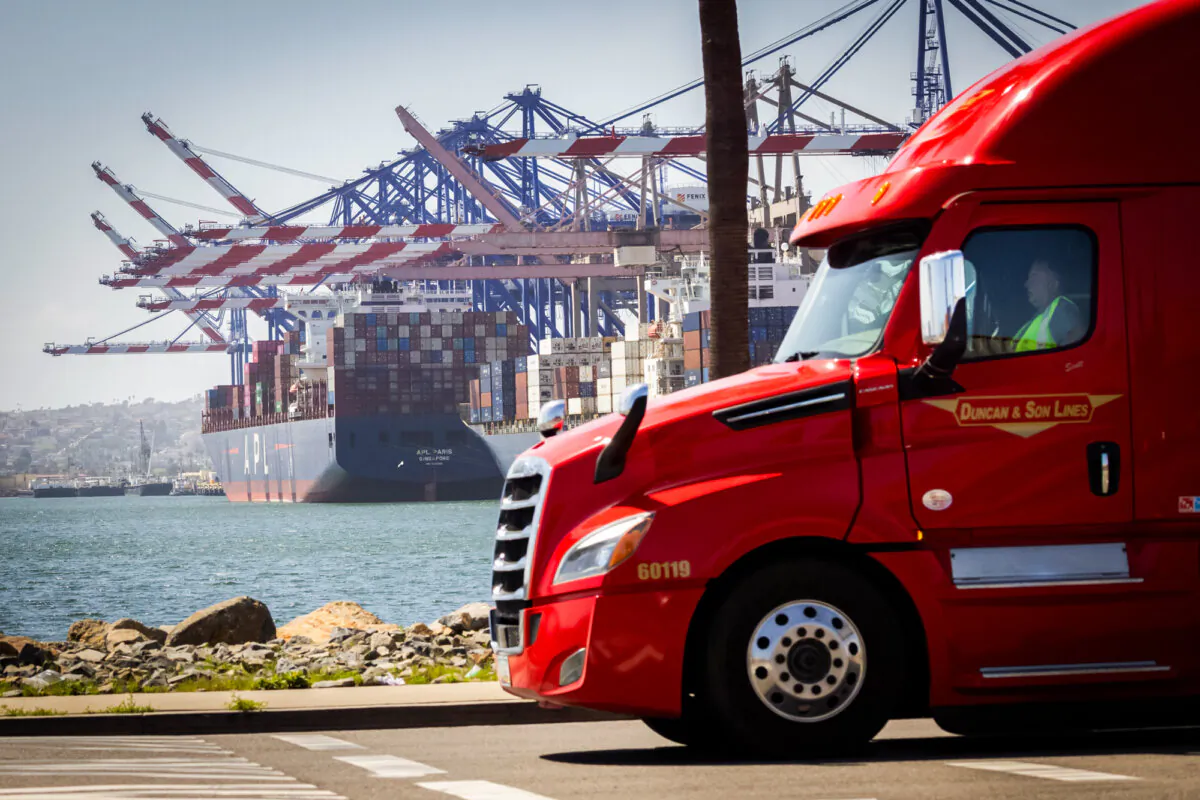

The federal government was so prompted by a spate of fatal big-rig crashes on U.S. roadways by truckers who aren’t legal American residents that Department of Transportation Secretary Sean Duffy on Sept. 26 announced an emergency action to restrict the eligibility of foreign-domiciled drivers to obtain commercial drivers licenses and learner’s permits.
The ruling was designed to strengthen regulatory oversight on the way states issue commercial drivers licenses, the the Federal Motor Carrier Safety Administration (FMCSA) said. A nationwide review launched in June by the agency found widespread non-compliance in multiple states, particularly California, Colorado, Pennsylvania, South Dakota, Texas, and Washington.
“Licenses to operate a massive, 80,000-pound truck are being issued to dangerous foreign drivers—oftentimes illegally,” Duffy said.
“This is a direct threat to the safety of every family on the road. Today’s actions will prevent unsafe foreign drivers from renewing their license and hold states accountable to immediately invalidate improperly issued licenses.”
According to the FMCSA, commercial drivers licenses had been improperly issued to drivers who didn’t meet eligibility requirements, and also to drivers whose eligibility to be in the United States had long expired. The review stems from five fatal semi truck crashes since January by non-domiciled commercial driver’s license (CDL) drivers—drivers who don’t reside in the state where their license was issued.
While the FMCSA establishes CDL safety regulations, training requirements, and hours-of-service standards, it’s the responsibility of individual state’s department of motor vehicles to administer those rules and issue commercial drivers licenses.
The Sept. 26 Transportation Department ruling strengthens FMCSA regulations in multiple ways. Eligibility for issuance of a CDL is now restricted to foreign citizens with lawful status to work in the United States either by holding an H-2A agricultural work visa, H-2B temporary visa, or an E-2 treaty investor visa. Those drivers also must provide a current passport and unexpired arrival/departure record.
At the state level, licensing agencies must query the Systematic Alien Verification for Entitlements (SAVE) system to verify the eligibility of CDL applicants and their documentation, the DOT said.
In California, the DOT added, approximately one-quarter of all commercial drivers licenses were found to be improperly issued to ineligible drivers. The DOT ruling went a step further in the Golden State by immediately halting issuance of non-domicled CDLs, as well as a review and subsequent suspension of all noncompliant drivers.
The state has 30 days to comply with the new regulations, the DOT said. Failure to comply will result in withholding of federal highway funds to the tune of nearly $160 million and doubling in year two.
“California must get its act together immediately or I will not hesitate to pull millions in funding,” Duffy said.
“To every other state around the country—find all improperly issued CDLs and revoke their licenses now. We owe it to the American people to ensure only lawful, qualified drivers are operating big rigs on our highways.”
The new regulations on CDL were necessary to tighten CDL credentialing standards, the American Trucking Associations (ATA) said in a statement.
“Rules only work when they are consistently enforced, and it’s imperative that all state driver licensing agencies comply with federal regulations,” ATA president and CEO Chris Spear said. “We appreciate USDOT taking these steps to guarantee that happens.”
The announcement follows President Trump’s executive order 14224 in March that called for greater roadway safety in the trucking industry and tighter restrictions on issuance of commercial drivers licenses, among other provisions.
 Friends Read Free
Copy
Facebook
Tweet
Friends Read Free
Copy
Facebook
Tweet