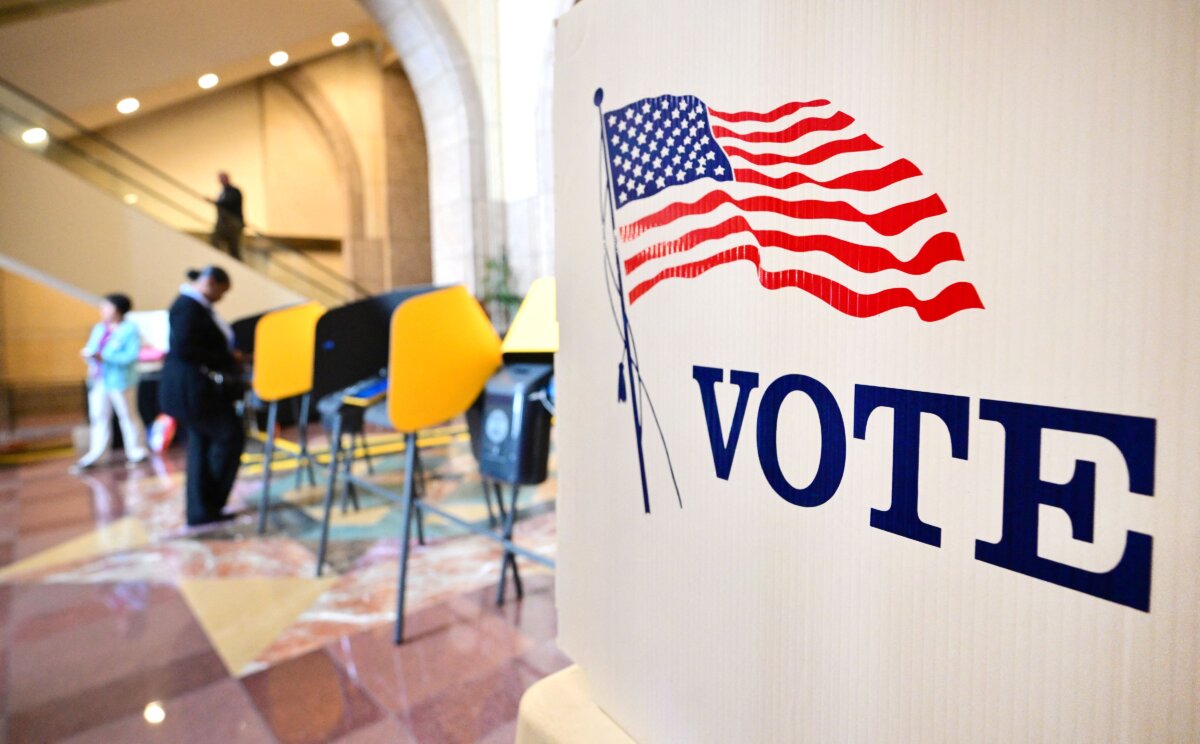

The FBI and the Cybersecurity and Infrastructure Security Agency (CISA) warned election officials and the public on Oct. 16 that cyber actors could use artificial intelligence to steal sensitive data ahead of the midterm elections.
The government has begun referring to AI as “super intelligence” following an executive order issued by President Donald Trump on Sept. 29. The order said the change was intended to reflect the technology’s transformative capabilities and “the limitless opportunities” it offers.
In a public service announcement, the agencies warned that hackers could use phishing and smishing tactics to disrupt the elections, which involve sending deceptive emails, text messages, audio, and videos to trick recipients into revealing sensitive information or clicking malicious links.
“Election officials, candidates, and their political organizations are attractive targets to malicious cyber criminals due to their access to voter registration data, current government officials, or sensitive campaign information,” it stated.
According to the statement, AI technology allows cybercriminals to craft text messages or emails that closely resemble legitimate communications, making it difficult for recipients to identify fraudulent messages.
It also warned that cyber actors could use AI-generated deepfake videos and audio recordings to create new identities, impersonate real people, and bolster phishing schemes.
“During the last two election cycles, election officials experienced a surge of phishing attempts, and within the last year, the FBI saw an increase in smishing attempts through encrypted chat applications,” it stated.
“Malicious cyber actors will continue to develop innovative technologies to breach digital defenses.”
Election officials and the public are advised to carefully verify the sources of emails and text messages they receive, according to the statement.
The agencies also recommend using phishing-resistant multi-factor authentication for all services “to the extent possible,” particularly for email accounts, virtual private networks, and accounts with access to critical systems.
Organizations are advised to enhance their security infrastructure and educate employees on how to identify phishing and smishing attempts. It stated that employees should verify requests for sensitive information through secondary channels whenever possible.
The agencies said organizations should use unique passphrases for password logins and avoid reusing passphrases across multiple accounts.
Director of National Intelligence Jay Clayton told CNBC on Oct. 16 that both the Trump administration and American companies “need to be wary” of foreign espionage with the rise of AI.
Clayton said that while AI platforms and capabilities can be used for “very good purposes,” they can also be exploited for nefarious purposes.
“It’s something that our private-sector companies need to be wary of; we as a government need to be wary of,” he told the news outlet.
Meanwhile, Secretary of War Pete Hegseth issued a memo last month directing U.S. Cyber Command and the Pentagon’s combat support agencies to focus intelligence and cyber tools on foreign efforts to interfere in the 2026 midterm elections.
Hegseth wrote that secure voting plays a critical role “in sustaining the strength of our democratic system,” and that the department “will effectively wield its capabilities to protect and uphold the reliability of America’s voting mechanisms against external manipulation and disruption from foreign actors.”
Timothy Frudd and Kimberly Hayek contributed to this report.
 Friends Read Free
Copy
Facebook
Tweet
Friends Read Free
Copy
Facebook
Tweet