
The White House said on April 23 that China and other foreign adversaries are carrying out “industrial-scale campaigns” to extract advanced U.S. artificial intelligence (AI) technology.
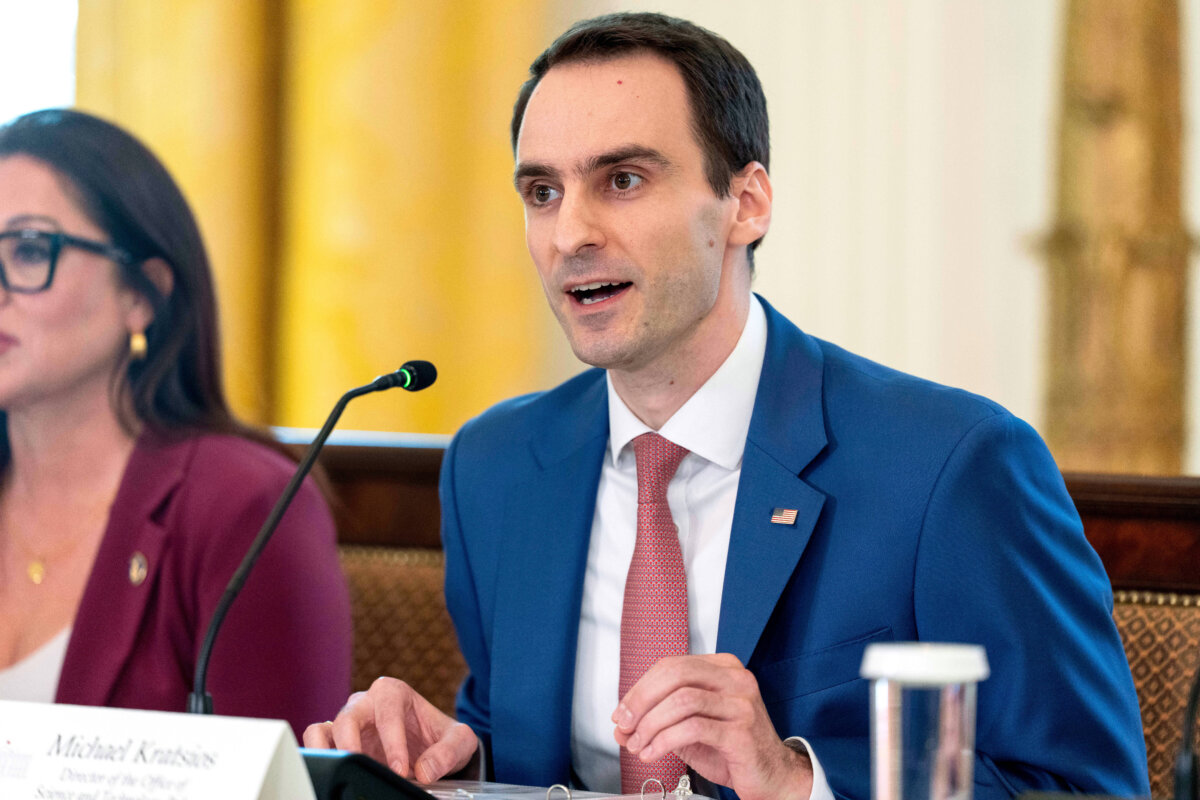
In a memo addressed to federal agencies, Michael Kratsios, director of the White House Office of Science and Technology Policy, stated that although the United States remains a global leader in AI, officials have evidence that foreign entities—primarily based in China—are systematically targeting U.S. frontier AI systems.
According to the memo, these efforts involve “tens of thousands of proxy accounts” and the use of jailbreaking techniques designed to bypass safeguards and extract proprietary information. Kratsios said such campaigns exploit American innovation and technical expertise at scale.
Although the resulting systems do not fully replicate the capabilities of leading U.S. AI models, they enable foreign actors to develop comparable products at significantly lower cost.
“These distillation campaigns also allow those actors to deliberately strip away security protocols from the resulting models and undo mechanisms that ensure those AI models are ideologically neutral and truth-seeking,” the memo reads.
AI distillation refers to the process of training smaller, more efficient models using outputs from larger, more advanced systems—often as a cost-saving measure. Although distillation is widely used in legitimate development, U.S. officials argue that its misuse in this context undermines U.S. research and intellectual property.
Kratsios emphasized that the United States supports AI innovation, but he called malicious, large-scale distillation efforts “unacceptable.”
“There is nothing innovative about systematically extracting and copying the innovations of American industry,” he wrote. “And there is nothing open about supposedly open models that are derived from acts of malicious exploitation.”
To address the threat, the administration plans to increase information-sharing with U.S. AI companies about suspected foreign activity and strengthen coordination between government and industry. Officials also aim to develop better detection, mitigation, and response strategies to counter such campaigns.
In addition, the White House is exploring measures to hold foreign actors accountable for these activities.
The memo comes just weeks before a planned meeting in Beijing between U.S. President Donald Trump and Chinese leader Xi Jinping, potentially adding tension to an already fragile tech relationship between the two countries. A temporary easing of tensions had been reached in October 2025, but the latest warnings suggest ongoing friction in the AI sector.
The issue also raises fresh uncertainty around U.S. semiconductor exports. In January, the administration approved conditional sales of advanced AI chips from Nvidia to China. However, Commerce Secretary Howard Lutnick indicated this week that shipments have not yet begun.
Reuters contributed to this report.
 Friends Read Free
Copy
Facebook
Tweet
Friends Read Free
Copy
Facebook
Tweet