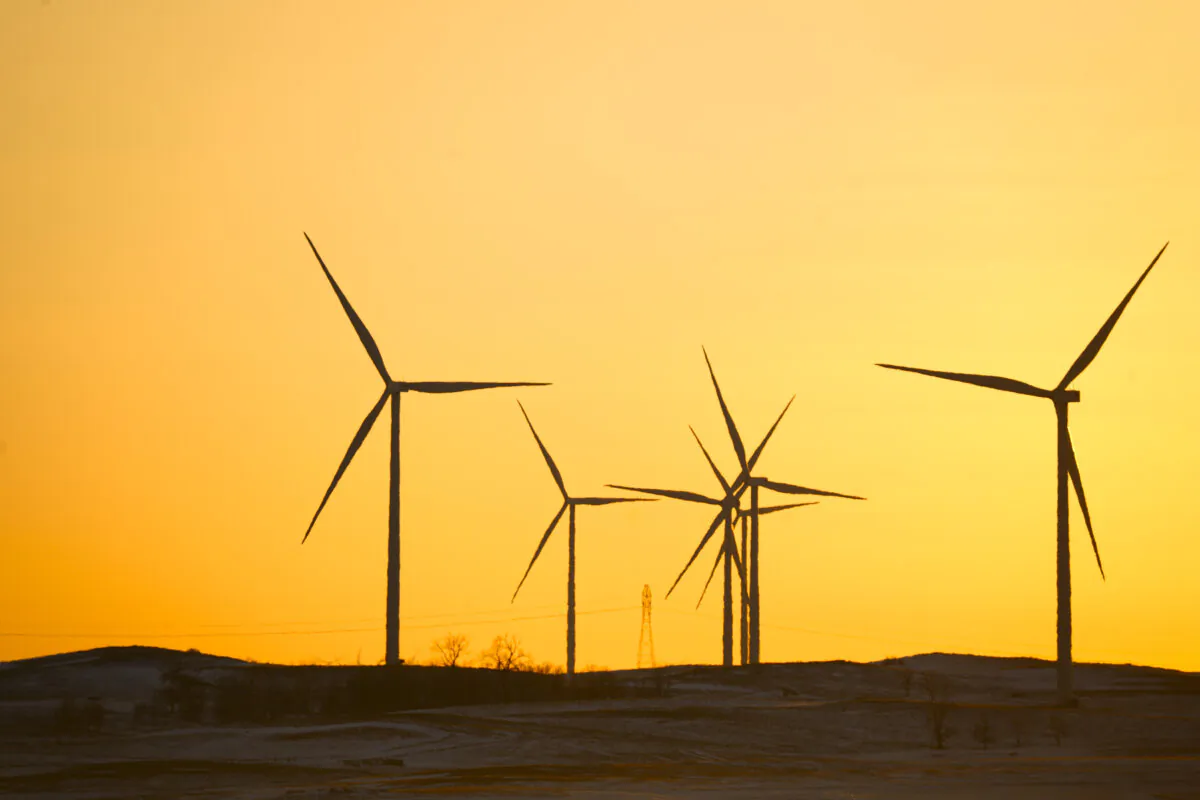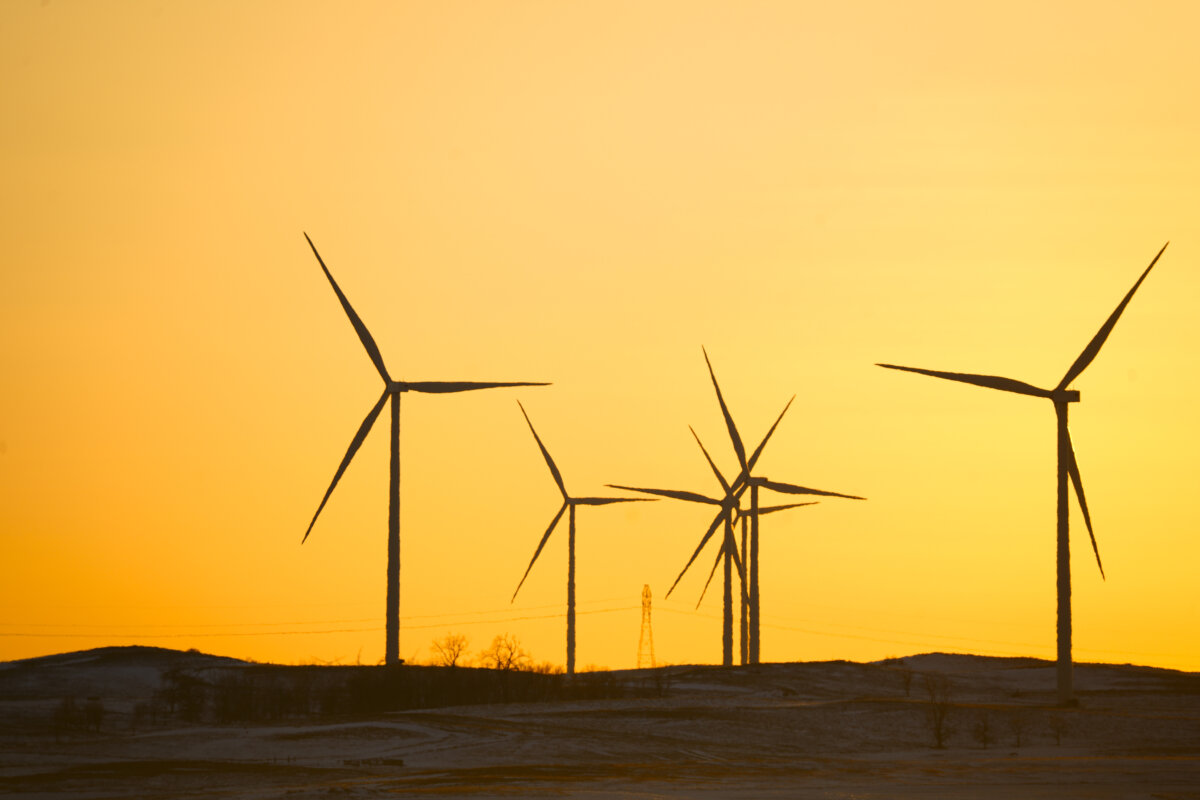

The U.S. Department of Agriculture (USDA) has stopped all of its programs that fund solar or wind power projects on productive farmland, Agriculture Secretary Brooke Rollins said in an Aug. 18 X post.
“Millions of acres of prime farmland is left unusable so Green New Deal subsidized solar panels can be built. This destruction of our farms and prime soil is taking away the futures of the next generation of farmers and the future of our country,” she said.
The Biden administration had promoted wind and solar deployment across the country, a decision that has been mostly reversed by the current Trump administration.
Rollins’s decision comes as hundreds of thousands of acres of U.S. farmland have already been converted for solar and wind power usage.
“From 2012 to 2020, more than 90 percent of large-scale, commercial wind turbines and 70 percent of solar farms in rural areas were installed on agricultural land,” the USDA stated in a Sept. 12, 2024, post.
These projects took up 424,000 acres of farmland as of 2020.
“Solar panels, also, are frequently installed in small-scale systems typically built on existing structures such as rooftops and do not directly affect land cover or lead to concerns about land use competition,” the Biden-era report reads. It noted that less than 0.05 percent of the total 897 million acres of farmland is used for solar and wind purposes.
Similarly, for wind projects, the USDA had stated that the direct land cover impacts of wind farms are restricted to smaller areas.
Farmers and ranchers can continue agricultural production near wind turbines for revenue purposes, it stated. However, it also pointed to the disadvantages of converting land to wind farms.
“At the same time, wind developments can be associated with noise disturbance, altered views, and effects on wildlife,” the 2024 report reads.
The USDA’s Rural Energy for America Program was given more than $2 billion to support agricultural producers and rural small business owners through renewable energy grants. The funds came from the Inflation Reduction Act passed by the Biden administration in 2022.
It is unclear how much of the funds were used for productive farmland. According to the USDA website, the agency has currently stopped accepting grant applications for the program.
In her Aug. 18 post, Rollins also said that halting renewable projects on U.S. farmland ends “the use of panels made by foreign adversaries like China.”
China controls the supply chain of critical materials necessary for solar and wind power technologies.
For instance, China refines 50 percent to 70 percent of lithium and cobalt, about 35 percent of nickel, and nearly 90 percent of rare-earth elements globally, according to the International Energy Agency.
Lithium, nickel, and cobalt are critical components of batteries used in storing solar and wind power. Rare-earth elements are a crucial component for wind turbines.
However, a July 28 post from Michigan State University states that solar panels help farmers earn income and save water.
Farmers who installed solar panels on their farmland made $50,000 per acre in profits annually, which is 25 times the amount that they would have earned by planting crops, the university stated in the post.
By not irrigating the land, the amount of water saved was equivalent to supplying 27 million people with drinking water or irrigating 7,500 acres of orchards, it stated.
Ending Solar, Wind Projects
Rollins’s announcement follows a July 7 executive order signed by President Donald Trump that sought to end market-distorting subsidies for “unreliable, foreign-controlled energy sources.”
The proliferation of unreliable energy such as wind and solar “displaces affordable, reliable, dispatchable domestic energy sources, compromises our electric grid, and denigrates the beauty of our Nation’s natural landscape,” the order reads.
On Aug. 1, Interior Secretary Doug Burgum signed an order seeking to rein in wind and solar power projects and ensure that federal lands are used optimally for energy projects.
The Interior Department questioned the use of federal lands for solar and wind projects, given their high land requirements, according to a statement from the agency.
“One advanced nuclear plant … produces 33.17 megawatts (MW) per acre, while one offshore wind farm produces approximately 0.006 MW/acre, which is approximately 5,500 times less efficient than one nuclear plant,” the agency stated.
 Friends Read Free
Copy
Facebook
Tweet
Friends Read Free
Copy
Facebook
Tweet