
Vice President JD Vance said on Feb. 25 that the Trump administration has seen evidence that Iran is trying to rebuild its nuclear program and pursue a warhead after the June 2025 U.S. strikes on three of its nuclear sites.
“[Trump] is sending two of his best negotiators to Geneva tomorrow in order to continue to try to strike the best deal possible for the American people. But the principle is very simple: Iran cannot have a nuclear weapon,” Vance told reporters. “If they try to rebuild a nuclear weapon, that causes problems for us. And in fact, we’ve seen evidence that they have tried to do exactly that.”
Vance said President Donald Trump was sending U.S. special envoys Steve Witkoff and Jared Kushner to Geneva to negotiate with the Iranian delegation on Thursday to “try to address that problem” diplomatically.
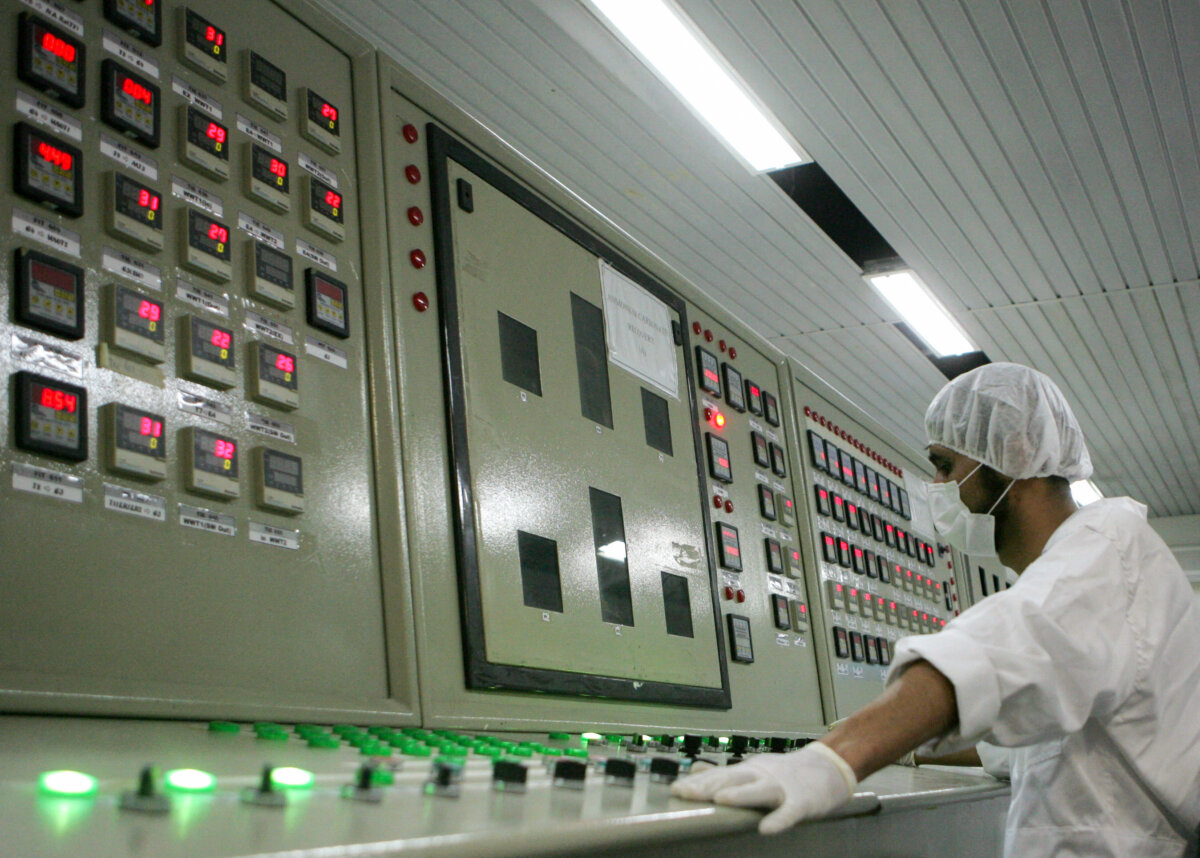
U.S. officials said last year’s Operation Midnight Hammer completely destroyed Iran’s Natanz, Fordow, and Isfahan nuclear sites. The president has indicated that an Iranian civil nuclear program is a red line in negotiations with Tehran, which Witkoff confirmed on Sunday.
“They say that it’s all about their civil program, and yet they’ve been enriching well beyond the number that you need for civil nuclear; it’s up to 60 percent,” Witkoff said. “They’re probably a week away from having industrial-grade bomb-making material, and that’s really dangerous. So, can’t have that.”
Witkoff said zero uranium enrichment will remain a red line for Trump until Iran can prove that it can “behave.”
Tehran has denied seeking a nuclear weapon. As a member of the Non-Proliferation Treaty, Iran has said it has a right to pursue a civilian nuclear program.
Meanwhile, Rafael Grossi—director general of the U.N.’s International Atomic Energy Agency—said last June that Iran could resume enriching uranium at a limited level in a matter of months.
The agency said it was able to inspect all 13 of Iran’s declared nuclear facilities that weren’t bombed, but did not have access to Natanz, Fordow, or Isfahan.
Both the U.S. intelligence community and the International Atomic Energy Agency concluded separately that Iran ended a nuclear weapons development program in 2003.
“We continue to assess Iran is not building a nuclear weapon and that [Supreme Leader Ali] Khamenei has not reauthorized the nuclear weapons program he suspended in 2003, though pressure has probably built on him to do so,” the U.S. intelligence community wrote in its 2025 annual worldwide threat assessment report.
“In the past year, there has been an erosion of a decades-long taboo on discussing nuclear weapons in public that has emboldened nuclear weapons advocates within Iran’s decision-making apparatus. Khamenei remains the final decision maker over Iran’s nuclear program, to include any decision to develop nuclear weapons.”
The International Atomic Energy Agency has said Iran’s enrichment of uranium to the levels the nation produced, 60 percent, is of serious concern, as it can be further refined to the 90 percent weapons-grade threshold.
Reuters contributed to this report.
 Friends Read Free
Copy
Facebook
Tweet
Friends Read Free
Copy
Facebook
Tweet