
The Trump administration is wondering why Iran has not yet yielded to the United States and agreed to end its nuclear program amid Washington’s recent large-scale military buildup in the Middle East, U.S. special envoy Steve Witkoff said on Feb. 21.
Speaking with U.S. President Donald Trump’s daughter-in-law on Fox News’s “My View with Lara Trump,” Witkoff said the president has “red lines” in negotiations with Iran, particularly zero uranium enrichment.
“They say that it’s all about their civil program, and yet they’ve been enriching well beyond the number that you need for civil nuclear; it’s up to 60 percent,” Witkoff said. “They’re probably a week away from having industrial-grade bomb-making material, and that’s really dangerous. So, can’t have that.”
Witkoff said zero uranium enrichment will remain a red line for the Trump administration until the Iranian regime can prove that it can “behave.”
Lara Trump asked Witkoff whether the Iranians have any red lines with Washington amid ongoing negotiations.
“The president asked me that this morning, and he’s, I don’t want to use the word ‘frustrated’—it’s almost because he understands he’s got plenty of alternatives,” Witkoff said. “But it’s curious. He’s curious as to why they haven’t, I don’t want to use the word ‘capitulated,’ but why they haven’t capitulated.
“Why, under this sort of pressure, with the amount of sea power, naval power, that we have over there, why they haven’t come to us and said: ‘We profess that we don’t want a weapon. So here’s what we’re prepared to do.’ And yet it’s hard to sort of get them to that place.”
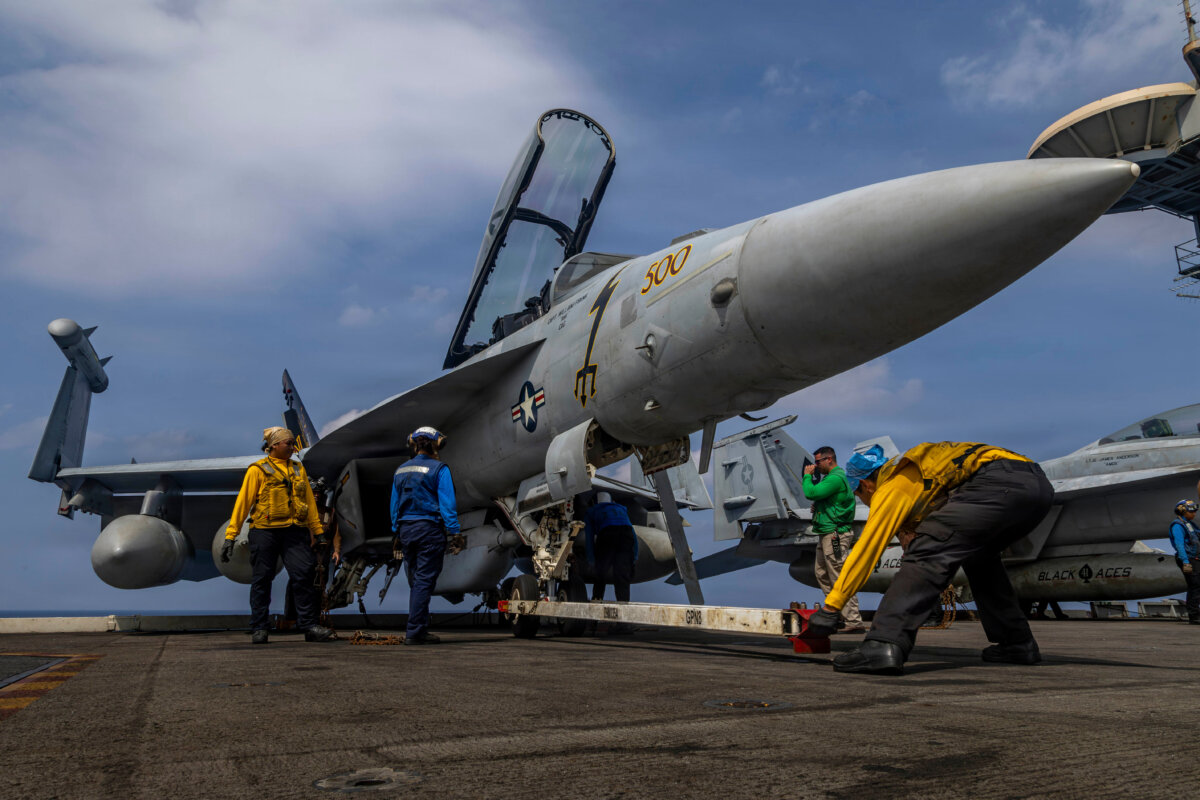
Throughout the past month, the Trump administration has embarked on one of the largest military buildups in the Middle East in recent years, warning Tehran that last year’s U.S. strikes on its nuclear facilities could merely be a preamble to what may come if the regime refuses to meet Washington’s demands of zero uranium enrichment.
During the inaugural meeting of Trump’s Board of Peace on Feb. 19, Trump suggested that Iranian negotiators may have less than two weeks to reach a deal with the United States.
“Now we may have to take it a step further, or we may not. Maybe we’re going to make a deal,” he said. “You’re going to be finding out over the next probably 10 days.”
Trump went further, indicating that he needs to see a “meaningful deal” emerge between Tehran and Washington, “otherwise, bad things happen.”
The U.S. president elaborated while speaking with reporters on Air Force One on Feb. 19, saying he would give “10 to 15 days, pretty much maximum” for negotiations. Trump said he believed it would be enough time to determine whether it’s possible to reach a deal with the regime.
Trump has directed two aircraft carrier strike groups to the Middle East since January, strengthening the U.S. military force posture in the region as his administration pushes Tehran to strike a deal or face a potential second series of strikes following those on Iran’s nuclear program in June 2025.
During his Feb. 21 interview with Fox News, Witkoff said he has met with Iranian opposition figure Reza Pahlavi, son of the now-deceased former ruler of Iran who served as Shah before he was ousted in the 1979 Islamic Revolution. He didn’t offer further details of the meeting.
Living in exile, Pahlavi has rallied oppositional forces in Iran, particularly during the wave of anti-regime protests last month, which was the largest surge of domestic unrest since the revolution.
Ryan Morgan contributed to this report.
 Friends Read Free
Copy
Facebook
Tweet
Friends Read Free
Copy
Facebook
Tweet