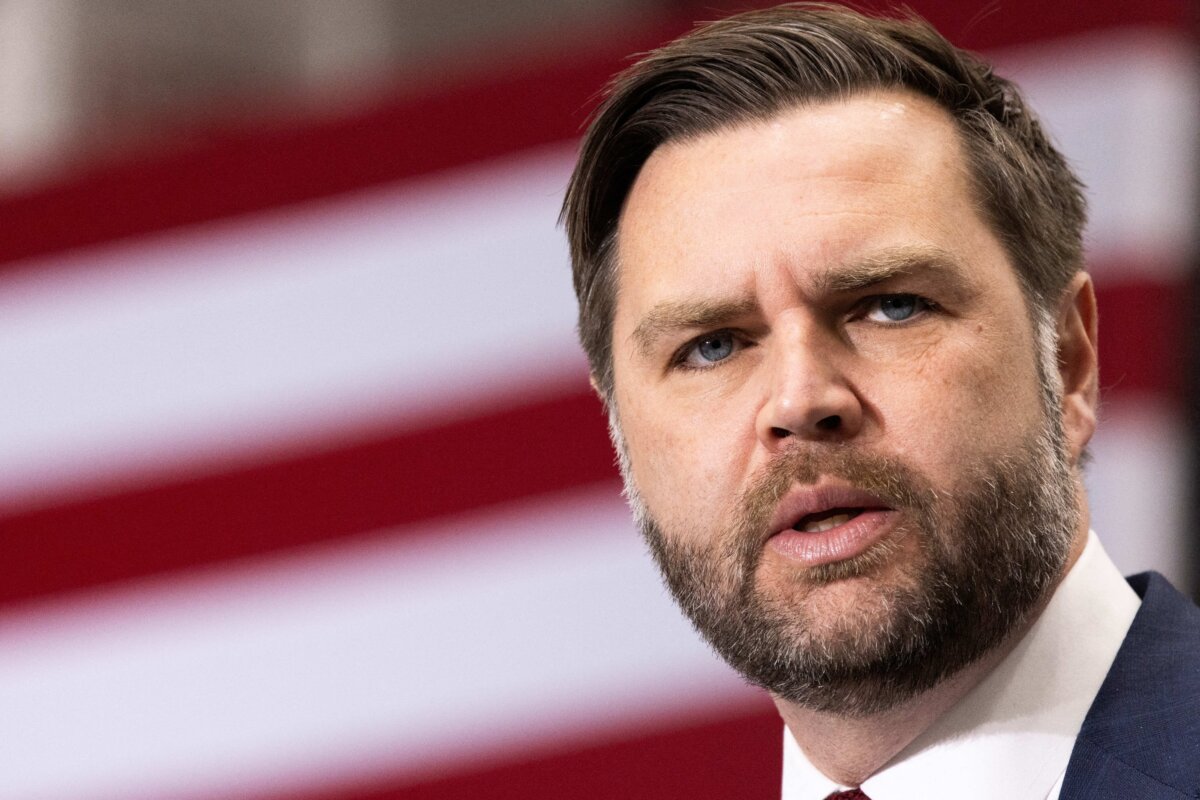

U.S. Vice President JD Vance said the United States will allow Venezuela to sell oil only if those sales advance U.S. national interests, describing Washington’s emerging energy policy toward the country as a tool of diplomatic leverage that avoids military entanglements and does not endanger any American lives.
In a Jan. 7 interview on Fox News’ “Jesse Watters Primetime,” Vance said U.S. control over Venezuelan energy revenues would give Washington economic and geopolitical influence while avoiding a prolonged military commitment.
“The way that we control Venezuela is we control the purse strings, we control the energy resources,” Vance said. “And we tell the regime, ‘You’re allowed to sell the oil so long as you serve America’s national interest. You’re not allowed to sell it if you can’t serve America’s national interest.’”
Describing this approach as a feature of “critical, high-quality diplomacy,” Vance said the policy exerts “incredible pressure” on Venezuela, “without wasting a single American life, without endangering a single American citizen.”
Vance added that Venezuela’s vast oil resources could be used to pressure U.S. adversaries, secure low-cost energy supplies for Americans, and reinforce U.S. military deterrence in the Western Hemisphere.
“This is in our neighborhood,” Vance said. “If we cannot follow the basic principle … that we control our neighborhood, a lot of bad people are going to take advantage of it.”
U.S. forces recently carried out a mission to capture former Venezuelan leader Nicolás Maduro and transfer him and his wife, Cilia Flores, to the United States to face drug and arms-related charges. They have both pleaded not guilty.
Sanctions Rolled Back, Revenues Locked Down
Vance’s remarks came as the Trump administration formally began selectively lifting sanctions on Venezuelan oil exports, while maintaining strict U.S. control over the proceeds.
White House press secretary Karoline Leavitt said on Jan. 7 that Washington has already begun marketing Venezuelan crude oil globally through major commodity traders and banks. All revenues from those sales will first settle in U.S.-controlled accounts at internationally recognized financial institutions.
“These funds will be disbursed for the benefit of the American people and the Venezuelan people at the discretion of the U.S. government,” the Energy Department said in a fact sheet outlining the policy.
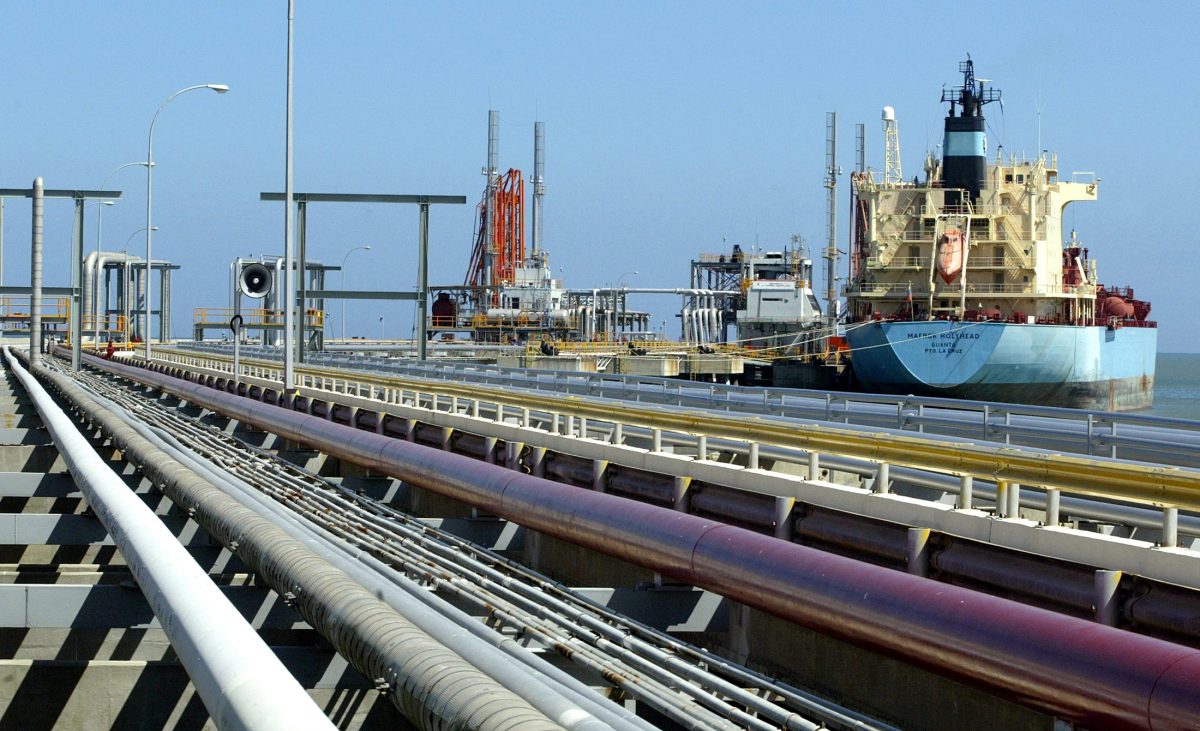
U.S. President Donald Trump said the United States would soon receive between 30 million and 50 million barrels of previously sanctioned Venezuelan oil, worth up to $2.8 billion at current prices of roughly $56 per barrel.
“This Oil will be sold at its Market Price, and that money will be controlled by me, as President of the United States of America,” Trump wrote in a post on Truth Social, adding that the proceeds would be used to benefit both countries.
Energy Secretary Chris Wright said the United States would oversee Venezuelan oil sales “indefinitely,” describing the arrangement as a way to ensure leverage over Caracas while allowing oil to flow back into global markets.
Wright has been tasked with executing a three-part plan for a post-Maduro Venezuela, and Trump has stressed that the United States is not at war with Venezuela but is pursuing a “safe, proper, and judicious” transition that would include future elections.
Trump was asked by reporters in a Jan. 7 interview with The New York Times whether U.S. oversight of Venezuela would last a year or more.
“I would say much longer,” Trump replied. “Only time will tell.”
Rebuilding a Broken Oil Sector
Venezuela, a founding member of OPEC, holds the world’s largest proven oil reserves—more than 300 billion barrels—but production has collapsed after years of mismanagement, underinvestment, corruption, and sanctions.
Output has fallen from more than 3 million barrels per day in the early 2000s to less than 1 million barrels per day in recent years, according to data from the U.S. Energy Information Administration.
“The combined impact of domestic mismanagement and international sanctions has driven its production down from over 3 million barrels a day in the early 2000s to about 2 million b/d in 2017 and 0.9 million b/d in 2025,” energy research and consulting firm Wood Mackenzie said in a Dec. 5 report.
Much of the country’s crude is heavy or extra-heavy, requiring specialized refining.
Trump has said U.S. oil companies could restore Venezuelan production in less than 18 months, though at a high cost.
“It’ll be a lot of money,” Trump told NBC News, adding that oil companies would invest heavily and later be reimbursed through revenues. “But they’ll do very well. And the country will do well.”
The administration plans to authorize U.S. equipment, services, and technical expertise to modernize Venezuela’s aging oil fields and repair a fragile electricity grid that has hampered production nationwide.
Major U.S. oil companies have reacted cautiously. Exxon Mobil CEO Darren Woods told Bloomberg in November that the company would need to see stable terms before considering a return to Venezuela, noting it had been expropriated from there twice. Chevron has maintained a limited presence under sanctions waivers.
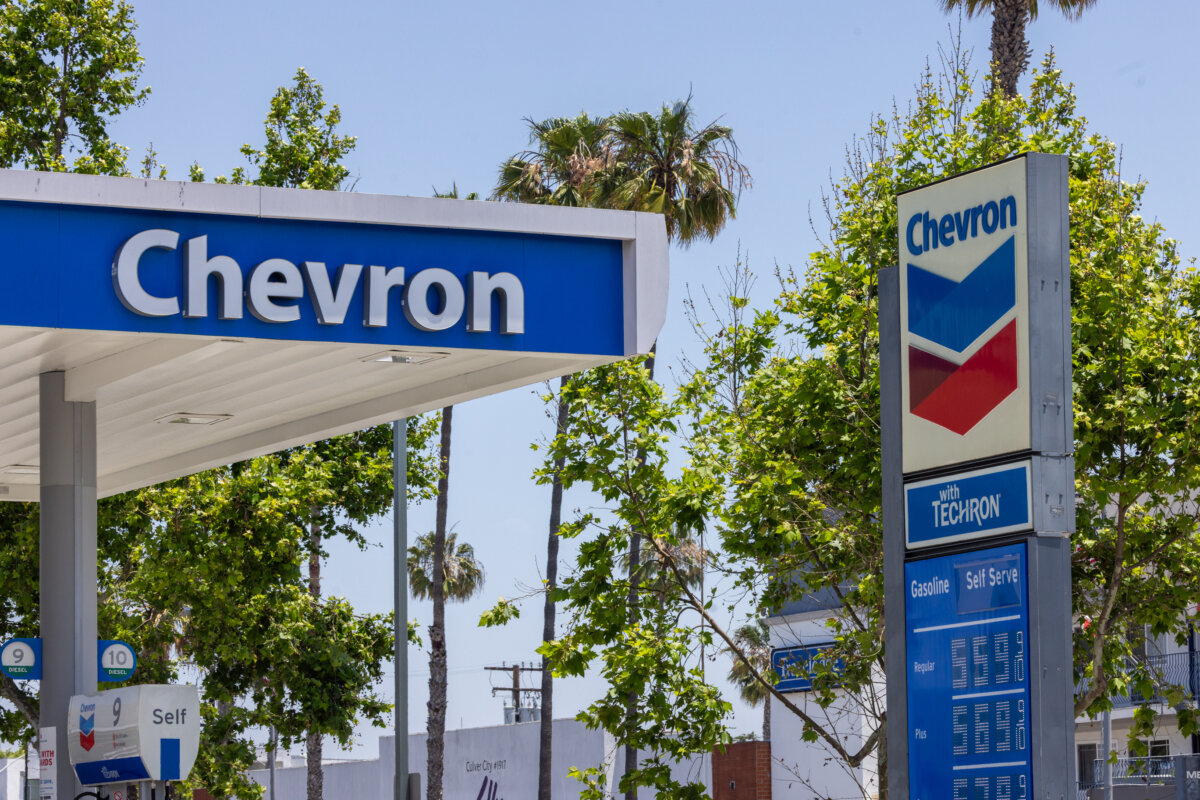
Markets reacted positively after Maduro’s capture and Trump’s announcement of U.S. intentions to restore Venezuela’s oil production. Shares of Chevron, Exxon Mobil, and ConocoPhillips rose sharply, helping lift the Dow Jones Industrial Average by more than 600 points on Jan. 5, as stocks rallied at the start of the trading week following Maduro’s capture over the weekend.
 Friends Read Free
Copy
Facebook
Tweet
Friends Read Free
Copy
Facebook
Tweet