
Early voting in Virginia’s special election on a redistricting referendum is set to begin Friday after a Lynchburg Circuit Court judge on Monday dismissed a lawsuit that sought to clarify whether local officials could proceed with election preparations.
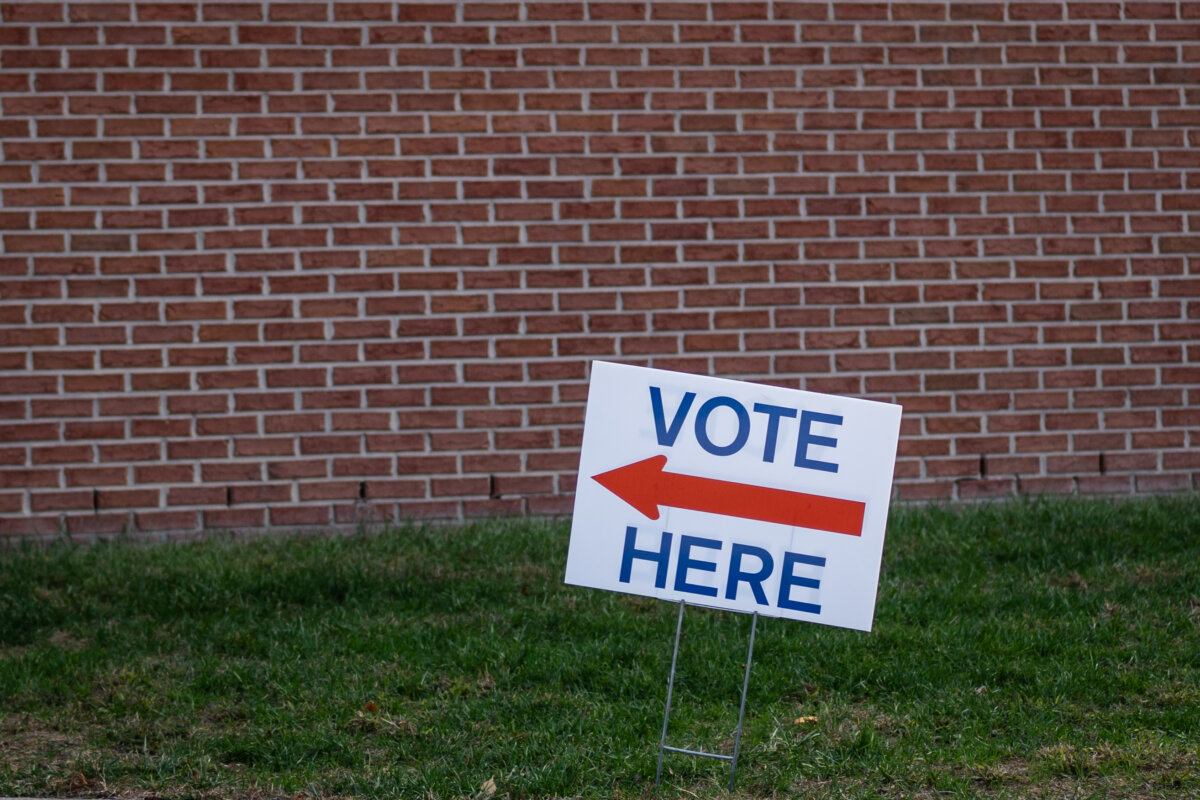
The ruling removes the most immediate obstacle to the April 21 special election, in which voters will decide whether to amend the state constitution to allow the Democrat-controlled General Assembly to redraw Virginia’s congressional map ahead of the November midterm elections.
The proposed map could shift the state’s delegation from six Democrats and five Republicans to as many as 10 Democrats and one Republican.
The Lynchburg case was the latest in a series of legal fights over the redistricting effort that has played out across multiple courts in recent weeks.
The City of Lynchburg, represented by attorney and former Republican state Delegate Timothy Anderson, filed the lawsuit on Feb. 25 seeking a declaratory judgment on its obligations. The city said it was caught between conflicting court directives—a Virginia Supreme Court order allowing the referendum to proceed and a separate temporary restraining order from a Tazewell County court blocking state election officials from preparing for it.
Judge F. Patrick Yeatts dismissed the case, according to attorneys for both sides, ruling that the court would not exercise jurisdiction over the matter before the election takes place. A written ruling was not yet available at the time of publication.
Anderson said in a statement that the constitutional issues in the case remain unresolved.
“The Court did not rule that the election is lawful. It ruled only that the legality must be determined after the vote,” Anderson wrote on social media. “But for now, the election proceeds.”
In an email to The Epoch Times on Tuesday, Anderson said he does not plan to appeal the ruling because there is not enough time to obtain guidance from the Virginia Supreme Court before early voting begins.
“The City needs guidance before the election starts on Friday, March 6,” he said. “There is not enough time to get to the Supreme Court for guidance. So for that sole reason, an appeal is not going to get us the guidance the city needs.”
Anderson said he does not expect the Virginia Supreme Court to act on the pending appeals before Friday. He said any challenge to the constitutionality of the referendum will have to be made after the election is completed.
“There are plenty of challenges to be made—including whether HB1384 could immediately become law as an emergency absent a four-fifths voting majority of the General Assembly,” Anderson said. “If HB1384 is constitutionally invalid—which the City argued—then the entire election schedule is constitutionally invalid.”
He added that every issue raised in the case will have to wait until after the election is complete, per the Lynchburg Circuit Court ruling.
Virginia Attorney General Jay Jones, a Democrat, said his office had successfully defended the election.
“The Lynchburg Circuit Court’s decision reinforces our position since the beginning—this election was properly called and will proceed as scheduled,” Jones said in a statement.
The Republican National Lawyers Association urged voters to reject the amendment, saying the courts would not halt the April 21 vote and that it was now “up to the voters of Virginia” to defeat it.
The redistricting effort has been the subject of sustained legal challenges since January, when Tazewell County Circuit Court Judge Jack Hurley Jr. ruled that the Democrat-controlled Legislature had violated state law in advancing the constitutional amendment. Democrats had first passed the measure during a special session in October 2025 and then again in January, as required for a constitutional amendment to reach the ballot.
Hurley found that the special session vote was procedurally improper and that the amendment was taken up too close to an intervening election. Democrats appealed, and on Feb. 13, the Virginia Supreme Court allowed the referendum to proceed while it considers the case. The court has not yet ruled on the merits.
On Feb. 19, in a separate case brought by the Republican National Committee, the National Republican Congressional Committee, and Republican U.S. Reps. Ben Cline and Morgan Griffith, Hurley issued a temporary restraining order blocking the state Board of Elections and Department of Elections from preparing for the referendum.
The Virginia Department of Elections initially told local registrars to pause ballot issuance after the Feb. 19 order but reversed course days later, saying the restraining order applied only to the named defendants and not to registrars statewide, according to local outlet Virginia Public Media.
That order is set to expire on March 18 and has also been appealed.
 Friends Read Free
Copy
Facebook
Tweet
Friends Read Free
Copy
Facebook
Tweet