
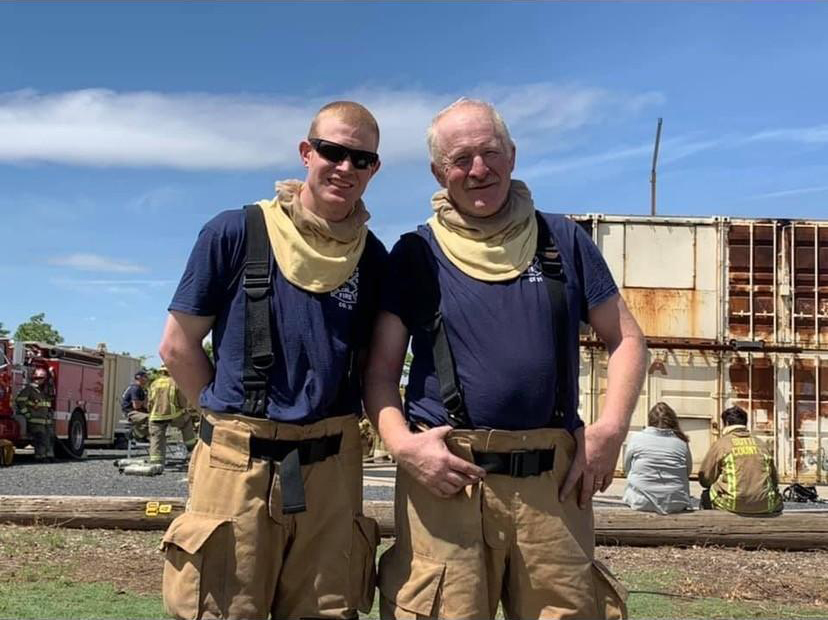
Johnathan Tehan and his father, Dave Tehan, are volunteer firefighters and residents of Cohasset, a small, mountainous community about half an hour north of Chico, California.
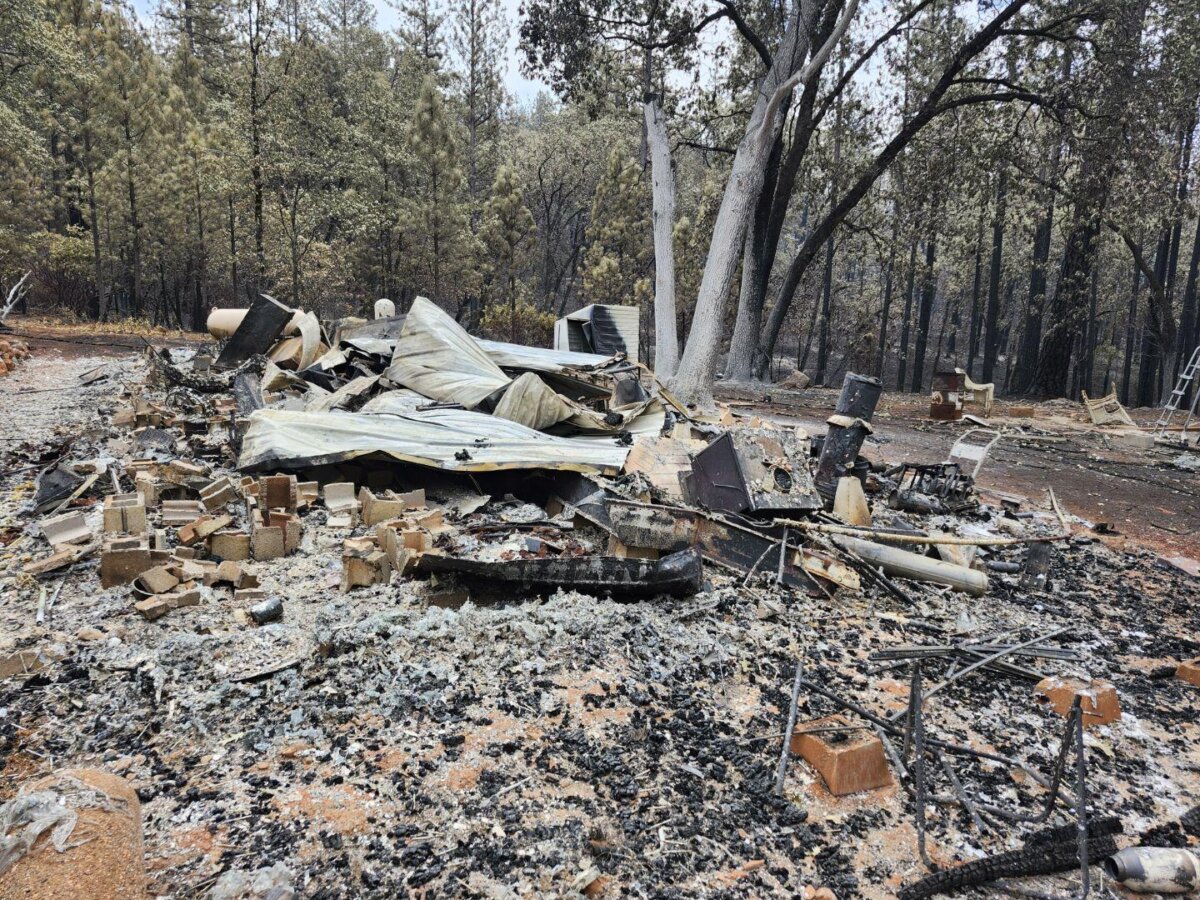
In July 2024, they lost their own home as they battled the Park fire to save other homes in their community.
This year, they are facing a different battle: keeping the trees on their property that have been marked for removal.
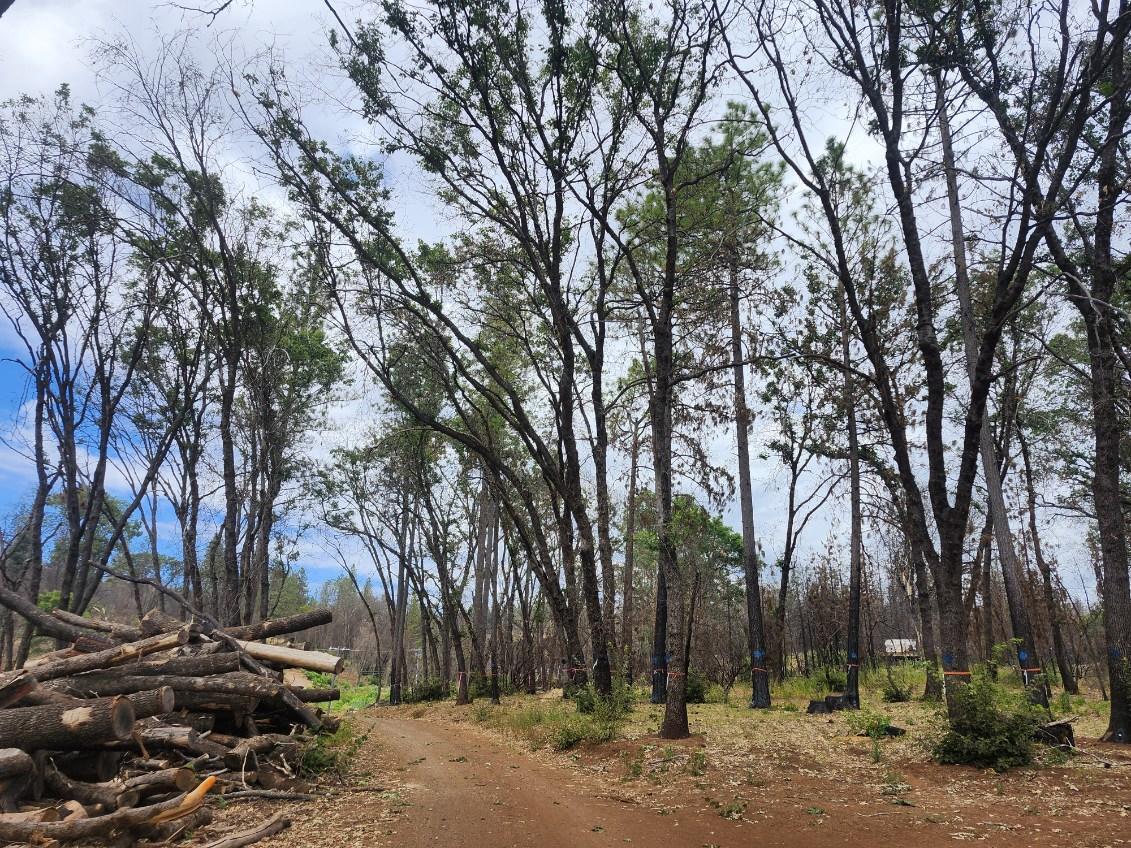
“They went out and marked trees right after the fire, so the trees are all burned up,” Dave Tehan told The Epoch Times. “They don’t have signs of life or anything. Well, it’s been a year. Spring has come. These trees have bounced back. They have green foliage, lots of canopy and shade, but they still want to take them, and we don’t want them to take them.”
Johnathan Tehan said: “There are other things that I’m trying to protect, which is the land. And the way their equipment comes in and the crews come in, they don’t respect the land the way that I would respect the land. I got to see firsthand what the cleanup looked like, and it was far more destructive and reckless than I would have ever done.”
Property owners who were affected by the fires last year are required to sign up for the State Debris Removal Program by submitting a right-of-entry (ROE) form. They are not allowed to clean up debris or remove trees themselves. The debris must be removed before property owners can start rebuilding homes.
The program, led by the California Office of Emergency Services and CalRecycle, marks trees that are deemed hazardous or are predicted to die in five years. Trees marked with a dot would be trimmed, and those marked with an “X” would be cut down. Trees flagged with tape need work. By submitting the ROE form, property owners grant state contractors such as Tetra Tech and PST permission to enter their property to conduct the cleanup.
“The debris removal contractor will remove trees that are a threat to the safety of the debris removal crews while working on your property and hazard trees,” the program’s FAQ page reads. “The debris removal contractor may also remove other trees to access hazard trees.”
Property owners have an alternative option to hire a private contractor for cleanup, but they must also complete an application and submit a work plan to Butte County Environmental Health.
“We had nine acres on our property … all the trees were gone,” Dave Tehan said. “Between Tetra and the logger, everything’s gone. I had to pay $500 for a logging permit. And I didn’t even get 10 cents for anything. I got zero money.
“People would show up without calling ahead or anything, and doing their thing. And we’re like, ‘Well, who are you with?’ And then you’re being nice all the time because you don’t want to get kicked out of the program. But people are coming in and doing free will whenever they want on your property.”
His son, who was born and raised in the home and has been raising his son in it, too, said their land is more than just property. He said there is cultural history in the area, such as that of the Yahi Tribe and other neighboring tribes that used to live there. He feels that he should be the one to protect the area, because no one else is.
“I know I pay the property tax, and … it’s mine on paper,” Johnathan Tehan said. “But to me, that means nothing, and nobody owns this land, and so my job as the person that’s here in this time is to be a caretaker of the land, or look after the land. So I know every rock and tree.”
He said he has a spot with a shaded grove of trees, which he refers to as a little oasis, where everyone, including the workers, enjoys parking. According to Johnathan Tehan, that oasis has been marked for removal.
After he signed the ROE form, contractors marked more than 190 of his trees for removal, saying they are hazardous, fire-damaged, or will die within five years. Johnathan Tehan spoke with professionals who informed him that there is no telling when a tree will die, and he also saw his own trees showing life again.
“I’m very concerned about public safety, and I do not want anything from my property to impact anybody in my community,” he said. “I would never leave a tree that I felt was dangerous. But with the arborist that I’ve had out, I’ve identified trees that they recommend. If I’m going to argue for a tree, these are the trees you should argue for.”
In their small community, whenever a tree falls, residents volunteer to clear the roadway, taking care of their community without outside help. After that, they go about their day.
Johnathan Tehan has been requesting a reassessment of his property, thus delaying the program and being viewed by some as a nuisance. If he continues to block access to his property, he was told, he will be removed from the program.
He has the option to opt out of the program and keep all his trees, which would mean shouldering $30,000 worth of cleanup costs for crews and equipment, a hefty price for someone in a poor community with no insurance.
“Dealing with this program, since I’ve signed the paper, has been nothing but chaos since the beginning, and this has been, incredibly, harder to deal with than the fire itself,” he said, noting that he did not have time to grab anything inside his house except fire gear before heading out to fight the fire.
“I thought that losing everything was bad. This is making me face the possibility of losing what I have left of the childhood home I grew up in. … I am fighting to keep some living trees.”
He also said he would like to advocate for a waiver option, similar to how other communities that have been affected by the fire handled debris cleanup.
Recently, his father was told that he is done with the program and should not see any cleanup crews on his property anymore.
The Epoch Times reached out to Butte County’s Phase II Debris Removal Program for comment, but did not hear back by publication time.
The program is divided into Phase I: household hazardous waste removal and Phase II: remaining debris, ash, and hazard trees. Hazardous waste includes batteries, herbicides, pesticides, propane tanks, asbestos siding, and paints. Hazardous waste had to be removed first without delay before the general debris cleanup, so the two phases were not conducted at the same time.
Local government prioritized debris removal from properties that are near public use facilities such as schools, parks, and nursing homes, as well as areas that could threaten the environment, such as creeks and other bodies of water.
After all debris has been removed and soil testing is up to California state standards, contractors will install erosion control methods. After all hazard trees are removed, personnel will inspect the site to confirm that all requirements have been met and report to the property owner’s local government that the lot is clear. The resident would then be notified that his property is safe and that he may rebuild.
 Friends Read Free
Copy
Facebook
Tweet
Friends Read Free
Copy
Facebook
Tweet