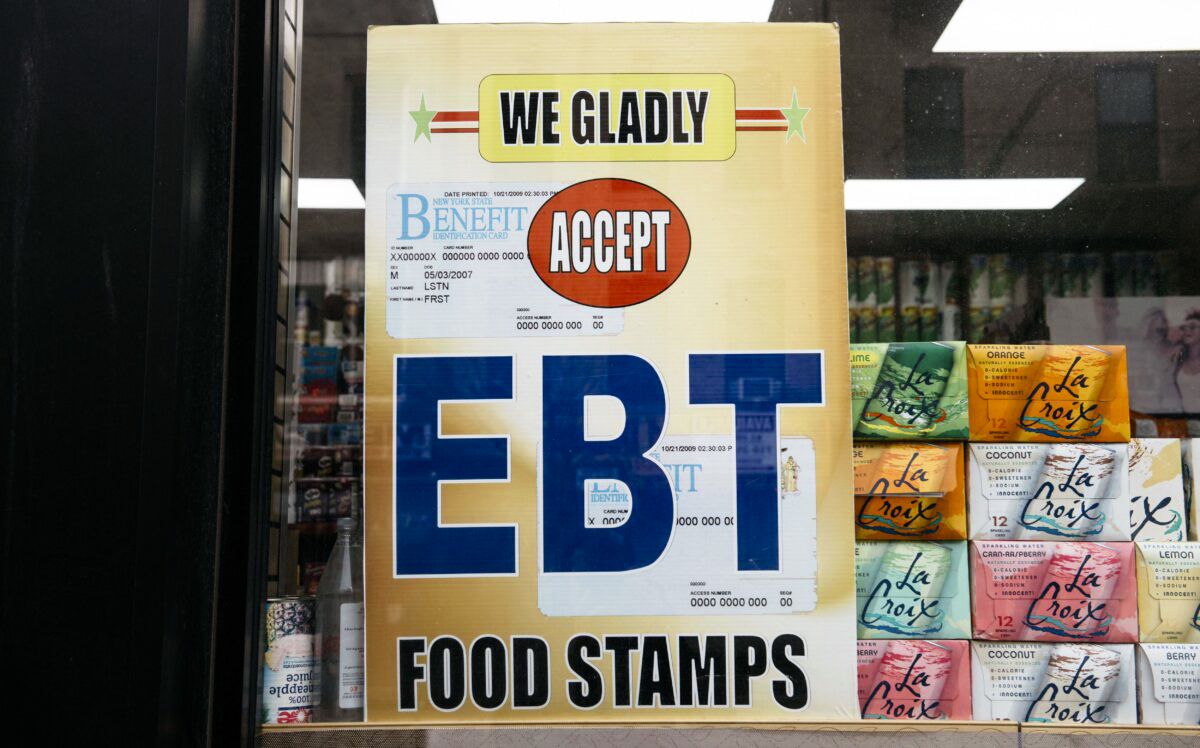

Americans who are in the federal food stamp program and have not received full benefits are poised to see the money soon, under a package the House of Representatives is due to vote on later Nov. 12.
Many of the 42 million Americans enrolled in the Supplemental Nutrition Assistance Program (SNAP) have received partial or no benefits for November as the federal government has only paid about half of the approximately $8.5 billion needed to fund the program for the month.
Courts ordered the government to pay in full for November, but the Supreme Court blocked those rulings on Tuesday.
Here’s what to know about SNAP and the upcoming vote.
Some States Have Paid Full Benefits
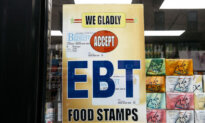
Usually, the money SNAP beneficiaries receive on electronic EBT cards comes in full from the federal government, which conveys them through states.
Because the government has only paid $4.6 billion so far, a number of states have only been distributing partial benefits, with some SNAP participants not having received any money yet.
The plan in place now “would delay November benefits by weeks or months for recipients in multiple states and would create substantial risks of error,” states said in a Nov. 11 filing to the Supreme Court.
Others have paid full benefits to some people. Hawaii, for example, recently paid full benefits to about half of the 161,400 residents who receive food stamps, officials said in a court filing.
The state took this step following a U.S. Department of Agriculture (USDA) memorandum sent on Nov. 7 that said the federal government would make funds available for full SNAP benefits for November to comply with a court order, according to the filing.
Still others, including Minnesota and Oregon, paid all beneficiaries the full amount they were due to receive after reading the memo.
“The money is now on the EBT cards of SNAP recipients, and the recipients have begun to spend it,” Jessica Amaya Hoffman, deputy director of the Oregon Department of Human Services’ Self-Sufficiency Programs, said in a declaration.
Later on Nov. 7, the Supreme Court ruled that the federal government did not immediately have to pay full benefits for November, prompting the USDA to direct states to “undo any steps taken to issue full SNAP benefits for November.” U.S. District Judge Indira Talwani, who is overseeing one of the cases brought over food stamp funding, said on Monday that she was blocking the USDA from implementing the new memo. She has not yet issued a written order detailing her decision.
Package Contains Full Funding
Trump administration officials have argued they could not fund SNAP because the government shutdown meant Congress had not appropriated funding for the program.
The Senate on Nov. 10 approved a package that would fund the USDA, including SNAP, for the rest of the fiscal year, which runs through Sept. 30, 2026.
A House committee early Wednesday advanced the legislation to the full House.
Some, but not all, lawmakers have expressed support for the package. Seven Democrats and one independent in the Senate joined Republicans in passing the measure. Republicans narrowly control the House.
Provided the House approves the package later Wednesday, it would either go back to the Senate if any changes were made or head to the desk of President Donald Trump for signing.
When Funds Would Become Available
If approved by both chambers and signed by Trump, when SNAP funds become available could vary by state, based in part on whether the state has issued no, partial, or full benefits thus far.
Jessica Garon, a spokesperson for the American Public Human Services Association, said she anticipates that most states would be able to issue full benefits within three days after they’re given the go-ahead, but it might take a week for others.
Sixteen states—including Illinois and Texas—have loaded the EBT cards used in SNAP with partial benefits.
Carolyn Vega, a policy analyst with advocacy group Share Our Strength, said some of those states might run into technical hurdles to issue the remaining amount.
Experts say the states that have so far sent no November benefits, such as South Carolina and West Virginia, will likely be the quickest.
The Associated Press contributed to this report.
 Friends Read Free
Copy
Facebook
Tweet
Friends Read Free
Copy
Facebook
Tweet