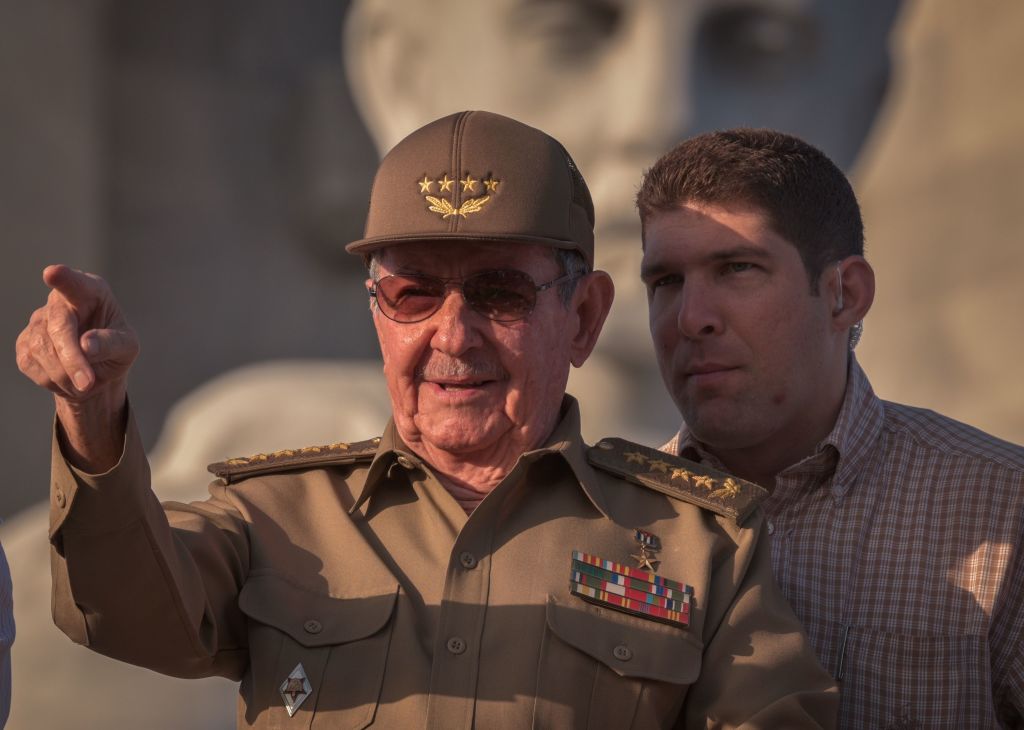

The U.S. Department of Justice unsealed an indictment on May 20 charging former Cuban President Raúl Castro, 94, with the 1996 killing of four humanitarian aid workers. Three of those victims were U.S. nationals.
“For 30 years, the families of these men have waited. The Miami community has waited. Our country has waited,” U.S. Attorney Jason A. Reding Quiñones for the Southern District of Florida told reporters at a press conference.
“Today is a step toward accountability. This passage of time does not erase murder. It does not diminish the value of these lives. And it does not weaken our commitment to the rule of law.”
Here’s what to know about the indictment.
The Shootdown
After communist dictator Fidel Castro seized control of the island in 1959, Cubans began to flee in droves to the United States. The journey through the Florida Straits was a tough one, and refugees perished because ships became lost or capsized.
The Miami-based organization Hermanos al Rescate—Brothers to the Rescue—was formed in 1991 to assist the asylum seekers on their journey by guiding boats through the strait, or rescuing those stranded at sea. The planes, unarmed Cessnas, also conducted pro-democracy work such as dropping leaflets during protests.
The Justice Department’s indictment alleges the Castro regime sent spies, posing as exiled pilots, to infiltrate the rescue group and report back to Cuba. The spy operation, part of a program called the Wasp Network, was followed up with Cuban pilot training to prepare for a future engagement with aircraft such as those used by Brothers to the Rescue.
On Feb. 24, 1996, Cuba shot down two Brothers to the Rescue planes over international waters, killing three American citizens—Armando Alejandre, Jr., Carlos Costa, and Mario de la Pena—and a legal U.S. resident, Pablo Morales.
The incident led to a further souring of relations between the United States and Cuba.
Shortly after, the U.S. Congress passed the Cuban Liberty and Democratic Solidarity Act of 1996, strengthening economic sanctions against the island nation.
Castro Faces 7 Counts
The Justice Department alleges the final orders to use deadly force against the Brothers to the Rescue flights came from Raúl and Fidel Castro.
The indictment also names pilots Lorenzo Alberto Pérez-Pérez, Luis Raúl González-Pardo Rodríguez, Emilio José Palacio Blanco, José Fidel Gual Barzaga, and Raúl Simanca Cárdenas as co-conspirators.
Castro and Pérez-Pérez are charged with four counts of murder for actually shooting down the planes. Those charges could result in the death penalty or life in prison, the DOJ said.
They are also charged with two counts of destruction of U.S. aircraft—each count carries a maximum of five years in prison.
All the defendants are charged with one count of conspiracy to murder U.S. nationals, and harassing a third Cessna, which managed to escape.
The May 20 indictment is a follow-up to a similar one from 2003, when a grand jury indicted Pérez-Pérez and his twin brother, Luis Francisco, along with Cuban Air Force Gen. Ruben Martinez Puente, on the same charges.
Extradition Unlikely
Despite the charges, it is unclear how the defendants can be brought to justice. Only one defendant, González-Pardo Rodriguez, is currently in U.S. custody; he is being held in Florida for making false statements on immigration forms.
Cuba has no extradition treaty with the United States and accuses the country of engaging in an energy blockade as a form of “blackmail” against its leadership.
The same day the indictment was handed down, U.S. Secretary of State Marco Rubio asked Cuba’s citizens to cast off the country’s communist leadership.
“The reason you are forced to survive 22 hours a day without electricity is not due to an oil ‘blockade’ by the U.S.,” he said.
“The real reason you don’t have electricity, fuel, or food is because those who control your country have plundered billions of dollars, but nothing has been used to help the people.”
Emel Akan and Jack Phillips contributed to this report.
 Friends Read Free
Copy
Facebook
Tweet
Friends Read Free
Copy
Facebook
Tweet