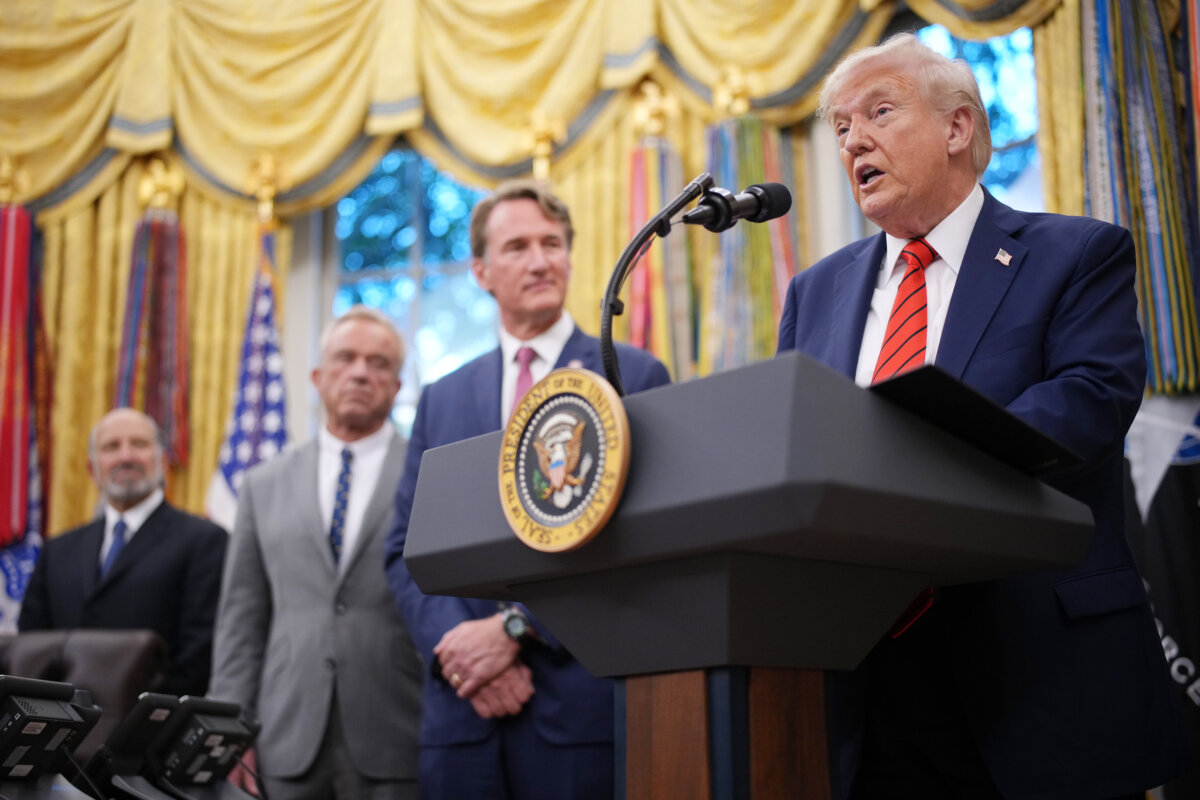

The federal government has negotiated a series of agreements with major pharmaceutical companies to offer certain drugs at dramatically reduced prices to U.S. consumers.
The agreements resulted from President Donald Trump’s Most Favored Nation prescription price policy, initiated in May, which asked drugmakers to offer their lowest prices in the United States voluntarily.
These agreements are structured on four points outlined by the White House. A senior administration official said on Oct. 16 that each of the deals includes these items, although not all details have been made public.
Drug prices in the United States are at least twice as high as those anywhere else in the world, according to a 2024 report from the Department of Health and Human Services. For the most expensive medications, the disparity is even greater.
Here’s what the drug makers have agreed to and what that means for consumers and taxpayers.
1. Offer the Lowest Available Prices to Medicaid Patients
Drug manufacturers Pfizer, Amgen, AstraZeneca, and EMD Serono have agreed to offer drugs sold through Medicaid at the lowest price for which they are sold in any developed country.
In many cases, the pharmaceutical companies will raise prices in other countries while lowering them in the United States so that there is parity.
That’s good news, according to some industry analysts, is that it lowers costs for the Medicaid program. But it may not lower out-of-pocket costs for Medicaid patients, who already have very low co-payments for prescription drugs.
“The Most Favored Nation agreements we’ve seen so far are voluntary, confidential, and apply only to Medicaid—a program through which most patients pay less than $4 per prescription,” Merith Basey, executive director of Patients for Affordable Drugs, told The Epoch Times.
“Pharmaceutical executives are touting these industry-friendly agreements, while they continue to fight systemic reform measures like Medicare negotiation in the courts.”
What this means for Americans is that the $8 billion per year total that Medicaid spends with these four companies should begin to decrease, saving taxpayers money.
2. Offer New Medications in the United States at the Lowest Available Price
New medications are often the most expensive, as pharmaceutical companies attempt to recoup their investment in developing the drugs. That can range up to $2 billion per drug, according to data cited by the Congressional Budget Office.
Yet U.S. consumers pay the bulk of that cost, according to Trump, who has said the price structures established in other nations have led manufacturers to charge higher prices in the United States, allowing other nations to reap the benefits of innovation at a lower cost.
Pharmaceutical companies agree.
“The United States is forced to subsidize research and development for new treatments and cures, while other countries benefit but don’t pay their fair share,” PhRMA, the drug industry trade association, stated on its website.
AstraZeneca CEO Pascal Soriot said on Oct. 10: “America has shouldered a disproportionate portion of the world’s [research and development]. That imbalance is not sustainable. It had to change.”
This means that drug prices in the United States could eventually reach parity with the developed world. However, these agreements do not apply to all existing medications.
3. Sell Some Medications Directly to Consumers at the Lowest Available Prices
One driver of high prescription drug costs is pharmacy benefit managers, the middlemen who negotiate prices for insurance companies, often keeping a large portion of the discount for themselves.
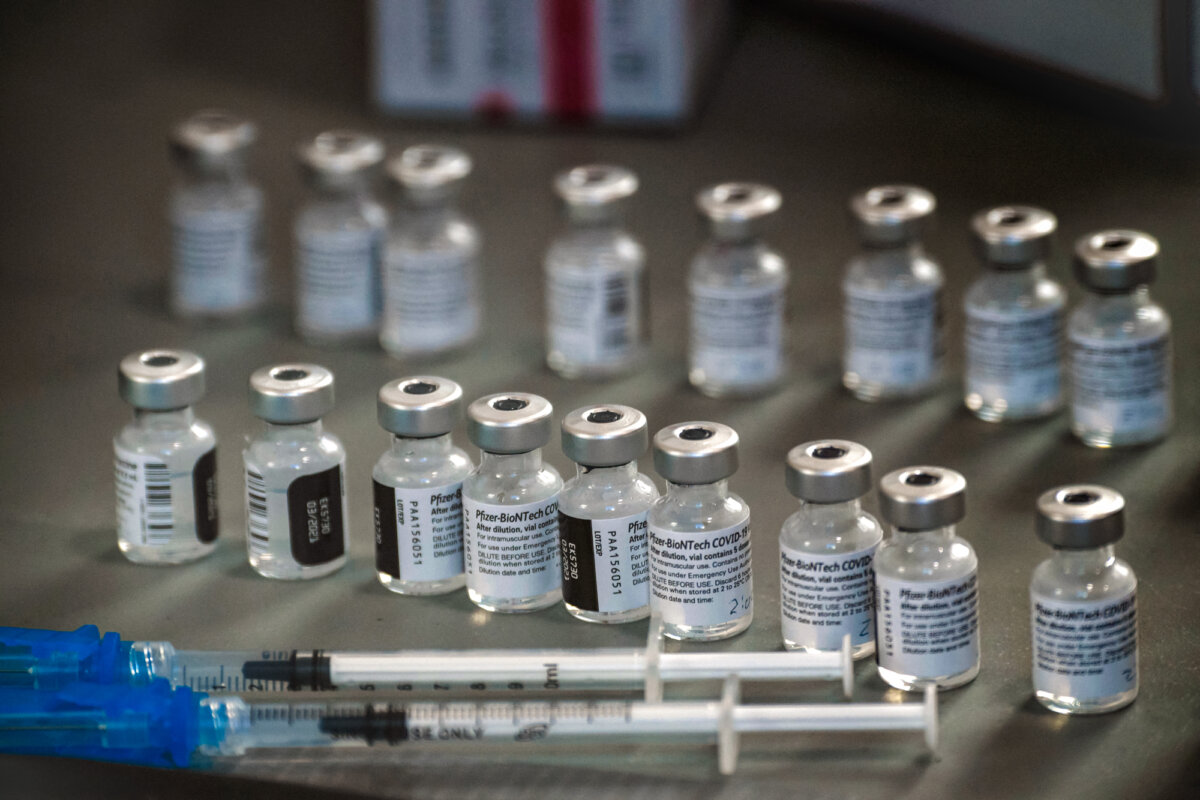
“This is why President Trump called on companies to let patients and employers purchase medicines directly—and at a lower cost,” PhRMA said in a statement.
Each of the four companies entering into pricing agreements has agreed to offer at least some direct-to-consumer sales at heavily discounted prices.
Pfizer stated that it will offer the majority of its primary care treatments and some select specialty brands at discounts averaging 50 percent, with some drugs offered at an 85 percent discount.
Amgen is offering Repatha, a drug that treats high cholesterol, at a monthly price of $239, approximately a 60 percent discount off the current price, to patients who purchase directly from the company.
AstraZeneca will offer drugs used to treat chronic diseases at discounts of up to 80 percent to patients who purchase directly from the company.
EMD Serono will offer all of its in vitro fertilization (IVF) drugs at an 84 percent discount for direct-to-consumer sales. Drugs for a single round of IVF treatment can run up to $6,000, and patients often need more than one round of treatment.
To facilitate direct-to-consumer sales, the federal government is creating TrumpRx.gov, a website that will list discounted drugs and connect consumers with the manufacturers to purchase them. That site will be launched in early 2026, according to the administration.
PhRMA also plans a direct-to-consumer site that will operate in a similar way, also available in 2026.
This means patients who have a valid prescription but don’t have prescription coverage or have coverage gaps can buy many common medications at greatly reduced prices directly from the drug makers. However, direct-to-consumer sales may be of little use to people who have prescription drug coverage because their co-pay may be less than the discount price.
“These programs will be most beneficial for those who are uninsured or who may not have coverage of a particular medication through their benefits,” Shanda Harclerode, a pharmacist and pharmacy consultant, told The Epoch Times.
For example, some popular weight loss medications such as Trulicity, Wegovy, and Ozempic may not be covered by insurance, according to Harclerode, so buying at a direct-to-consumer discount would save money.
And there is no guarantee that the drug a patient needs will be offered directly to consumers.
“They are not offering all their drugs, just some of them, and they might not offer them forever,” Charles White, a pharmacist and professor at the University of Connecticut, told The Epoch Times.
4. Invest Revenue From Abroad in the United States
Drug makers have agreed to invest the increased revenue gained from raising prices overseas in the United States.
The administration has used trade policy to incentivize both drug makers to lower prices in the United States and other nations to raise prices. Tariffs have been a primary tool.
That has resulted in plans for new or expanded research or manufacturing operations in the United States. In some cases, the administration has offered temporary exemption from tariffs to allow the companies to make good on their pledges.
Trump imposed a 100 percent tariff on branded or patented pharmaceutical imports on Oct. 1, but the tariff does not apply to building domestic drug manufacturing facilities.
Pfizer signed onto the Most Favored Nation policy on Sept. 30, agreeing to make investments in domestic manufacturing in exchange for a tariff exemption.
“We’ve agreed to a three-year grace period during which time Pfizer products under a Section 232 investigation won’t face tariffs, provided we further invest in manufacturing in the United States,” Pfizer CEO Albert Bourla said in a statement.
Pfizer agreed to invest an additional $70 billion in research in the United States over the “next few years,” although no specific plans were mentioned.
EMD Serono’s agreement excludes its pharmaceutical products and ingredients from tariffs in exchange for an unspecified commitment to expand its U.S. presence.
Amgen agreed to a $650 million expansion of its U.S. manufacturing presence that it said would create 750 jobs.
AstraZeneca received a three-year delay on the imposition of tariffs in exchange for investing $50 billion in U.S. manufacturing and research and development over the next five years.
This means that a larger share of drug manufacturing will take place in the United States, which provides jobs and lowers prices by eliminating tariffs.
Further price agreements are expected with a number of other drug makers, according to Mehmet Oz, administrator for the Centers for Medicare and Medicaid Services.
These price reductions come on top of the $35 per month insulin pricing for Medicare patients, which was first instituted as a co-payment cap by Trump in 2020, then made permanent by the Inflation Reduction Act of 2022.
Also, the Medicare Price Negotiation Program, authorized by the Inflation Reduction Act, has resulted in reduced prices in the Medicare program for 10 medications, which will take effect in January 2026, and 15 additional drugs, which will take effect in January 2027.
 Friends Read Free
Copy
Facebook
Tweet
Friends Read Free
Copy
Facebook
Tweet