
MESA, Arizona—From quaint mom-and-pop shops to towering corporate skyscrapers, 20th-century America was largely written in neon.
Larry Graham watched it happen growing up—the amazing shapes made from glass tubes, the dazzling colors, the artistry, and the warm feeling of basking in the glow of a neon moon.
For nearly four decades, Graham has specialized in handcrafting and repairing neon signs. He is one of only a handful of people in Arizona still practicing the trade—one of the few keeping the tradition alive.
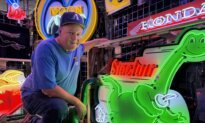
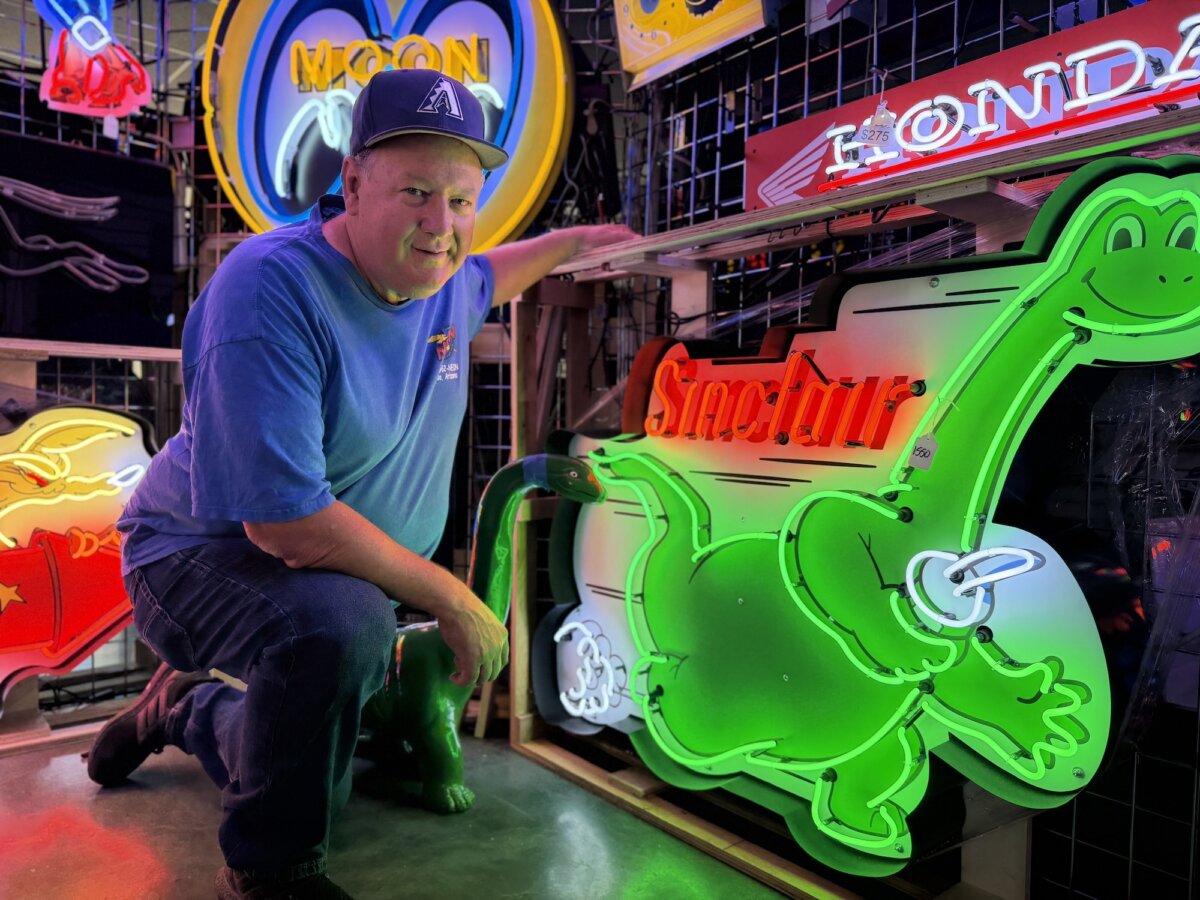
“It’s easy to get into, difficult to master,” Graham told The Epoch Times, as he stood surrounded by a sea of neon glass tubing, spare parts and working neon signs from yesteryear.
There’s Big Boy, a bright red neon double-decker hamburger held high. A Corona beer sign. A Pepsi sign in red, white, and blue. A waving cowboy. A green Sinclair dinosaur.
Graham, 62, began handcrafting neon signs in 1987, bending glass tubes in his Arizona garage.
What started as a home workshop eventually grew into Graham’s Neon, a family business in Mesa serving the Phoenix metropolitan area.
“I was working on my house and had a little shop in Tempe. Then I got this place. I just wanted a stable building,” Graham said.
His clients include established businesses, collectors of nostalgia, and “man-cave” builders.
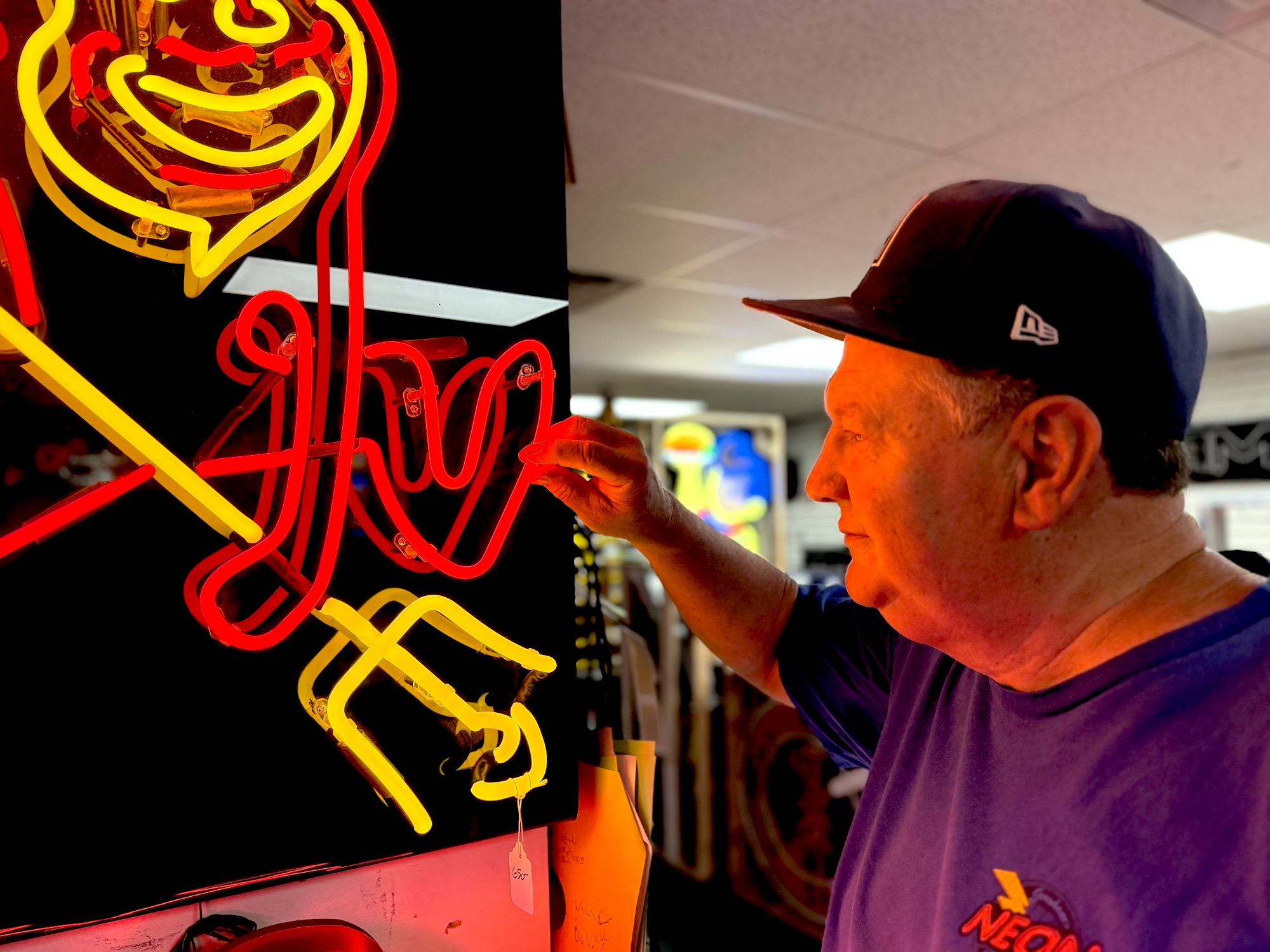 Larry Graham, owner of Graham’s Neon, tests a vintage glass tube neon sign in Mesa, Ariz., on Aug. 17, 2026. (Allan Stein/The Epoch Times)
“Bending glass is the hardest part. Assembly is easy,” said Brett Berres, a neon sign technician at Graham’s Neon. He’s been working in the trade for the past 11 years.
“My first touch of neon was through a course at Arizona State University,” he told The Epoch Times.
Lights With Character
Graham laments that neon signs are increasingly being replaced by more efficient LED neon lights.
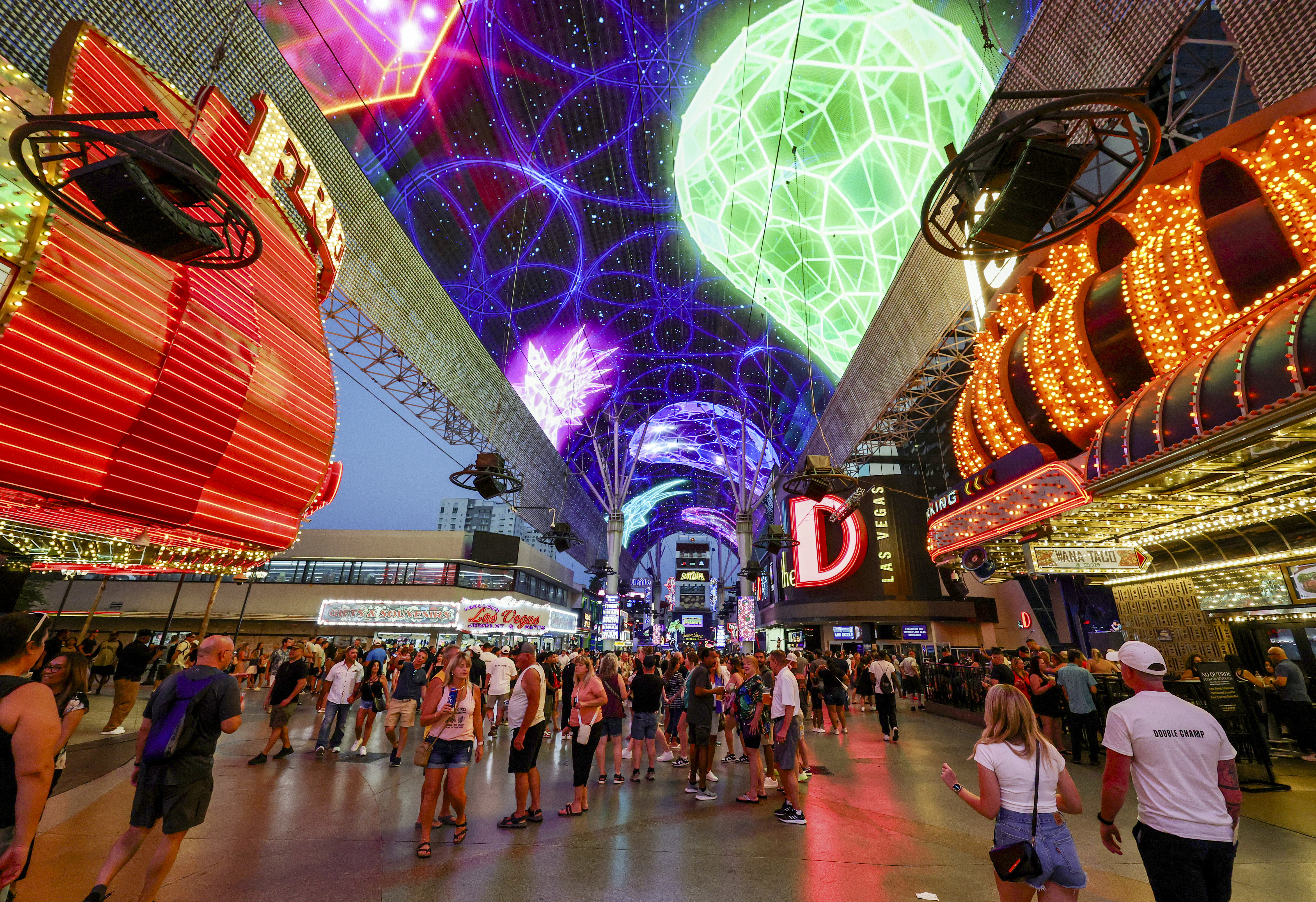 People walk under the Fremont Street Experience attraction’s Viva Vision canopy screen in downtown Las Vegas on Aug. 30, 2025. (Ethan Miller/Getty Images)
“They’re part of America,” Graham said of traditional glass tube neon lights. “LEDs may be cheaper, but they don’t have the same character.”
“The LEDs are just easier to use for people [who] don’t understand neon. A lot of sign guys don’t understand neon.”
And it’s traditional neon’s bold, enduring character, he said, that speaks to a bygone era—fabricating a neon sign is both an art and a science.
Working with 4-foot sections of glass tubing, Graham and his team use gas torches to heat and bend the glass into the shape needed for a sign.
Once formed, the air is removed from the tube. It is then filled with a small amount of neon, an inert gas.
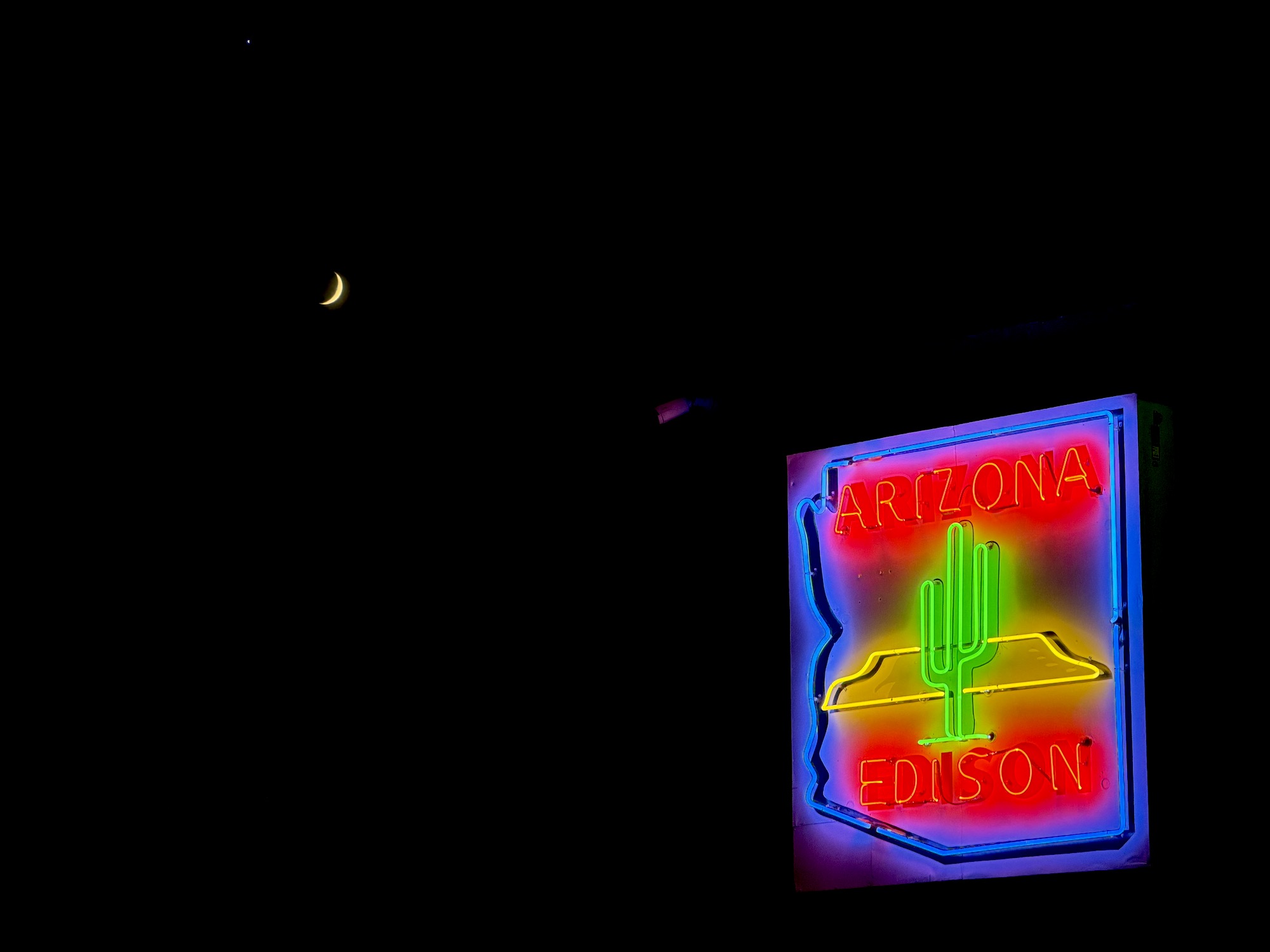 A crescent moon shines over a vintage neon sign at the Casa Grande Neon Park in Casa Grande, Ariz., on Aug. 16, 2026. (Allan Stein/The Epoch Times)
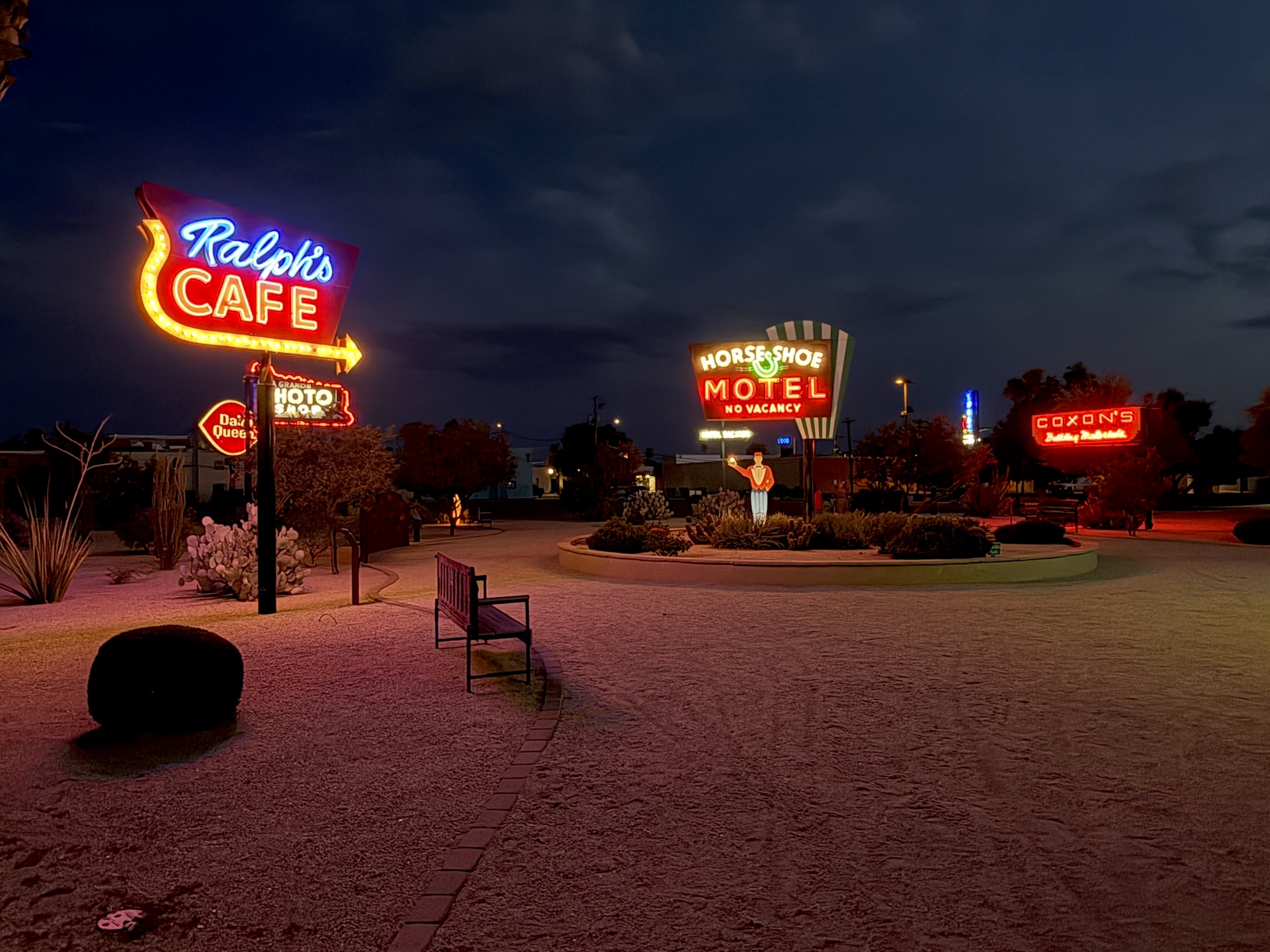 Vintage signs aglow at the Casa Grande Neon Park in Casa Grande, Ariz., on Aug. 16, 2026. (Allan Stein/The Epoch Times)
“I love just looking at neon signs,” Graham said. “I go home and have [neon] clocks in my house at night. There’s something about it. I mean, just the glow of it.”
It’s a Gas
French engineer George Claude patented neon gas light technology around 1910. By 1912, neon was illuminating a Paris hairdresser’s shop, and within two decades it had reached major U.S. cities, including New York, Chicago, and Las Vegas.
“Ethel Guenter, owner of the Overland Hotel, is believed to have installed the first neon sign in Las Vegas,” the Neon Museum says. “This was followed by famous examples such as the Oasis Cafe sign in 1929 and the Las Vegas Club sign in 1930.”
Neon signs were nearly ubiquitous in major cities by the mid-1930s, a trend that continued into the 1950s.
By the 1960s, traditional glass-tube neon was declining as newer, more efficient lighting technologies emerged.
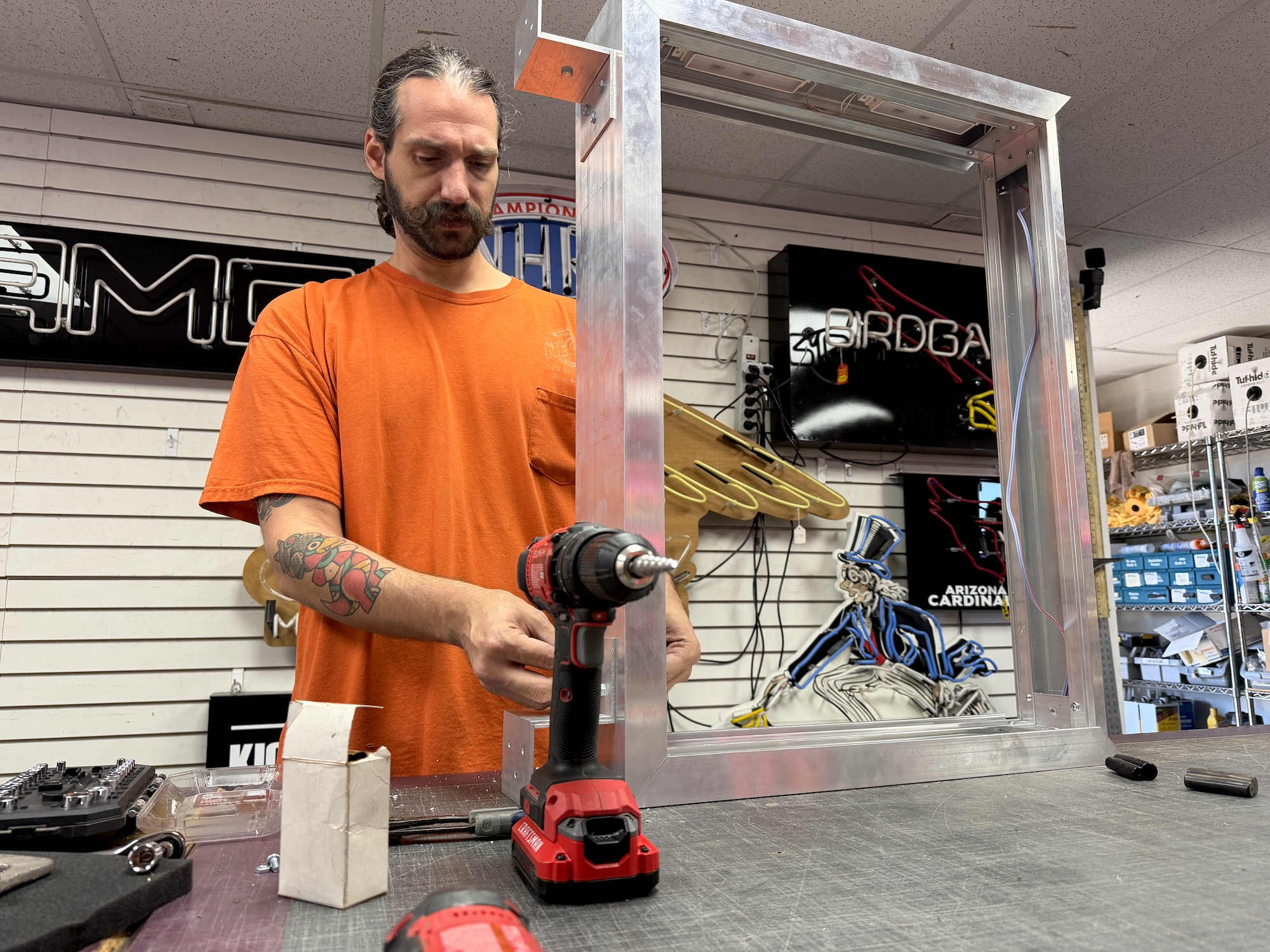 Neon sign technician Brett Berres assembles a neon sign at Graham’s Neon in Mesa, Ariz., on Aug. 17, 2026. (Allan Stein/The Epoch Times)
The famous pink Flamingo hotel sign in Las Vegas is a striking example of the city’s vibrant neon history. That colorful tradition extended far beyond Las Vegas, with Route 66—the 2,448-mile highway stretching from Chicago to California—becoming known for its quirky shops and electrifying neon signs.
“Route 66 was huge for neon. We’re redoing some of them,” Graham said, referring to restoration work in Arizona as the nation celebrates 100 years of America’s “Mother Road” this year.
Sourcing parts for vintage neon signs can sometimes be difficult, Graham said.
“The glass—the phosphorus coatings—are tricky” and challenging to procure, Graham said. “So the phosphorus coatings have kind of gone away.”
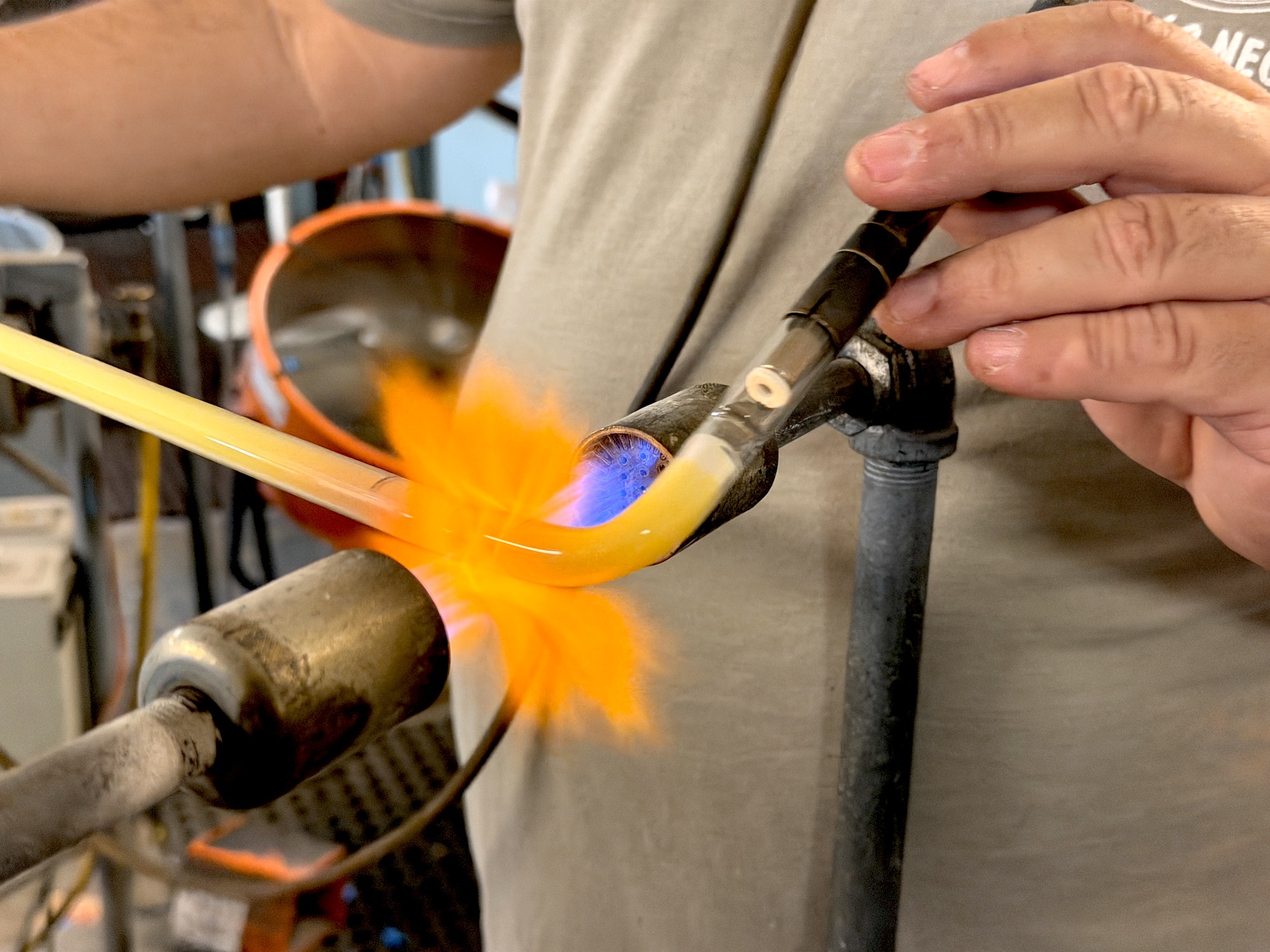 An employee bends a glass tube using a natural gas torch at Graham’s Neon in Mesa, Ariz., on Aug. 17, 2026. (Allan Stein/The Epoch Times)
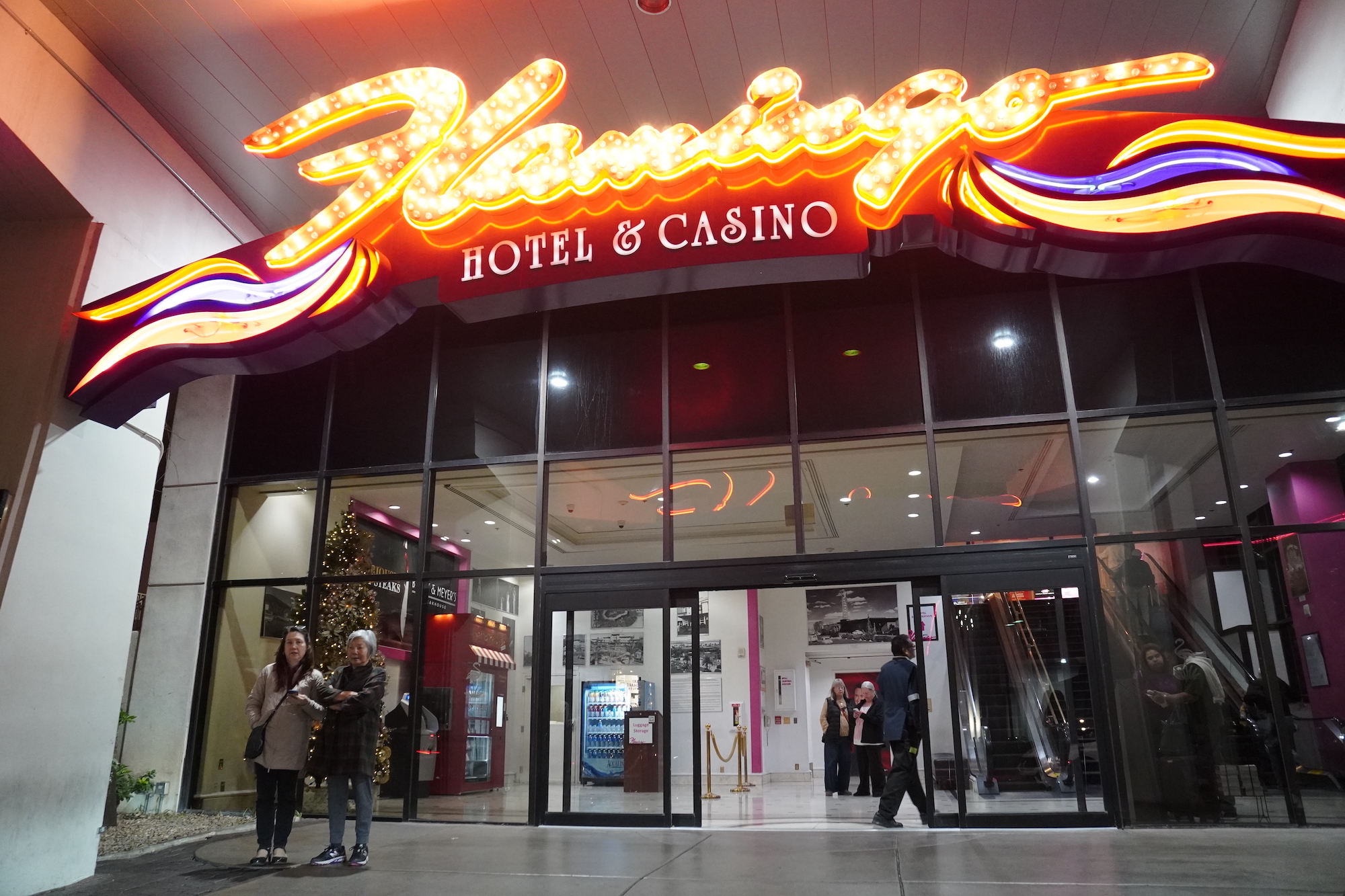 VIsitors enter the Flamingo Las Vegas hotel and resort on Dec. 9, 2025. (Allan Stein/The Epoch Times)
Because they use about 80 percent less energy than traditional glass-tube neon lights, LED neon signs can significantly reduce a company’s monthly utility costs, the company said.
In Arizona, several communities have taken an active interest in preserving the state’s neon sign heritage.
The Ignite Sign Art Museum in Tucson is dedicated to preserving and showcasing neon signs.
 President Donald Trump and former President Joe Biden appear in neon signs at Graham’s Neon in Mesa, Ariz., on Aug. 17, 2026. (Allan Stein/The Epoch Times)
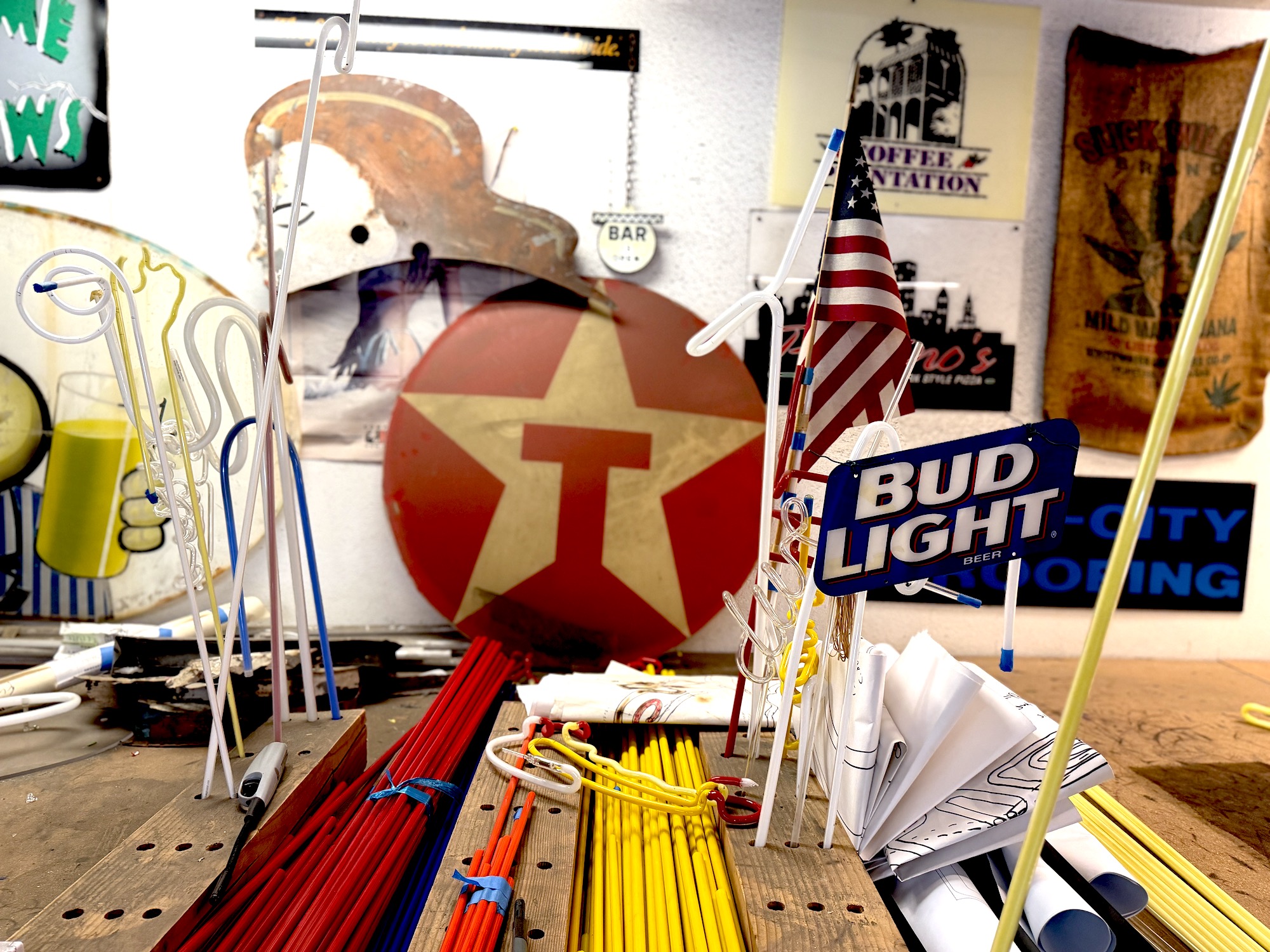 Vintage signs at Graham’s Neon in Mesa, Ariz., on Aug. 17, 2026. (Allan Stein/The Epoch Times)
Graham also worked with Cook and other regional experts on the Casa Grande neon sign park, which features 14 vintage signs. He restored the Goddard Show Store sign and handled the technical work to revive its historic neon glow.
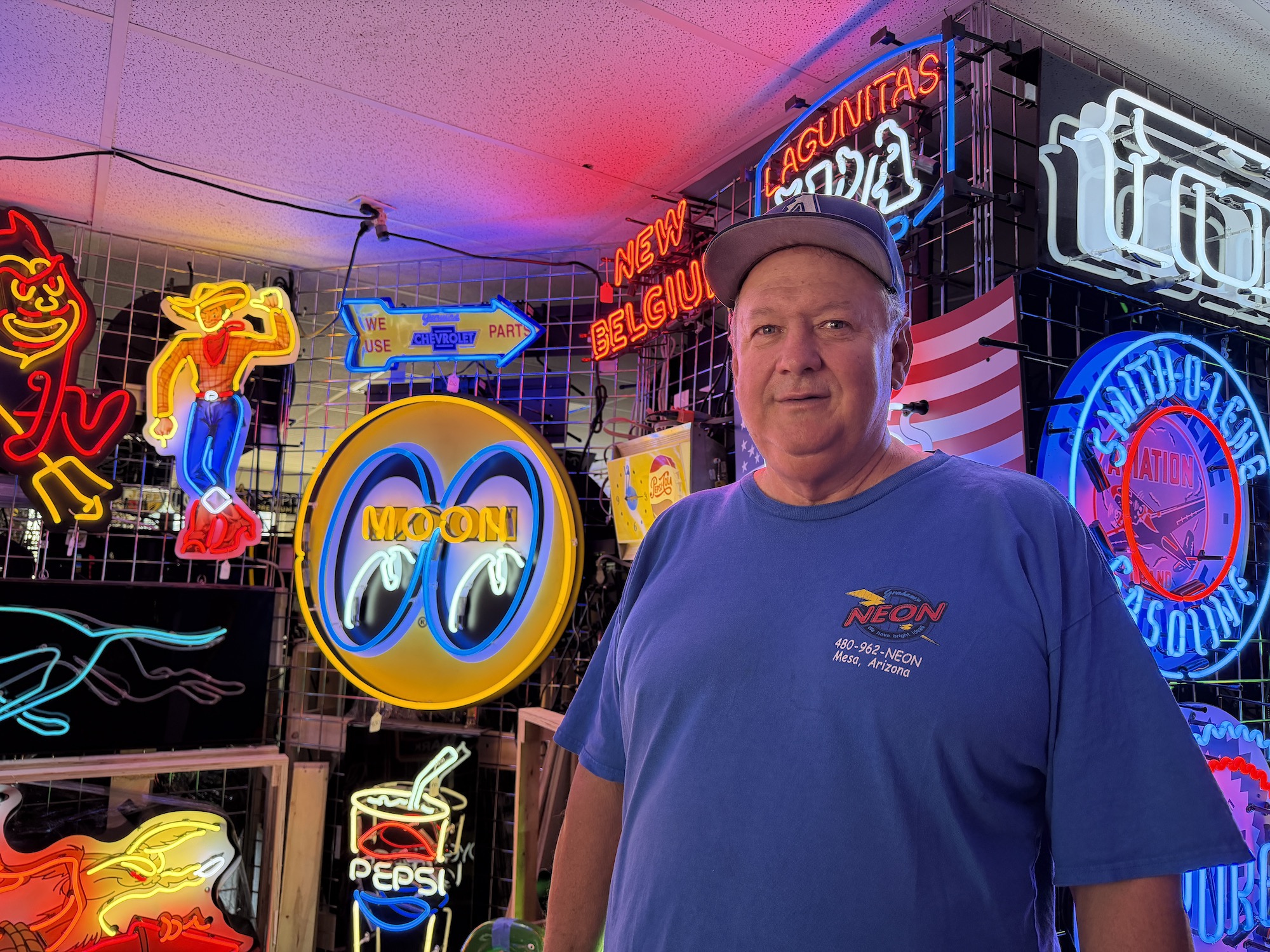 Neon sign repair shop owner Larry Graham stands in front of several examples of vintage signs in Mesa, Ariz., on Aug. 17, 2026. (Allan Stein/The Epoch Times)
Neon Moon
In the country classic “Neon Moon,” Brooks & Dunn sing of loneliness, lost love and broken dreams beneath the glow of a neon bar sign.
The song captures something Graham understands well: Neon is more than light. It illuminates the aspirations and longings of generations.
Inside Graham’s shop, a neon moon sign still shines. And while the times and technology may change, the need for something bright remains.
As long as people keep looking for that glow, Graham believes, “there will always be neon.”
 Friends Read Free
Copy
Facebook
Tweet
Friends Read Free
Copy
Facebook
Tweet