
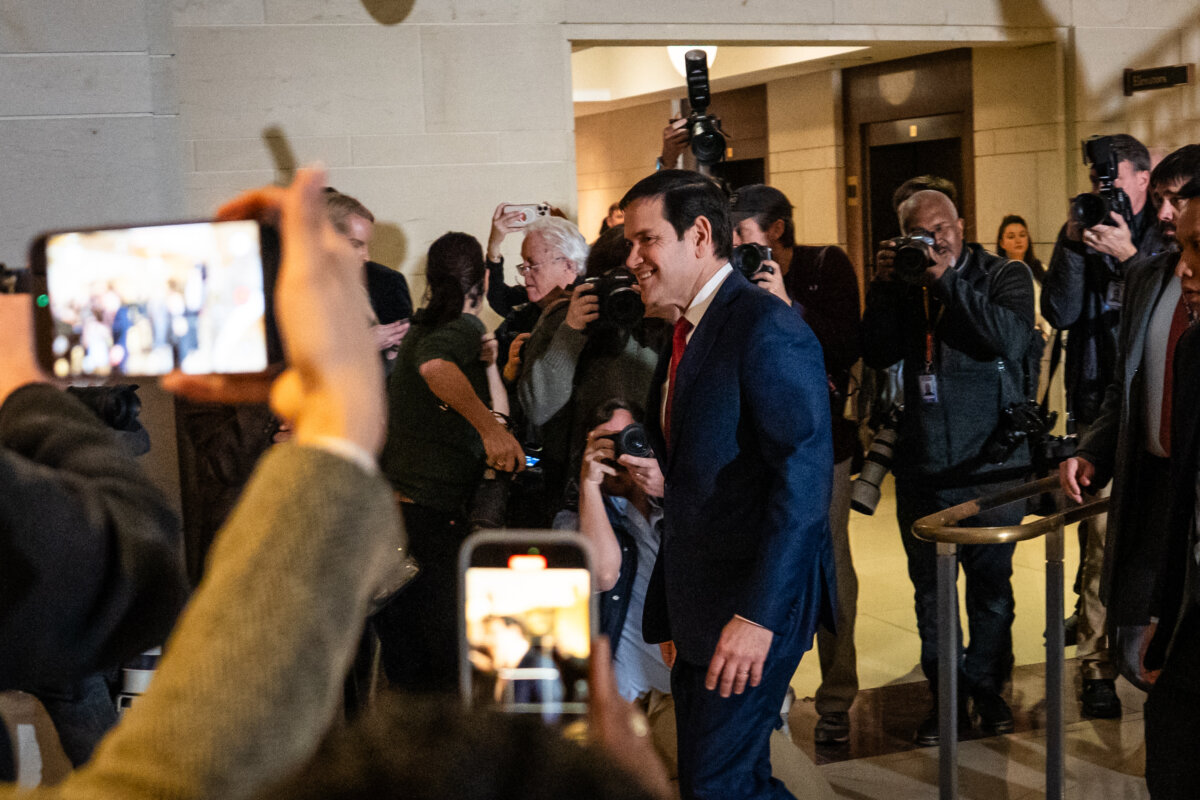
The White House is preparing to unveil a strategy aimed at bringing down rising energy prices following the joint U.S.-Israel operations in Iran, said Secretary of State Marco Rubio.
Rubio, speaking to reporters on March 2, stated that Energy Secretary Chris Wright and Treasury Secretary Scott Bessent would announce efforts to mitigate increasing oil and gas prices.
“We knew that going in would be a factor,” Rubio said. “We talked about it last night again about this program, we talked this morning. And starting tomorrow, you will see us rolling out those phases to try to mitigate against that.”
He stopped short of providing details of what these initiatives would be.
U.S. crude oil prices surged more than 8 percent to finish the March 2 trading session at $71.55 per barrel on the New York Mercantile Exchange. Brent, the international benchmark for oil prices, soared about 9 percent to nearly $80 a barrel on London’s ICE Futures exchange.
These are the highest prices since June 2025, when Iran’s nuclear facilities were attacked.
Prior to the strikes on Iran, oil prices had been edging higher as traders were pricing in the attacks.
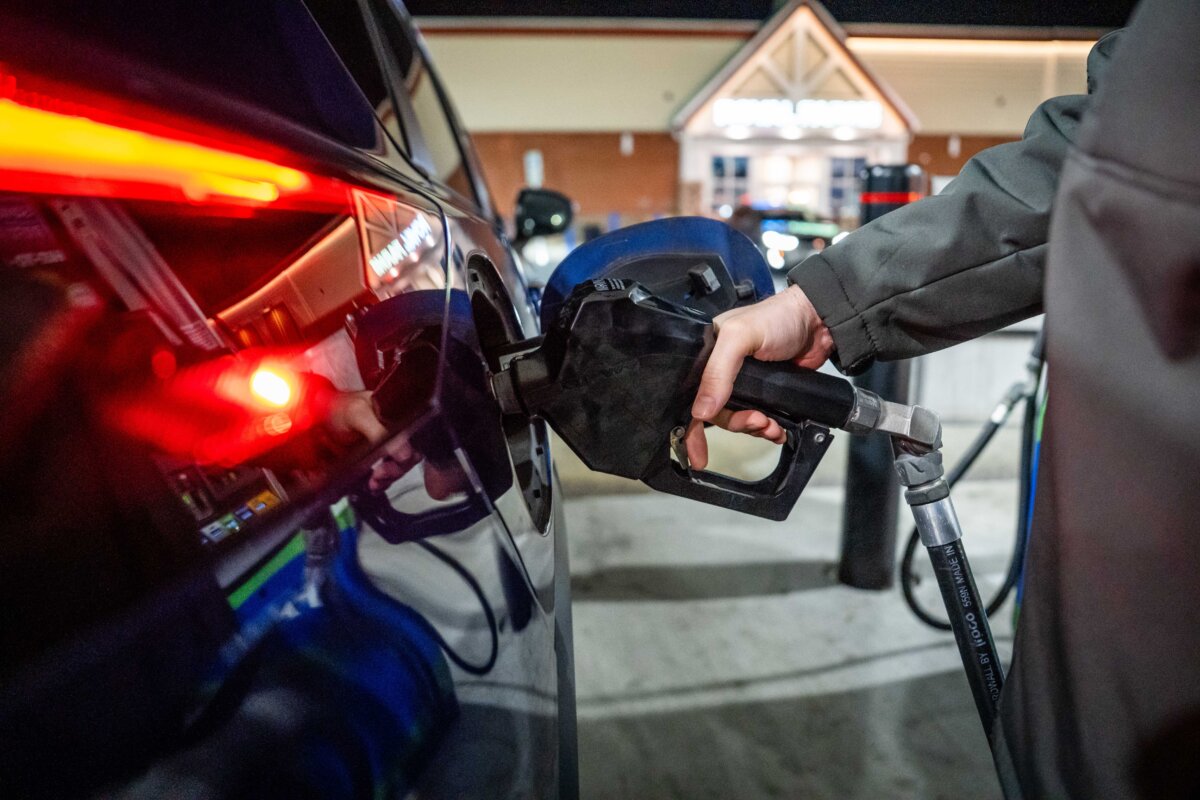
The recent jump in oil prices is also impacting motorists.
The average price for a gallon of gasoline reached $3 on March 2, up more than 4 percent from a month ago, according to the American Automobile Association.
Oil accounts for about half of the cost of a gallon of gas.
Natural gas prices rose 1 percent on March 2 to about $3 per million British thermal units. Heating oil futures also surged 14 percent to nearly $3 per gallon.
Near-Term Outlook
Crude futures were little changed in after-hours trading, hovering at around $71 a barrel as markets monitor the situation.
Prices have wobbled on conflicting reports that the Strait of Hormuz, a vital shipping artery for oil and liquefied natural gas, was shuttered. But companies have already been diverting traffic out of the area as a precaution.
Approximately 20 million barrels of oil and petroleum products are transited through this corridor. Most of the oil exported from the region is directed to Asia, with China as Iran’s primary customer.
Looking ahead, market watchers say the situation in Hormuz and the extent of Tehran’s retaliation will be significant factors for oil prices—as well as broader markets—this week.
“In particular, traders will be watching the Strait of Hormuz, the 10-year’s reaction, and whether a spike in crude is just a headline-driven pop or a new sustainable trend,” Jay Woods, chief market strategist at Freedom Capital Markets, said in a note emailed to The Epoch Times.
“Seeing that the market has recently struggled to rally on good news, this could have a negative chain reaction and drive the market into correction territory.”
Long-term interest rates ticked up to start the trading week. The benchmark 10-year yield traded slightly above 4 percent.
A prolonged conflict and disruptions to oil and natural gas flows could seep into business and consumer inflation expectations, which have eased in recent months.
“Any sustained disruption to oil or natural gas flows, especially if both severe and long-lasting, has the potential to influence inflation expectations, weigh on business confidence, and elevate volatility across asset classes,” Kristian Kerr, head of macro strategy at LPL Financial, said in an email to The Epoch Times.
“In simple terms, the more intense and prolonged the geopolitical shock, the larger the likely market impact.”
Median one-year inflation expectations declined to 3.1 percent in January, according to the New York Federal Reserve’s Survey of Consumer Expectations.
For now, inflationary pressures are muted following the attacks on Iran.
The widely watched Truflation US CPI Inflation Index—a running real-time estimate that uses a plethora of consumer and spending data—is 0.8 percent.
 Friends Read Free
Copy
Facebook
Tweet
Friends Read Free
Copy
Facebook
Tweet