
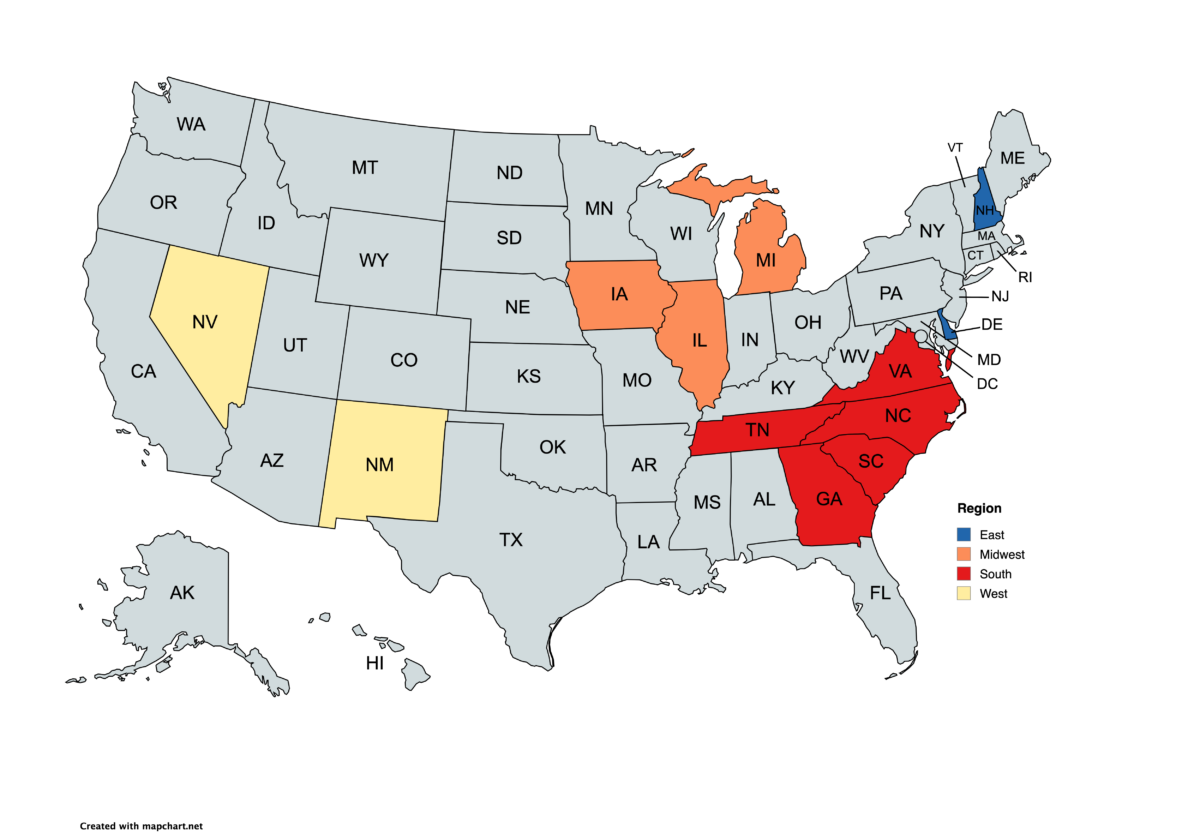
Twelve state parties spent two days this week asking a Democratic National Committee panel to let them vote early in the 2028 presidential primary. Their pitches, whether intentional or not, added up to a single answer to a harder question: Which voters does the party have to win back?
Three groups came up again and again. Latinos. Rural and working-class voters. The South.
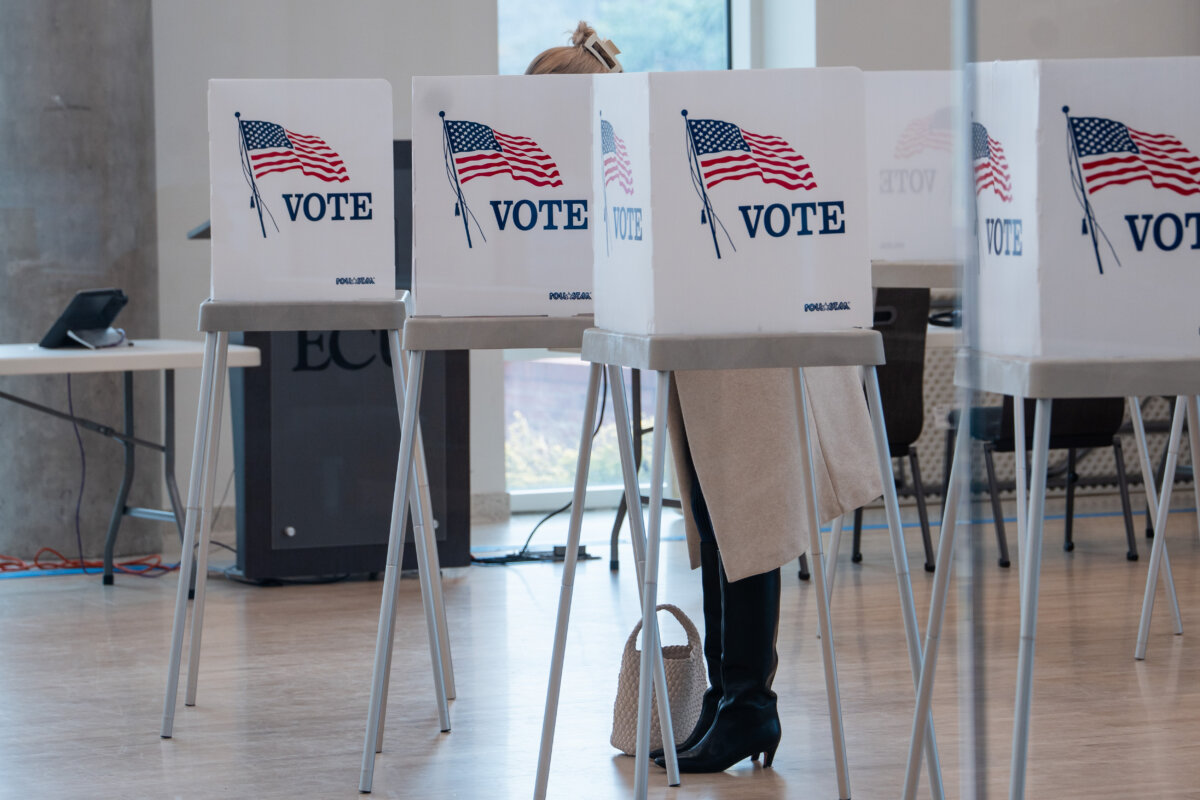
The DNC Rules and Bylaws Committee met in Washington on Wednesday and Thursday, and spent Friday continuing the process of drafting the rules that govern delegate selection. Among their tasks is deciding the order in which states vote.
Early states draw candidates, money, and attention, and they can shape who becomes the eventual nominee. The committee has said it will choose at least one state from each of four regions, with an optional fifth, and judge applicants on what it calls rigorousness, efficiency, and fairness.
Why the order matters is a question Democratic strategists answer in concrete terms.
Avis Jones-DeWeever, a Democratic strategist and principal at Nouveaux Strategies, said the early calendar sets the conditions for everything that follows.
“Early primaries typically set the tone for the primary season,” she said in an email to The Epoch Times on Friday. “This is where perceived front-runners are solidified or perceived long-shots have the opportunity to gain legitimacy.”
She pointed to 2008 as the clearest example: then-Sen. Barack Obama faced doubts about his viability, including from some Black voters and members of the Congressional Black Caucus, until he won the Iowa caucuses and showed he could win over white voters and build momentum.
The money follows the same logic, Jones-DeWeever said.
“Fall behind early and it becomes that much harder to attract the donors necessary to survive the full primary season.” Then-Sen. Kamala Harris is an example of a candidate who dropped out of the race in 2020 before the voting began, citing dwindling finances and an inability to raise the funds she needed to stay in the race.
She also pointed to President Joe Biden’s falling behind in delegate count until primaries opened up in states such as South Carolina with large minority populations, which propelled Biden to win the nomination. That 2020 success in South Carolina led Biden to request—and be granted—moving South Carolina to the front of the Democratic primary calendar in 2024.
Jones-DeWeever added that for states with significant Black populations, the push to vote earlier “signals that they’re tired of sitting in the back of the proverbial political primary bus.”
The Latino Vote
New Mexico built its pitch around Hispanic and Latino voters, who comprise nearly 50 percent of the state’s population, according to the latest estimates by the U.S. Census Bureau. This represents the largest percentage from those groups out of any state.
During the state’s presentation, Gov. Michelle Lujan Grisham (D) underscored that the term covers more than one group. A candidate, she said, has “to be able to translate [their] messages to Hispanic voters,” like herself, as well as “the Latino voters, which is a whole different group of minority voters in the state.”
The two terms are often used interchangeably, including by the U.S. Census Bureau, which combines them into a single category, but they describe different things.
“Hispanic” generally refers to people with roots in Spanish-speaking countries, a reference to language and Spanish heritage. “Latino” refers to people with roots in Latin America, a reference to geography. The two overlap for most people but not all.
A Brazilian, for example, is Latino but not Hispanic, because Brazil’s language is Portuguese. In New Mexico, many families identify with Spanish heritage that predates the more recent immigration often associated with the term Latino, which is the distinction Lujan Grisham was drawing.
Michelle Mayorga, a Democratic pollster on the state’s delegation, told the committee that Hispanic and Latino voters “shifted 12 points to [President Donald] Trump last cycle,” a large swing toward Republicans in a single election. New Mexico, she said, reflects the losses the party suffered nationally and would force candidates to court these voters from the start rather than after the nomination is settled.
Several other applicants made versions of the same case. Nevada, North Carolina, Georgia, and others pointed to growing Latino populations and argued that an early contest in their states would push presidential candidates to compete for those voters sooner.
Rural and Working-Class Voters
Iowa, asking to go first again, leaned on its rural standing. State party chair Ross Wilburn told the committee, “Over the past several election cycles, our Democratic party has lost rural working class voters across the Midwest.” Michigan, Nevada, and New Mexico made similar pitches about reaching rural and working-class voters that the party has been losing.
The theme cut across regions. In Tennessee, state Rep. John Ray Clemmons (D-Nashville), who chairs the House Democratic caucus, opened with an appeal to the party’s broader prospects.
“We have a tremendous opportunity ahead of us in a couple years to turn this country back around, and it needs to start in the state of Tennessee,” he said.
The South
Five of the 12 applicants came from the South, and several argued that the region is where the party’s future will be decided.
North Carolina Democratic Party chair Anderson Clayton told the committee that “by the next census, four out of every 10 Americans is going to live in the South,” and that the party would have to compete there to build lasting power. Census Bureau estimates show the South is already the nation’s largest and fastest-growing region, home to about 39 percent of Americans, or 133 million Americans.
“If Democrats are going to pick up seats in Congress and build an enduring Democratic majority, we’re going to have to learn how to be competitive in the South,” she said.
Georgia chair Charlie Bailey was more blunt in making his case.
“If you win Georgia, you win the country,” he said, describing the state as both diverse and a genuine battleground. Atlanta and Georgia officials hosted DNC members last month, as the city also pitches to be the host city for the 2028 Democratic National Convention.
Tennessee state Sen. London Lamar (D-Memphis) framed the stakes regionally.
“If we win the South, we take the nation every single presidential election,” she said.
South Carolina, which currently holds the first sanctioned Democratic primary, argued for keeping that spot. Five Southern state party chairs, from Alabama, Arkansas, Louisiana, Mississippi, and West Virginia, sent a letter urging the committee to leave South Carolina first. Rep. Bennie Thompson of Mississippi, through the Congressional Black Caucus Institute, sent a separate letter making a similar case.
The committee did not make a decision this week. It was scheduled to draft delegate-selection rules on Friday. Moore said the panel expects to meet again June 25–26 and July 23–24, with another online meeting likely to continue the debate.
 Friends Read Free
Copy
Facebook
Tweet
Friends Read Free
Copy
Facebook
Tweet