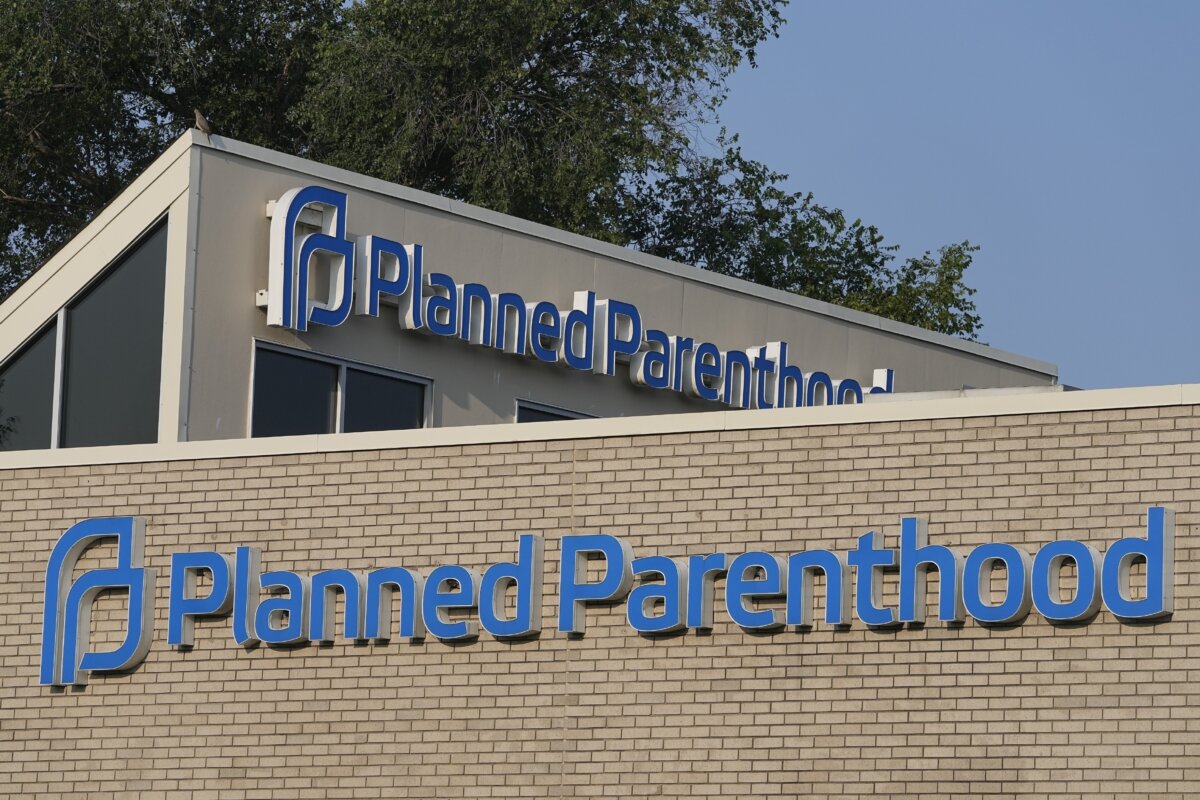

Planned Parenthood of Wisconsin said on Thursday that it will cease scheduling abortions on Oct. 1, as it braces for funding cuts signed into law as part of the “One Big Beautiful Bill” Act in July.
That legislation strips Medicaid funding from any healthcare provider that receives more than $800,000 in federal dollars, and also performs abortions.
The law originally cut funding from such organizations for the next 10 years; it was reduced to one year after the Senate Parliamentarian threatened to hold up the legislation.
U.S. District Judge Indira Talwani of Massachusetts blocked that provision of the law on July 28, saying that it unlawfully targeted Planned Parenthood, but the ruling was later temporarily overturned by an appeals court.
The company said it will see as many patients as it can before the Oct. 1 deadline and hopes that the ongoing litigation will change its situation.
“Our commitment is unwavering: Planned Parenthood of Wisconsin will continue to provide the full spectrum of reproductive health care—including abortion—as soon as we are able to,” Tanya Atkinson, president and CEO of Planned Parenthood of Wisconsin, said in a statement emailed to The Epoch Times.
“In the meantime, we are pursuing every available option—through the courts, through operations, and civic engagement.”
Abortion was illegal in Wisconsin until the 1973 U.S. Supreme Court ruling in Roe v. Wade legalized it across the country.
After the 2022 Dobbs decision overturned Roe, Wisconsin’s previous abortion restrictions—which dated back to 1849—theoretically took effect again.
But in July, that law was also struck down by the state’s Supreme Court, which said that post-Roe abortion regulations took precedence over the older law.
Abortion is legal in Wisconsin up to 20 weeks of pregnancy.
Planned Parenthood, the nation’s largest abortion provider, faces tough funding questions, as some states have banned abortions altogether, and others have individually moved to strip its Medicaid funding.
Although the Hyde Amendment prevents federal dollars from being used to pay for abortions, Planned Parenthood receives Medicaid reimbursements for other services like contraception and cancer screenings.
In April, the Department of Health and Human Services (HHS) announced that Planned Parenthood, along with other groups, would be temporarily ineligible for Title X family planning funding due to possible civil rights violations.
However, some states have sought to strip the organization of federal funds altogether.
South Carolina Gov. Henry McMaster removed funding for Planned Parenthood—and all other abortion providers—in 2018.
“South Carolina has made it clear that we value the right to life,” he said in a statement earlier this year. “Therefore, taxpayers should not be forced to subsidize abortion providers who are in direct opposition to their beliefs.”
Planned Parenthood sued to allow patients to choose their organization as a Medicare provider, but lost before the Supreme Court in June. link
 Friends Read Free
Copy
Facebook
Tweet
Friends Read Free
Copy
Facebook
Tweet