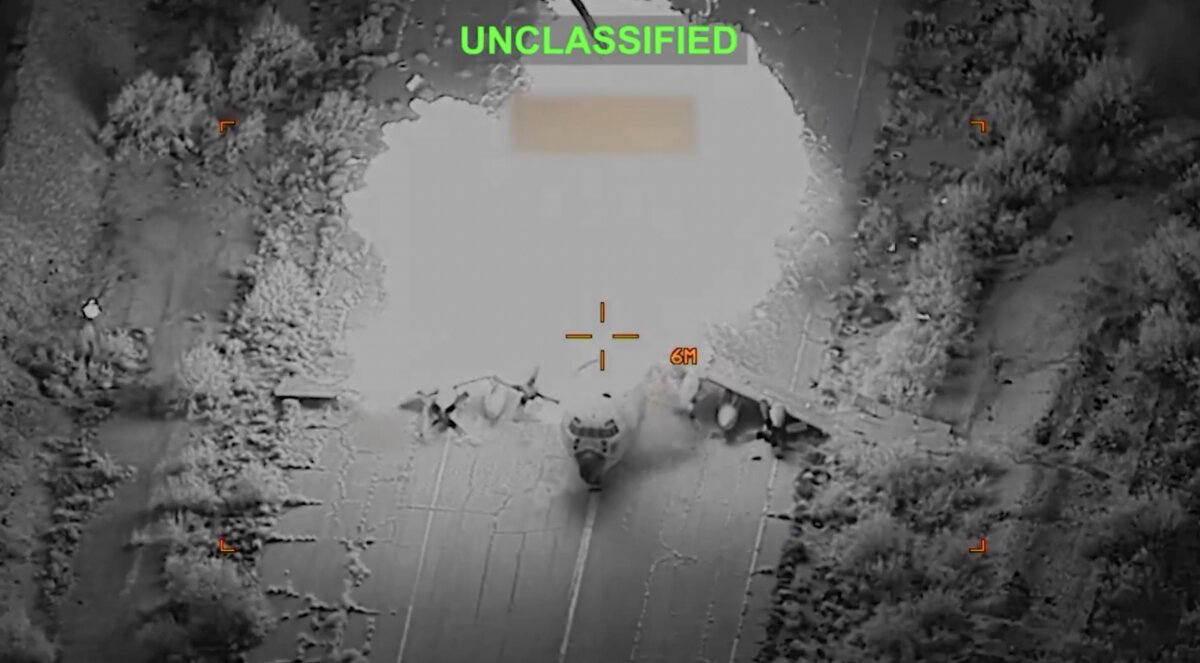

U.S. forces have struck 10,000 military targets in Iran—and more when combined with Israeli forces—U.S. Central Command (CENTCOM) Cmdr. Adm. Brad Cooper said in an Operation Epic Fury update on March 25.
The U.S. military remains “on plan or ahead of plan, in achieving very clear military objectives for eliminating Iran’s ability to project power in meaningful ways outside its borders,” Cooper said, as the conflict is in the midst of its fourth week.
About 92 percent of the Iranian Navy has been destroyed, and the regime’s drone and missile launch rates have been reduced by 90 percent, he said.
The strikes have also crippled the regime’s capability to rebuild.
“Today, we have damaged or destroyed over two-thirds of Iran’s missile, drone, and naval production facilities,” Cooper said.
Even as the conflict enters its 27th day, with the United States and Israel eliminating many of the Iranian elites, the regime remains defiant with its media messaging.
U.S. President Donald Trump said on March 23 that Washington and Tehran had reached “major points of agreement” in talks to end the war.
“We have had very, very strong talks,” Trump said. “We’ll see where they lead. We have points, major points of agreement, I would say, almost all points of agreement.”
However, Iranian officials denied involvement in any negotiations.
“There have been no talks with the US so far. Our position on the Strait of Hormuz has not changed,” the Iranian Embassy in South Africa said in a statement on social media on March 23.
On March 25, Iran rejected a U.S. cease-fire proposal.
According to a report from Iranian state media Press TV, an Iranian official said to the channel that “Iran will end the war when it decides to do so and when its own conditions are met.”
The unnamed official said Tehran was resolved to continue its defense and that Washington’s proposals were seen as “excessive.”
The official also said the regime has put forth five conditions for ending the war, including a complete halt to offensive strikes, mechanisms to ensure that war is not reimposed, payment of war damages, an end to the war across all fronts, and agreeing to Iran’s sovereignty over the Strait of Hormuz.
Responding to the Iranian media report, White House press secretary Karoline Leavitt said in a press briefing on March 25 that negotiations are still ongoing with the regime.
When asked whether talks have reached a dead end, Leavitt said: “They have not. Talks continue. They are productive, as the president said on [March 23], and they continue to be.”
She noted that more than 140 Iranian naval vessels have been destroyed so far, including 50 minelayers. Minelayers pose a significant threat to oil and gas ships sailing through the Strait of Hormuz.
“If Iran fails to accept the reality of the current moment; if they fail to understand that they have been defeated militarily and will continue to be, President Trump will ensure they are hit harder than they have ever been hit before. President Trump does not bluff, and he is prepared to unleash hell. Iran should not miscalculate again. Their last miscalculation cost them their senior leadership, their navy, their air force, and their air defense system,” Leavitt said.
Regarding the situation in the Strait of Hormuz, Leavitt said the U.S. military remains focused on eliminating the regime’s threat to the free flow of energy through the region.
Meanwhile, Abu Dhabi National Oil Co.’s CEO, Sultan Ahmed Al Jaber, described any restriction of passage through the Strait of Hormuz by Iran as “economic terrorism.” Abu Dhabi is the capital of the United Arab Emirates, one of the world’s leading petroleum exporters.
“When Iran holds Hormuz hostage, every nation pays the ransom, at the gas pump, at the grocery store, at the pharmacy,” Al Jaber said in a speech in the United States on March 25.
Oil prices have remained volatile with the ongoing negotiations. Brent crude is trading at about $103 per barrel as of March 26. It was more than $111 on March 20, and priced at roughly $87 roughly 10 days prior.
The Strait of Hormuz sees about 20 percent of the world’s oil and significant amounts of liquefied natural gas shipments. Disruptions in the region have led to fuel shortages and panic buying in many countries across South Asia and Africa.
European countries, Canada, and Japan have called for reopening the strait and bringing back stability to the global energy markets. However, the situation remains complicated with ongoing Iranian aggression and the regime controlling a large coastline along the strait.
Reuters contributed to this report.
 Friends Read Free
Copy
Facebook
Tweet
Friends Read Free
Copy
Facebook
Tweet